


 Saturday, 14-11-26


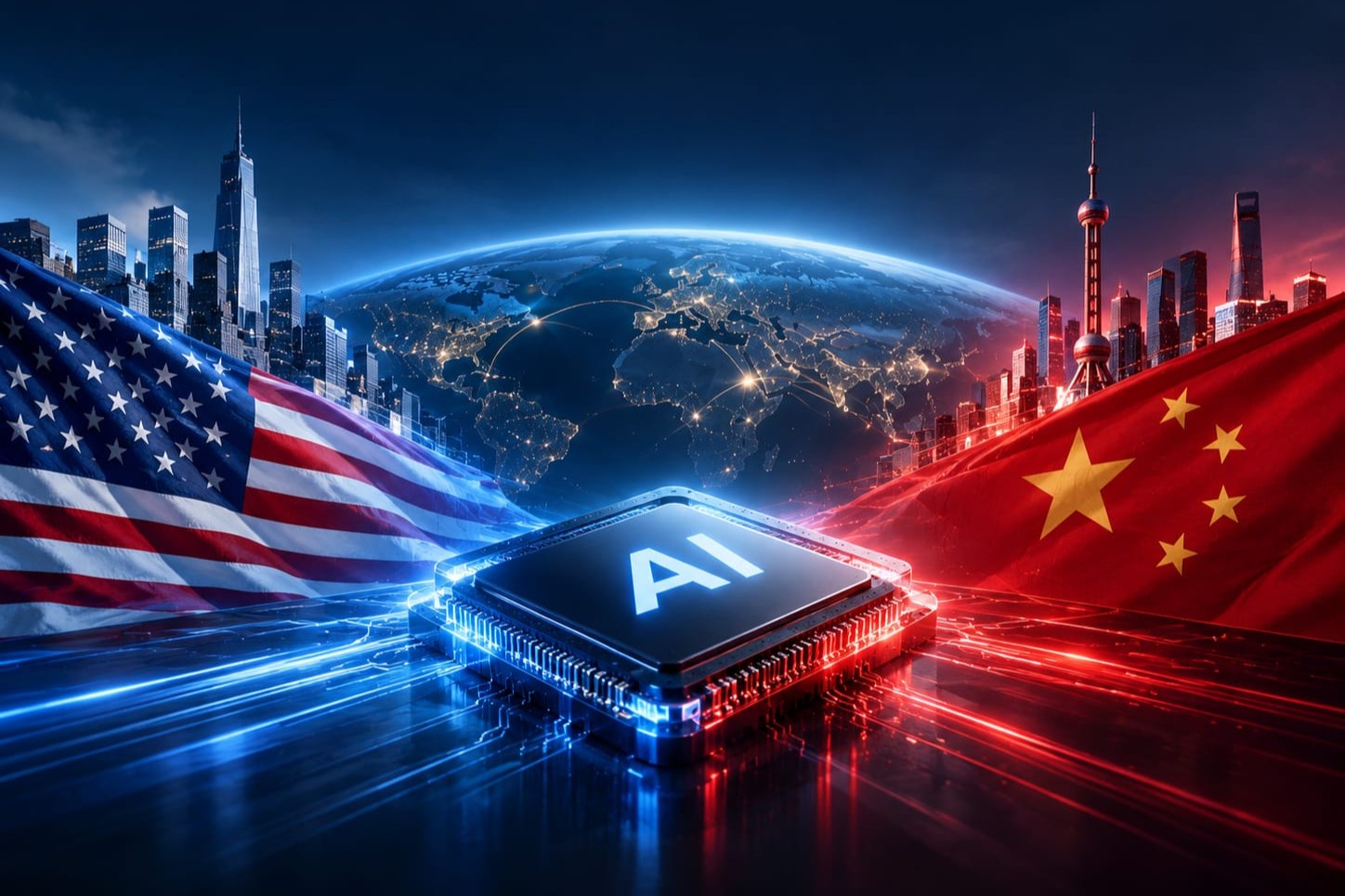
The U.S. and China are investing hundreds of billions of dollars in artificial intelligence as political and business leaders frame its development as a race between world powers, but economist Jason Furman said there may be no clear finish line for the competition in an interview published by the Harvard Gazette on September 24 (24/09).
Furman, Aetna Professor of the Practice of Economic Policy jointly at Harvard Kennedy School and the Department of Economics, said the U.S. and China are the two major players in the global AI economy when it comes to frontier models. Europe has an AI model, he said, but is not currently in the running.
The key question, according to Furman, is how much of the AI economy will depend on frontier models and which country reaches the leading edge first.
Why the AI Race May Have No Finish Line
Furman said he does not think there is a finish line in AI development. Instead, he described the industry as being in a continuous race.
He compared increasingly capable AI models to cars that can travel at higher and higher speeds. Increasing the speed from 300 miles per hour to 400 or 500 miles per hour may matter to race car drivers, but the difference may not matter to everyone else.
For AI, Furman said the highest-performing models could be important for cybersecurity and certain areas of cutting-edge research. For many other users, however, the difference between the most advanced model and a less advanced one could be much less important.
This could make the competition for the most capable AI increasingly relevant to a smaller group that needs the very best systems, while others could continue using models that are well below the frontier.
Where the Best AI Models Could Matter Most
Furman identified two areas where the position of the AI frontier could be particularly important: cybersecurity and military espionage.
For national security-related applications, he said having the most capable system can matter because the second-best system may not be sufficient.
The position of the leading AI model also matters for market capitalisation, according to Furman. That affects how many people receive millions or billions of dollars because they own part of the companies developing these systems.
For the broader economy, however, Furman said the more important issue will be how AI technologies are used in jobs and how they are adapted.
The broader economic effects may therefore depend less on which country reaches the AI frontier first.
Why AI May Not Become a Winner-Take-Most Market
The valuations and capital expenditures of AI companies are consistent with expectations of a “winner-take-most” market, Furman said.
He compared this with earlier internet businesses, including Google in search and Meta in social networking, where network effects were extremely powerful.
In those businesses, users had strong reasons to be on the same platform. If someone was on Facebook, for example, other people needed to be on Facebook as well.
AI services currently operate differently. A person using ChatGPT does not prevent another person from using Claude, and Furman said switching between the two has so far been relatively easy.
Because of this, he said it remains uncertain whether the winner-take-most model that has appeared in previous technology markets will apply to AI companies.
AI Investment Faces a Productivity Test
Furman also raised concerns about the economic effects if AI proves less transformative than expected.
So far, he said the AI build-out is producing very large effects on demand, with companies building large amounts of infrastructure and other related assets.
At the same time, he said there have not yet been very large effects on supply, which includes productivity and similar measures.
That could create financial problems if the expected productivity gains do not materialise. Furman said much of the financing behind the AI system is based on the assumption that AI will increase productivity and that companies will be able to profit from those gains.
If productivity does not appear, companies would not have the expected gains to monetise. Even if productivity increases, companies could still face problems if they cannot monetise it or if competition pushes prices down.
Under those circumstances, Furman said there could be a bear market and problems in parts of the credit system.
He does not expect this to be similar to the global financial crisis because the risks are spread across different parts of the financial system that are better able to absorb them.
Still, he said the situation would not be easy because trillions of dollars are currently being invested based on the expectation that AI development will work out.
U.S. and China Share Concerns About AI
Although the U.S. and China have major differences in their interests, Furman said they also have significant common interests in AI.
He said there is a common concern about AI safety and job displacement in both countries. During a visit to China in May, Furman said he heard concerns about these issues from people he spoke with.
Professors at Chinese universities, he said, were also concerned about how AI could affect teaching on their campuses.
Furman said these concerns are similar to issues being discussed in the United States, creating areas where the two countries could have greater dialogue.
He also said it is difficult to prevent knowledge in AI from spreading between countries.
“When we think about U.S.-China, we have to accept that they’re going to learn about the things that we figure out and be able to copy them. And by the way, they’ll figure out some things we don’t figure out, and we’re going to be able to learn and copy from that.”
Furman said countries may be able to protect a small strategic advantage, but completely containing AI knowledge is unlikely.
He said working together while remaining realistic about what that cooperation involves would be the better path forward.
This article was created with AI assistance.
We make every effort to ensure the accuracy of our content, some information may be incorrect or outdated. Please let us know of any corrections at [email protected].
Read More