





 Saturday, 19-09-26








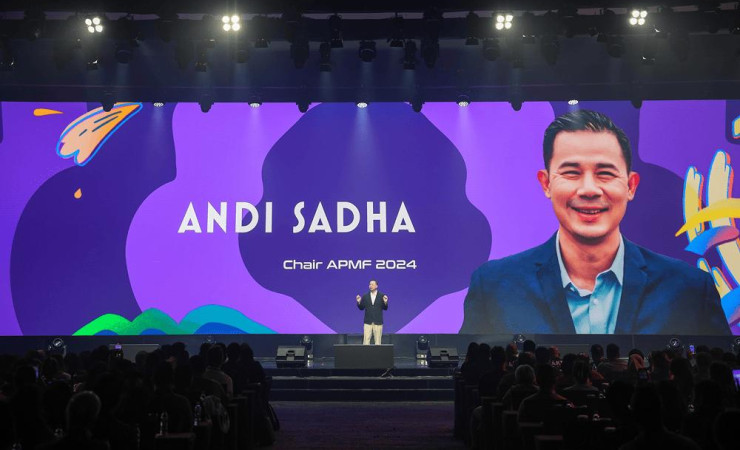
A New Era For Consumer Engagement
The marketing world is changing fast, and APMF 2026 is positioning itself at the center of that shift. The forum, which will take place on August 5 to 7, 2026 at the Bali Nusa Dua Convention Center, is built around the theme “Blueprint the Beyond.” Its official framing makes one thing clear: the next wave of consumer engagement will not be defined by old campaign playbooks, but by new structures that can keep up with AI, fragmented media, and rapidly changing audiences.
That is why the phrase consumer engagement matters so much in this conversation. It is not just another marketing buzzword. It is the core challenge that brands, media companies, agencies, and platforms are trying to solve as customer attention becomes harder to earn and easier to lose. APMF 2026 is designed as a place where industry leaders can think beyond campaigns and build a more durable strategy for the years ahead.
Why APMF 2026 Matters Now
APMF has been running since 2005, bringing together senior leaders from brands, agencies, media, and platforms. In 2026, the forum is leaning into a more strategic role, describing itself as a place to architect the next wave of consumer engagement rather than simply discuss market trends. That shift is important because the marketing environment has become more complex, and many teams are struggling to keep pace with change rather than merely observe it.
The timing also matters. Recent reporting on APMF 2026 says the forum was created to respond to the combined pressure of creator economy growth, media fragmentation, and generative AI. The result is a marketing landscape where campaigns no longer live for months with the same effect. They rise quickly, get tested across channels, and can fade just as fast if the brand does not stay relevant.
For businesses, that reality changes the meaning of consumer engagement. It is no longer enough to create a message and distribute it widely. Brands now need to design systems that can absorb new data, adjust messaging, and respond across many touchpoints at once. That is the bigger conversation APMF 2026 is trying to start.
How AI Is Reshaping Consumer Engagement
AI is not simply speeding up marketing production. It is changing what consumers expect from brands. McKinsey reported in January 2025 that more consumers are seeking tailored online interactions, and companies are turning to AI and generative AI to scale personalization. That means the consumer engagement standard is no longer broad reach alone, but relevance at scale.
Salesforce’s State of Marketing report says the era of one way conversations is over. In a survey of 4,500 marketing leaders, the company found that customers want dialogue, not broadcast messaging, and that 83 percent of marketers recognize the shift toward personalized, two way messaging. The gap is execution, not awareness. Many teams understand what is changing, but not all of them have the systems to act on it consistently.
Adobe’s 2026 AI and Digital Trends report reinforces that point. It says AI is reshaping customer experience across the journey from discovery to purchase, and that brands are aiming for experiences that are highly personalized, seamless across touchpoints, and AI powered while still feeling human. Adobe also notes that half of customers say promotional emails, ads, and social posts have only two to five seconds to capture interest. That is a very short window, and it explains why consumer engagement is becoming more precise, more dynamic, and more demanding.
What APMF 2026 Is Trying To Solve
The strongest insight behind APMF 2026 is that the challenge is no longer a lack of information. The challenge is how to convert information into better decision making. According to the forum’s own positioning, the industry now has more data, more technology, and more trends than ever before. What it needs is a framework that can turn those inputs into faster and smarter action.
That framing is especially relevant because consumer engagement now sits at the intersection of media, technology, creativity, and commerce. APMF 2026 says the tools used by marketers, from generative AI to programmatic commerce, are evolving faster than any single team can track. It also says audiences are scattered across communities, platforms, and behaviors that no single playbook fully covers. In other words, the old centralised model of consumer engagement is no longer enough.
This is also why the event’s format matters. APMF 2026 is not being presented as a simple keynote series. The forum says it is a room for practitioners to compare notes, test ideas, and leave with sharper questions and deeper strategic insight. That is a subtle but important distinction. It suggests the industry is moving from inspiration to architecture, from observing trends to designing operating models.
The New Rules For Brands In The AI Era
For brands, the AI era changes consumer engagement in at least four practical ways. First, personalization has to move faster. McKinsey and Adobe both point to rising expectations for tailored, timely, and more relevant experiences. Second, messages must work across more fragmented channels, because audiences are no longer gathered in one or two dominant spaces. Third, brands need stronger data foundations if they want AI to create useful outputs rather than generic noise. Fourth, trust now matters as much as reach.
Those changes are not theoretical. Adobe’s report says many organizations are still dealing with fragmented data, uneven alignment between executives and practitioners, and limited enterprise scale for AI deployment. Salesforce also notes that while marketers know customers want more personal and interactive communication, only one in four are satisfied with how they use data to support those moments. That means the opportunity is real, but so is the implementation gap.
The smart takeaway is that consumer engagement in 2026 is less about producing more content and more about producing better systems. A brand that can recognize behavior, adapt messaging, and deliver consistent experiences across channels will usually outperform one that only chases short lived attention. That is exactly the kind of shift APMF 2026 is meant to help the industry discuss.
Why Collaboration Is Becoming A Competitive Advantage
One of the most interesting parts of the APMF 2026 concept is its emphasis on collaboration. The forum brings together brand leaders, agencies, media companies, technology players, and creative professionals because no single sector can solve consumer engagement alone. AI may improve speed and scale, but it does not remove the need for aligned strategy, creative judgment, and cross functional execution.
That matters because marketing teams often still operate in silos. Data lives in one place, creative in another, media in another, and customer insight somewhere else. Adobe’s report suggests stronger data foundations and deeper cross functional alignment are essential for making AI useful at scale. APMF’s approach recognizes the same truth from a different angle: if the industry wants better consumer engagement, it has to design for collaboration, not just campaign delivery.
There is also a broader strategic reason for this shift. When markets move quickly, isolated decision making becomes a disadvantage. Shared frameworks make it easier for teams to move faster without losing coherence. That is why APMF 2026 is presenting itself as an architecture forum rather than a trend conference. It is trying to help the region build a common language for consumer engagement in an AI shaped market.
What Marketers Should Take Away From The Discussion
The clearest lesson from APMF 2026 is that the future of consumer engagement will reward brands that are both adaptive and disciplined. Adaptive, because audiences and platforms keep changing. Disciplined, because random experimentation without a clear system rarely produces sustainable growth. McKinsey, Salesforce, and Adobe all point to the same direction: personalization, dialogue, and AI assisted responsiveness are becoming baseline expectations.
For marketers, that means three priorities should rise to the top. The first is data readiness, because AI is only as useful as the data behind it. The second is speed, because attention windows are shrinking. The third is human relevance, because technology can scale a message, but it cannot replace trust, context, or empathy. Those three priorities define modern consumer engagement more accurately than any single campaign metric.
APMF 2026 is important because it reflects where the industry is headed, not where it has been. The event’s own language about building the next wave of consumer engagement shows that marketing leaders are thinking less about short term buzz and more about long term architecture. That is a healthy shift, and it comes at the right time. As AI becomes more embedded in media, commerce, and content, the brands that win will be the ones that treat consumer engagement as a system, not a slogan.
Conclusion
APMF 2026 captures a major turning point in marketing. The forum’s focus on Blueprint the Beyond, consumer engagement architecture, and AI driven change shows that the industry is moving toward a more deliberate way of working. For brands, the lesson is straightforward. The next era of consumer engagement will belong to the teams that combine better data, faster decisions, and more human experiences at scale. That is the real opportunity behind the APMF 2026 conversation.
Read More