





 Saturday, 19-09-26








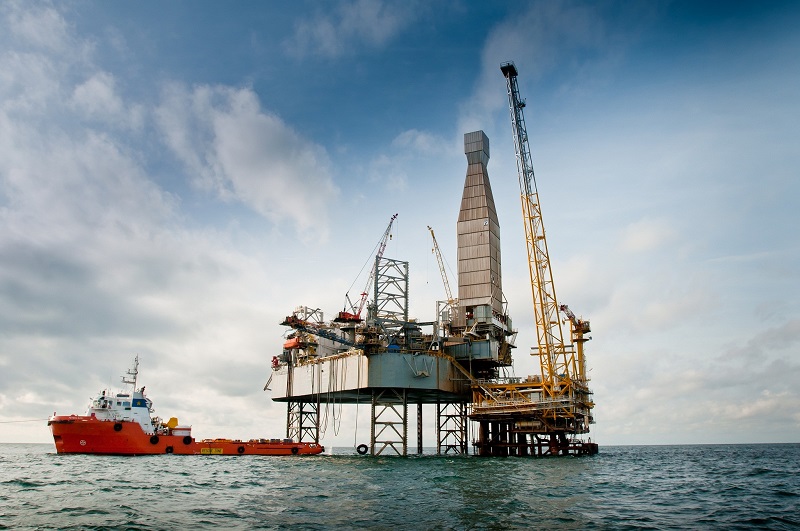
The Long Journey of the Masela LNG Project
The Masela LNG Project has a long development history that began after the discovery of gas potential in the area in 2000. The project officially entered the construction phase after President Prabowo Subianto conducted the groundbreaking ceremony for the Abadi LNG project on July 16, 2026.
The Masela Block is a working area for oil and gas located in the Arafura Sea, around 150 kilometers south of Masela Island, Kabupaten Kepulauan Tanimbar, Maluku.
The area contains the Abadi Gas Field, which is considered one of Indonesia’s strategic natural gas assets. The field is estimated to have around 3.06 trillion cubic feet (TCF) of natural gas reserves and 119 million barrels of condensate.
The project’s development took more than two decades due to various technical studies, policy changes, and discussions about the development plan.
Initially, the Abadi LNG project was planned to use a Floating Liquefied Natural Gas (FLNG) facility built offshore. However, the government later considered developing an onshore LNG facility to create greater economic benefits for the region.
After several years of discussion, the government decided to continue with the FLNG development concept with offshore production facilities.
The project’s ownership structure also changed during its development. Shell previously held an interest in the project before exiting, while the project is now operated by INPEX Masela Ltd., which holds a 65% participating interest.
A $20.9 Billion Investment for Future Gas Production
The Abadi LNG project has an estimated investment value of around US$20.9 billion, or approximately Rp300–330 trillion.
The investment will be used to develop offshore production facilities, Floating LNG systems, supporting networks, and other infrastructure needed for the project.
President Prabowo Subianto said the Abadi LNG project is an important step to strengthen Indonesia’s energy independence and support industrial development.
During the groundbreaking ceremony, President Prabowo emphasized that cooperation with investors should provide benefits for all parties while maintaining Indonesia’s responsibility toward its people.
“We start this project, we seek mutual benefits. The honor of a host country is when its partners and guests are happy. But we also have responsibility toward our people. As the President of the Republic of Indonesia, I once again emphasize that this project must be carried out properly based on mutual benefit.”
The President also stated that the project’s investment of around US$20.9 billion would support Indonesia’s downstream industrialization program, which requires large amounts of energy.
After production begins, the project is targeted to produce 9.5 million tonnes of LNG per year (MMTPA) and around 1.5 billion cubic feet of pipeline gas per day (BCFD) for domestic needs.
The government expects the project’s first gas production to begin during 2029–2030.
Why the Masela Project Finally Moved Forward
The acceleration of the Masela LNG Project was supported by several factors, according to Arie Kusuma Paksi, Lecturer in International Relations at Universitas Muhammadiyah Yogyakarta and an expert in International Political Economy.
Arie said President Prabowo’s diplomacy helped accelerate the project, but it was not the only factor behind its progress.
According to Arie, three main factors supported the project’s development.
The first factor was Japan’s strategic interest in receiving gas supplies from Masela. This created a strong incentive for INPEX to continue its involvement in the project.
The second factor was the completion of the ownership restructuring process. The transfer of participating interest from Shell to Pertamina and Petronas was completed in October 2023, followed by approval of the revised Plan of Development (POD) in December 2023.
The third factor was government policy direction, including efforts to evaluate and address stalled projects.
“The success of the project in Masela occurred because three factors happened at the same time,” Arie said.
He explained that presidential visits to investors would not necessarily produce concrete results without these supporting conditions.
Arie also highlighted the importance of developing a clear institutional framework to support investment certainty.
He said that repeated use of presidential discretion without a clear institutional framework could increase perceptions of political risk among foreign investors.
Green LNG and Methane Reduction in the LNG Value Chain
The development of LNG projects is also connected with efforts to reduce methane emissions across the value chain.
According to the Methane Management Roadmap for Oil and Gas in ASEAN, the first step in reducing methane emissions is developing a comprehensive emissions inventory.
This process involves identifying emission sources, measuring emission volumes, and collecting facility- and asset-level data.
The roadmap explains that methane inventories help companies determine appropriate mitigation measures, support policy development, and track emission reduction progress.
Several technologies can be used to reduce methane emissions in the LNG value chain.
One of them is Leak Detection and Repair (LDAR), which uses detection equipment and regular inspections to identify and repair methane leaks from sources such as pipelines, valves, and flanges.
Another technology is the Vapor Recovery Unit (VRU), which captures methane emissions from storage tanks and other low-pressure sources and allows the gas to be reused.
The roadmap identifies LDAR and VRU as potential “quick win” technologies for reducing methane emissions in the oil and gas sector.
Based on the roadmap’s analysis, upstream LDAR can address around 32% of total addressable methane emissions in the ASEAN oil and gas sector.
The roadmap also estimates that 84% of methane emissions in the region could be addressed at a net negative cost, assuming the gas can be monetized at relevant local gas prices.
This article is a summary of several original articles. The full versions can be read at the following links:
https://www.umy.ac.id/diplomasi-prabowo/
PHOTO: MINISTRY OF ENERGY AND MINERAL RESOURCES
This article was created with AI assistance.
We make every effort to ensure the accuracy of our content, some information may be incorrect or outdated. Please let us know of any corrections at [email protected].
Read More