





 Saturday, 24-10-26








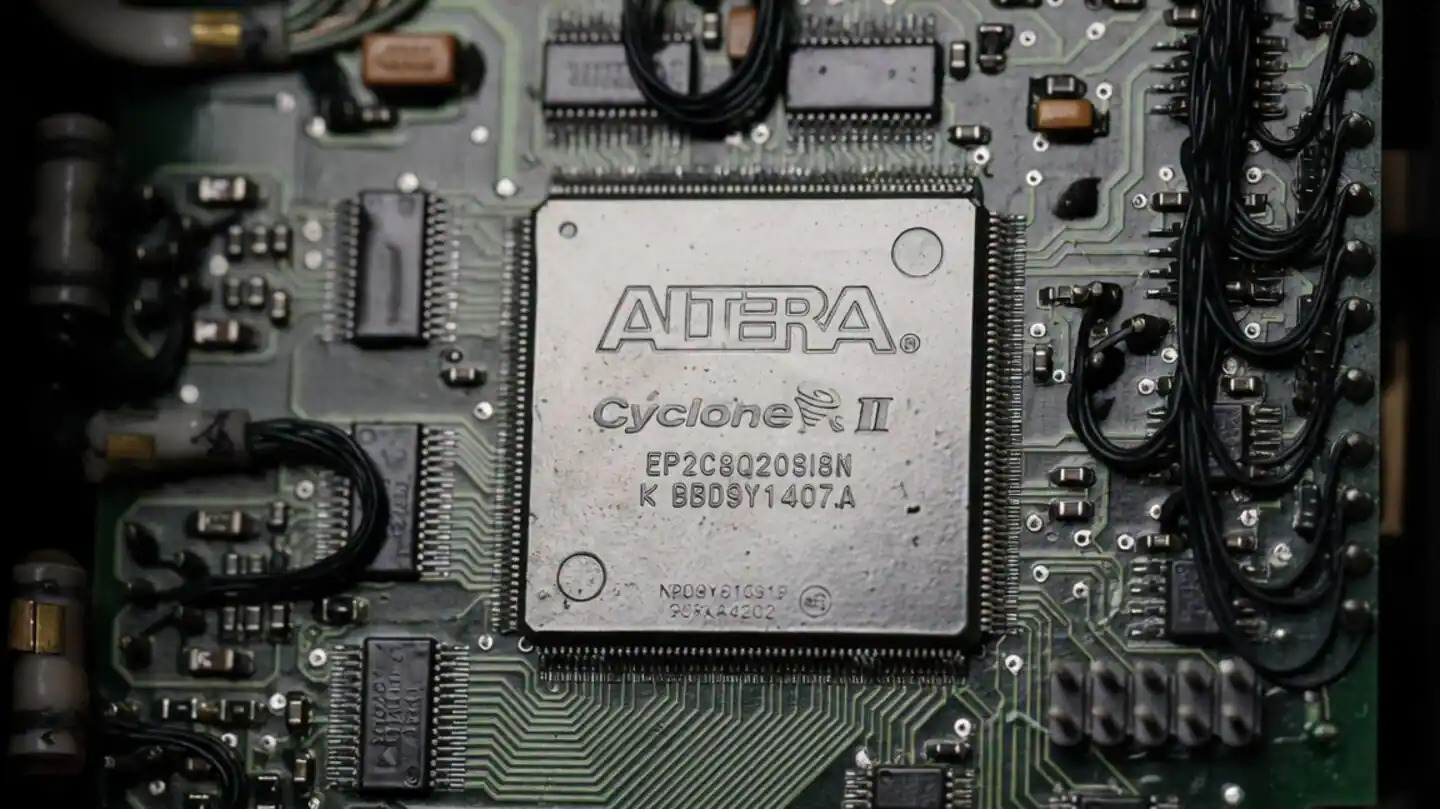
Altera is back in growth mode, and the reason is not hard to see. Reuters reported that the programmable chip maker is growing at roughly 20% a year and more than doubling operating income as it prepares for a future public listing. Chief Executive Raghib Hussain said the company is seeing stronger demand from artificial intelligence and robotics, two markets that rely heavily on flexible chips for connectivity, sensor fusion, and data pre processing. For a business that had faced a sharp revenue decline in 2024, the rebound is notable. It also gives a much clearer picture of why AI robotics demand has become such an important phrase in semiconductor circles.
Why Altera Is Gaining Momentum Again
The turnaround story starts with a painful reset. Intel reported that Altera revenue fell to $1.5 billion in 2024 from $2.9 billion in 2023, reflecting both a shift in customer spending toward graphics processors for AI and market share losses to AMD owned Xilinx. That backdrop makes the current growth rate more meaningful. Altera is not benefiting from a general semiconductor rebound alone. It is benefiting from a specific product fit in markets that are expanding quickly and need programmable logic rather than fixed purpose silicon.
Hussain told Reuters that the company expects mid twenties growth again this year, although Altera remains a private company and does not publish detailed figures. The message behind that forecast is simple. Customers are not only looking for faster chips. They want chips that can be adapted, updated, and integrated into systems that are still evolving. That is exactly the sort of environment where field programmable gate arrays can shine. The current wave of AI robotics demand is therefore giving Altera a more durable growth path than the one it had before its restructuring.
How AI And Robotics Are Changing The FPGA Market
Altera and Intel both frame the business around FPGA technology, or field programmable gate arrays. Intel says Altera is focused on AI driven market opportunities and highlights its presence in emerging AI and robotics segments. Altera says its portfolio spans industrial automation, data centers, telecommunications, edge AI, aerospace, defense, and robotics. In practice, that means these chips are useful wherever systems need low latency processing, flexible connectivity, and the ability to move data quickly between sensors, processors, and memory.
That is why robotics is such a compelling use case. Robots need more than raw computing power. They need responsive systems for perception, motion control, and sensor coordination. Hussain summed up the idea by saying that if GPUs are the brain, FPGAs are the nervous system. Reuters also quoted him projecting that FPGA content worth $100 to several hundred dollars per robot could create a market worth $100 billion to several hundred billion dollars over a decade. Whether or not the highest end of that estimate is realized, the logic is clear. AI robotics demand is creating a market where flexibility can be as valuable as speed.
Why The Intel And Silver Lake Deal Matters
Altera’s growth story cannot be separated from the ownership change that gave it more independence. Intel announced in April 2025 that it would sell 51% of Altera to Silver Lake in a transaction valuing the company at $8.75 billion. Intel kept 49% and said the move would allow it to participate in Altera’s future while focusing on its core business. Altera later said the deal gave it operational independence and made it the world’s largest pure play FPGA solutions provider. That shift matters because strategic clarity often changes how quickly a semiconductor company can move.
Reuters reported that Altera became fully independent last September and that Hussain, a former Marvell executive, took the top job after the spinout. Since then, the company says it has produced six new chips and reduced its reliance on transition service agreements from Intel from 125 agreements to 15. Those are not just back office improvements. They suggest a company that is trying to operate more like a focused growth platform and less like a legacy unit still shedding old dependencies. That restructuring gives the current AI robotics demand narrative more credibility because it shows execution, not just aspiration.
What Makes FPGAs So Useful In AI And Robotics
FPGAs matter because they sit between general purpose processors and fixed function chips. They can be configured for specific workloads, which is useful in industries where performance needs are high and system designs change fast. Altera says its products and tools are used in applications spanning industrial automation, communications, data centers, automotive, and emerging AI and edge computing markets. Intel similarly says Altera serves industrial, communications, data center, military, aerospace, and government customers, with growing exposure to AI and robotics.
That makes FPGAs especially attractive in robotics and AI infrastructure. In a robot, one chip may handle a sensor stream while another manages communications or control logic. In a data center, programmable hardware can help with pre processing, networking, security, and latency sensitive tasks. Hussain told Reuters that Altera is using its chips for connectivity, data pre processing, and sensor fusion alongside GPUs. That division of labor is the heart of the investment case. The more complex the system becomes, the more valuable adaptable hardware can be. That is why AI robotics demand is giving Altera a visible seat at the table in the next phase of compute.
How Altera Is Preparing For The Next Growth Phase
The company is not relying on market excitement alone. Reuters reported that Altera built a memory stockpile that is helping insulate it from shortages and said it is the only programmable chip supplier in full production with a new type of memory called DDR5 for use in mid to high programmable chips. Hussain also said the company manufactures with both Intel Foundry and Taiwan Semiconductor Manufacturing Co and is developing products on TSMC’s 2 nanometer and 3 nanometer technologies. That combination of supplier diversification and process advancement is important because it reduces execution risk while keeping Altera aligned with the most advanced nodes available.
Altera has also highlighted its software stack, development kits, and design tools as part of its broader value proposition. The company says it is delivering a full stack FPGA portfolio with scalable software and support for developers. In a market like this, hardware alone is not enough. Customers need ecosystems, support, and a predictable roadmap. Altera’s effort to strengthen those areas suggests the company understands that AI robotics demand is as much about helping customers build reliable systems as it is about shipping the chips themselves.
What Investors Should Watch Next
The near term story will depend on whether Altera can convert its momentum into sustained operating leverage. Reuters said the company has already more than doubled operating income and expects another year of mid twenties growth, but the broader market will want proof that those gains can continue. Watch for product launches, customer wins, and further evidence that robotics and edge AI are becoming repeatable revenue streams rather than one off opportunities. If the company keeps expanding in those areas, the growth story becomes more durable.
Another key signal will be how Altera performs against larger rivals. Intel said the company is focused on the fastest growing and most profitable FPGA segments, while Reuters noted that Altera lost share earlier to Xilinx during the period when GPU demand was taking center stage. That rivalry is not going away. But Altera now has a sharper identity, a more focused ownership structure, and a stronger link to end markets that are still expanding. For investors and industry watchers, that makes the company one of the more interesting comeback stories in semiconductors. The rise in AI robotics demand is helping turn a former side unit into a more visible strategic player.
Why This Story Matters Beyond One Company
Altera’s rebound is bigger than a single chip maker. It shows how semiconductor demand is fragmenting into specialized growth lanes, with AI training, edge computing, and robotics each rewarding different kinds of hardware. The fact that a programmable chip company can return to growth by aligning with those sectors is a sign that the market is still searching for the most efficient way to build AI systems. Fixed function chips will matter. GPUs will matter. But adaptable silicon still has a powerful role to play. That is the deeper message behind the latest AI robotics demand trend.
For now, Altera is benefiting from a combination of timing, ownership change, product fit, and market need. It has a clearer strategy, a more focused business model, and a set of customers that increasingly need chips capable of doing more than one job well. If management keeps executing, the company could become one of the best examples of how a semiconductor reset can lead to renewed relevance in the AI era.
Read More