





 Monday, 21-09-26








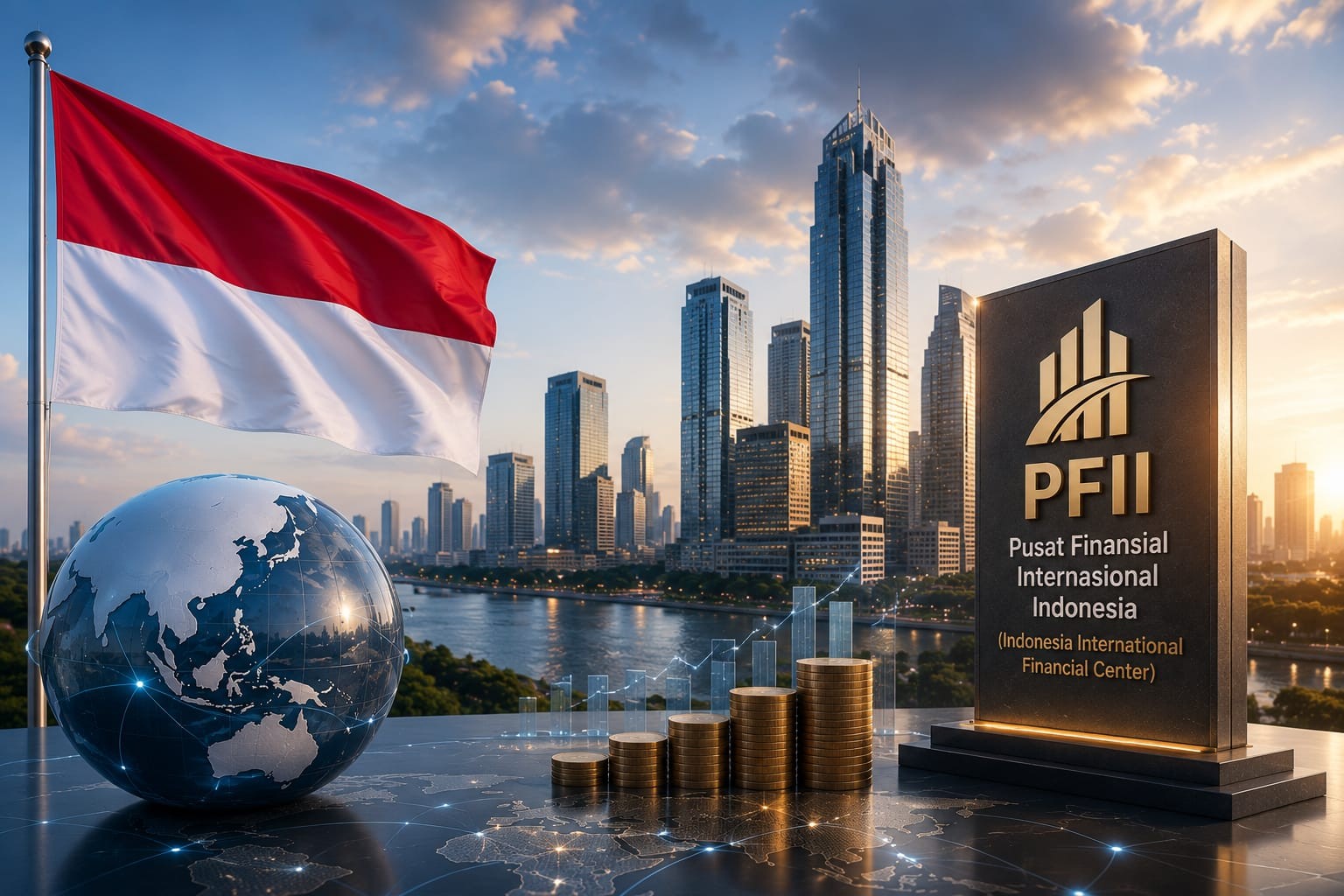
The Indonesian government and the House of Representatives (DPR) are accelerating discussions on the Indonesia International Financial Center (PFII) Bill, with the legislation targeted for completion on July 20, 2026, before being approved during a DPR plenary session on July 21.
Finance Minister Purbaya Yudhi Sadewa said the accelerated process is intended to provide Indonesia with a legal foundation to build an international financial center that can compete with leading financial hubs around the world.
PFII is a special zone designed to become a center for international financial services. Its establishment is mandated under Article 248A of Law No. 4 of 2026, which amended Law No. 4 of 2023 on Financial Sector Development and Strengthening (P2SK).
The government said PFII is part of its effort to build a stronger, more inclusive, sustainable, and globally competitive national economy in line with the Asta Cita program.
PFII Designed to Strengthen Indonesia’s Financial Sector
Through PFII, the government aims to create a modern financial ecosystem capable of attracting global financial institutions, investment managers, financial service companies, and foreign investors to conduct business activities from Indonesia.
According to Purbaya, the financial center is expected to support the development of Indonesia's financial sector, encourage financial services innovation, increase investment, expand financing for priority sectors and national strategic projects, and promote sustainable finance.
The government considers Indonesia to have strong potential to become an international financial center because of its large domestic market, strategic geographical location, abundant natural resources, and relatively strong long-term economic growth prospects.
However, the government noted that Indonesia has not yet established a dedicated international financial zone supported by governance, institutions, legal certainty, and competitiveness comparable to global financial centers.
Purbaya also explained that capital entering PFII would first flow into the financial center before being invested in various financial instruments based on market decisions. Investors may choose to invest in domestic projects, projects managed by Danantara, or government bonds.
Government Targets Up to Rp500 Trillion in Investment
To improve PFII's competitiveness, the government plans to introduce incentives covering taxation, licensing, immigration, residency, and employment.
Purbaya said the incentive package is being developed by studying international financial centers, including Dubai, Abu Dhabi, and other comparable financial hubs.
Director General of Financial Sector Stability and Development at the Ministry of Finance Herman Saheruddin estimated that PFII could attract between Rp300 trillion and Rp500 trillion in investment under a moderate scenario.
He said the estimate depends on PFII's ability to compete with financial centers such as Singapore and Dubai.
According to Herman, the investment may include foreign financial institutions opening bank branches or establishing companies within PFII.
Indonesia Studies Global Financial Centers While Addressing Potential Risks
Indonesia is using several international financial centers as references while designing PFII.
One benchmark is the Dubai International Financial Centre (DIFC), which provides international-standard legal, business, and physical infrastructure. The center offers benefits including full foreign ownership, full profit repatriation, zero percent tax on income and profits, and independent supervision through the Dubai Financial Services Authority.
Another reference is the Astana International Financial Centre (AIFC), which has more than 2,800 registered entities from around 80 countries. Its ecosystem includes an independent financial regulator, an international court, an arbitration center, and a stock exchange.
Indonesia is also studying the Vietnam International Financial Center (VIFC), which began operating in early 2026. The center was established to simplify direct investment into Vietnam through integrated financial hubs in Ho Chi Minh City and Da Nang.
Professor Telisa Aulia Falianty from the Faculty of Economics and Business at the University of Indonesia said PFII could help prevent domestic liquidity leakage and attract global capital flows.
She added that international financial centers can improve a country's attractiveness for foreign investment, create employment opportunities, and raise living standards.
At the same time, Telisa warned that adopting a separate legal, tax, and governance framework could create risks if not supported by strong regulations.
According to her, potential risks include capital round-tripping, where domestic funds are transferred abroad before returning as foreign direct investment to obtain tax incentives.
She also warned that excessive tax incentives could create perceptions of unfairness among taxpayers and reduce voluntary tax compliance.
Without clear regulations and strict economic substance requirements, PFII could also face the risk of becoming a tax haven or a location where funds are parked without real economic activity.
Government Plans Strong Governance and International Standards
The government has proposed establishing dedicated institutions responsible for managing, supervising, and resolving disputes within PFII.
These institutions will operate based on the principles of professionalism, independence, transparency, and accountability while maintaining close coordination with the government.
The bill also proposes creating a specialized PFII Court with authority to examine, hear, and decide disputes related to business activities within the financial center as well as international commercial disputes connected to PFII.
The government expects the specialized court to provide faster, more professional, and more credible dispute resolution while strengthening legal certainty for international businesses.
The draft law also allows the application of international commercial legal practices as long as they do not reduce Indonesia's legal sovereignty. According to the government, these provisions have been coordinated with the Supreme Court.
To prevent capital round-tripping, Herman said businesses operating within PFII must comply with international regulatory standards and undergo strict screening procedures similar to those implemented by other international financial centers.
He added that the government is preparing regulations regarding company ownership, including companies owned by Indonesian citizens.
Herman also confirmed that Indonesia will continue to comply with the Global Minimum Tax framework while discussions with the DPR continue regarding the details of investment incentives.
The draft bill states that the initial capital of the PFII management institution may come from Indonesia's sovereign wealth fund, Danantara, and/or other legal funding sources. The initial capital may consist of cash, state-owned assets, assets belonging to state-owned enterprises, or other lawful assets.
Bali Remains Under Consideration as PFII Location
Although discussions on the PFII Bill are progressing quickly, the government has not finalized the location of the international financial center.
Purbaya said Bali is one of the locations being considered because the government wants to select the place that is most attractive for international investors.
He also said other locations remain under consideration, while Indonesia's new capital, Nusantara, is unlikely to become the site because of limited space.
This article is a summary of several original articles. The full versions can be read at the following links:
PHOTO: ANTARA
This article was created with AI assistance.
We make every effort to ensure the accuracy of our content, some information may be incorrect or outdated. Please let us know of any corrections at [email protected].
Read More