





 Monday, 12-10-26








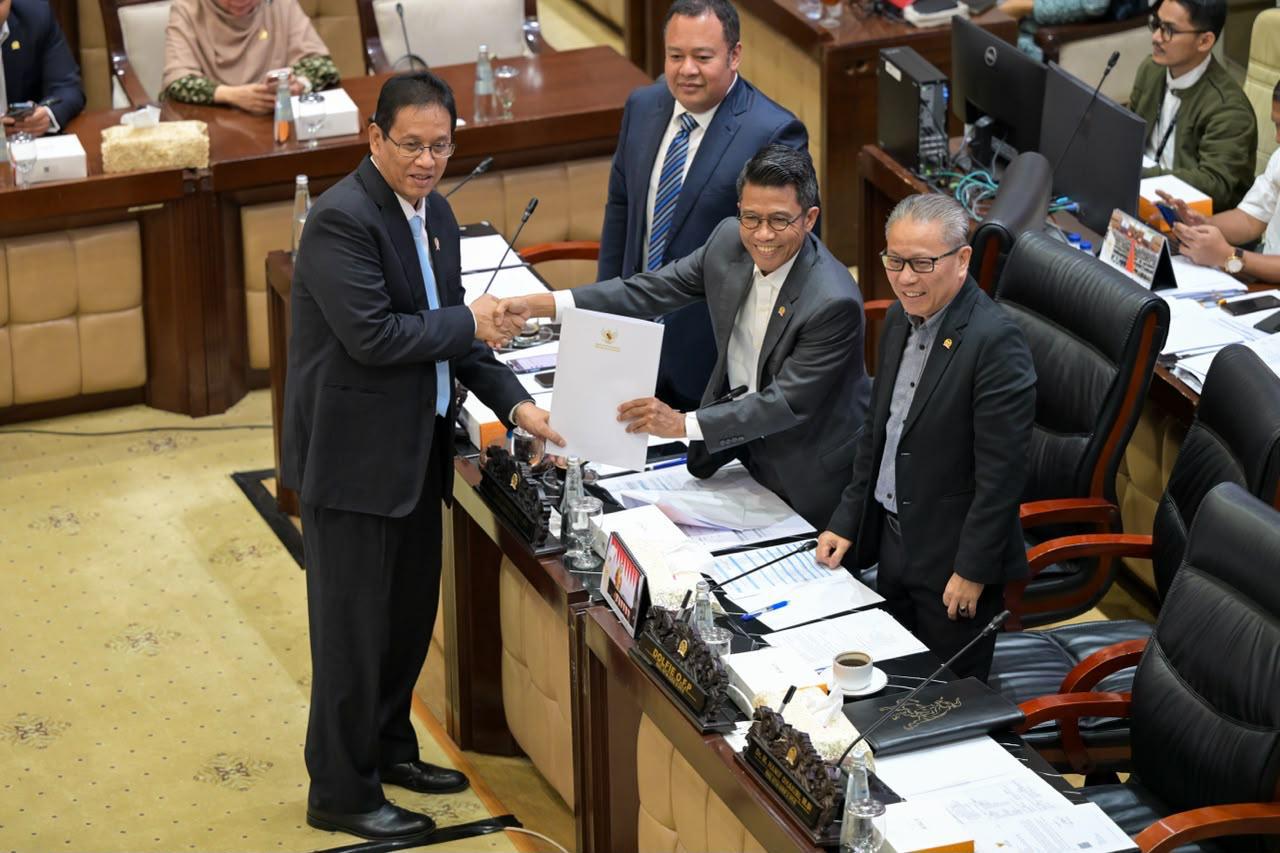
Indonesia's International Financial Center debate has moved from an abstract policy idea into a concrete legislative discussion. Reuters reported that parliament has begun deliberating a bill to create international financial centres with special courts for business disputes, while Finance Minister Purbaya Yudhi Sadewa said the plan is meant to draw foreign capital and deepen local financial markets without giving up legal sovereignty. The Ministry of Finance has also said the PFII bill is designed to create a more competitive ecosystem through business facilitation, including immigration and other supporting measures.
The idea is ambitious, and that is exactly why it is controversial. An International Financial Center can strengthen a country’s role in global capital flows, but it can also create concerns about legal fragmentation, supervision, and reputational risk if the rules are not tight enough. Indonesia is now trying to balance those two realities in one policy package.
Why Indonesia Wants An International Financial Center
The basic economic logic is easy to understand. Countries build financial centers because capital likes clarity, speed, and trust. Reuters said Indonesia’s proposed bill is intended to attract foreign capital and deepen financial markets, while still preserving sovereignty. That combination matters because Jakarta is not trying to create a free floating offshore zone. It is trying to create an International Financial Center that is embedded in the state, but more flexible than the standard domestic system.
That is also why the court issue is central. Reuters reported that the proposed framework would allow an IFC to adopt or adapt international commercial law principles within limits, and it would establish an IFC court with authority over disputes related to business activities in the center. In practice, that means investors could expect a more specialized dispute resolution channel than the general court system. For large financial institutions, that predictability can be as valuable as tax incentives.
Indonesia has reason to be interested in this model. The country has long wanted to move up the value chain from a large domestic market into a more influential regional financial player. A credible International Financial Center could help attract fund managers, family offices, fintech firms, wealth platforms, and cross border service providers that need a stable legal and operational base. That is the upside government officials are clearly aiming for.
The Opportunities For Capital, Markets, And Jobs
The first opportunity is capital attraction. Reuters said the government wants the bill to draw in foreign capital. That is not just about headline investment numbers. It is about creating a platform where financial activity can cluster, professional services can follow, and deal making can become easier for domestic and foreign firms alike. If that works, the International Financial Center could improve Indonesia’s standing in regional finance rather than leaving the country primarily as a destination for consumer finance and commodity linked capital.
The second opportunity is market depth. A successful International Financial Center can encourage more sophisticated financial instruments, better intermediated capital, and more specialized service providers. The Ministry of Finance has said the PFII framework is intended to create a competitive ecosystem, and Reuters reported that the draft bill builds on earlier legislation that already opened the door to IFC creation. That suggests the government is trying to build a layered regime rather than launch a one off policy experiment.
The third opportunity is employment. Financial centers are not just for bankers. They generate demand for lawyers, accountants, compliance officers, IT vendors, data specialists, real estate operators, and corporate service providers. If the center becomes credible, it can create a dense support economy around it. That is one reason countries with strong financial hubs often punch above their size in services and high value employment. The Indonesian debate is trying to capture that spillover.
The fourth opportunity is regional positioning. Reuters noted that Indonesia has previously explored ideas such as special wealth management laws and Bali based family office proposals. That indicates a broader policy intent to compete for mobile capital and specialized wealth services that currently gravitate toward established hubs in the region. An International Financial Center, if designed well, could give Indonesia a stronger chance of retaining more financial activity at home.
The Risks That Cannot Be Ignored
Every International Financial Center brings risk, and Indonesia is right to treat this seriously. The biggest risk is legal fragmentation. If an IFC court or special legal framework is too detached from the rest of the judicial system, it can create confusion over jurisdiction, enforcement, and accountability. Reuters specifically noted that the government wants to maintain legal sovereignty, which is a reminder that the political cost of appearing to create a state within a state is real.
The second risk is supervision. A financial center is only as strong as its oversight architecture. The Bank for International Settlements has warned that without trust, there can be no lasting successful financial centre, and that credible supervision is a prerequisite for soundness and robustness. The BIS also notes that financial conglomerates and cross border complexity make consolidated supervision harder, not easier. That is exactly the kind of problem Indonesia will need to address if the PFII is to function safely.
The third risk is illicit finance. The IMF says effective AML and CFT policies are key to the integrity and stability of the international financial system, because money laundering and terrorism financing can threaten financial sector integrity and external stability. That warning matters a lot for any International Financial Center, because international openness can be a strength and a vulnerability at the same time. If beneficial ownership, customer due diligence, and suspicious transaction monitoring are weak, reputational damage can spread fast.
The fourth risk is reputational. The BIS speech on financial centres says that with market globalisation and free flow of capital, there is a real risk a financial centre could become involved in illegal transactions against its will, and that reputational risk is a major challenge. For Indonesia, this is not a minor detail. A new International Financial Center would need to signal immediately that it is built for lawful, transparent, high quality finance, not for opacity.
Lessons From Established Financial Centers
Indonesia does not need to copy another country exactly, but it does need to learn from what already works. The BIS says successful financial centres rely on fundamental strengths and skills, not on one single factor. That means a clear legal regime, efficient supervision, strong infrastructure, capable professionals, and public trust all need to work together. A tax incentive alone will not be enough.
The same BIS speech also notes that financial centres must adapt to globalization, consolidation, and the growing complexity of financial conglomerates. In practical terms, that means Indonesia should expect the PFII to attract not just simple deposit taking or payment activity, but more complex cross border structures, asset management flows, and specialized service firms. The regulatory perimeter will need to be broad enough to capture that reality.
The Singapore example is also instructive. The BIS quoted former Monetary Authority of Singapore leadership describing the city state’s financial centre as one built on resilience, dynamism, and trust, with strict know your customer rules and rigorous supervision. That matters because it shows what investors usually reward in the long run. They do not simply chase tax advantages. They look for a place where rules are credible and enforcement is consistent. An Indonesian International Financial Center will need the same discipline if it wants durable success.
What A Credible PFII Would Need To Succeed
A credible PFII would need three things first. The first is legal clarity. Investors must understand which rules apply, how disputes are resolved, and how judgments are enforced. The second is supervisory depth. Regulators need the capacity to monitor complex products, cross border transactions, and ownership structures. The third is policy consistency. If the rules change too often, confidence will disappear before the center has a chance to mature. These are basic requirements, but they are often the hardest to maintain.
It would also need to avoid the temptation to oversell itself. A financial center becomes credible over time, not overnight. That means the government should prioritize measurable outcomes such as dispute resolution speed, compliance quality, licensing transparency, and the volume of real business activity, not just promotional language. Indonesia has a chance to build something useful here, but the policy has to be engineered for longevity rather than headlines.
The opportunity is real. So are the risks. If Indonesia gets the structure right, an International Financial Center could help pull in capital, improve market depth, and create better quality financial jobs. If it gets the structure wrong, it could create a legal and reputational problem that is difficult to unwind. That is why the current PFII debate is so important: it is not just about financial architecture, but about what kind of financial state Indonesia wants to become.
Read More