





 Monday, 06-07-26








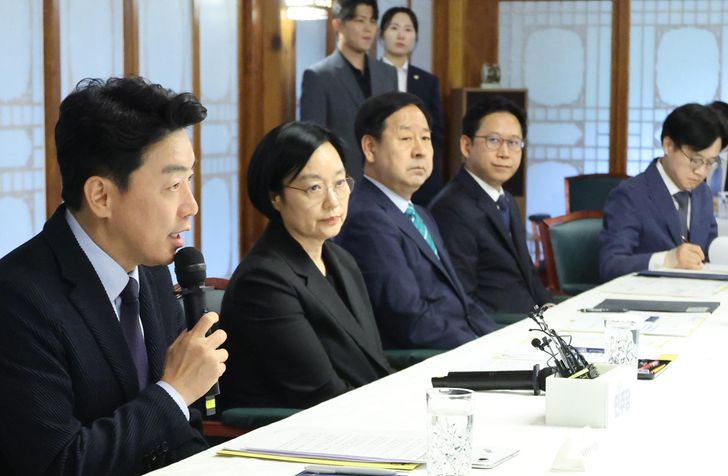
South Korea is trying to do something unusual with a booming industry: turn a temporary chip windfall into a long-term national growth engine. The proposed Future Response Fund is designed to capture extra tax revenue from the semiconductor surge and redirect it toward investment, youth support, and broader economic resilience. In Reuters' reporting, the fund is tied directly to President Lee Jae Myung's wider industrial agenda, including semiconductors, physical AI, and data centers. That makes the Future Response Fund more than a budget idea. It is becoming a central policy tool for the next phase of Korea's economic strategy.
A Chip Boom Has Created A Rare Fiscal Opening
The timing matters. South Korea's semiconductor sector is benefiting from a global AI investment cycle that has pushed chip demand and prices sharply higher. Reuters reported that Samsung Electronics is likely to post an operating profit jump of about 18-fold in the second quarter of 2026, while memory prices and AI-driven demand remain strong. Reuters also reported that South Korean exports rose 53.2% year on year in May, the fastest pace in more than four decades, with chip sales reaching a record high. In simple terms, chips are not just driving corporate profits. They are also lifting national economic momentum.
That is exactly why the Future Response Fund is politically attractive. When tax revenue rises because one sector is unusually strong, governments often face a choice between spending the windfall quickly or saving it for a strategic purpose. Seoul appears to be choosing the second path. Presidential Chief of Staff Kang Hoon-sik said the state should not squander the additional tax revenue generated by the semiconductor boom. Instead, it should channel that money into long-term competitiveness, especially at a moment when South Korea wants to strengthen growth drivers beyond the traditional Seoul-centered model.
For businesses and investors, the significance is clear. A Future Response Fund is not only a fiscal buffer. It is also a signal that the Korean government wants to convert chip-cycle gains into structural capability. That means more support for industrial clusters, more policy attention to AI infrastructure, and more emphasis on the younger generation that will have to live with the results. In other words, the Future Response Fund is an attempt to turn cyclical luck into durable capacity.
Why The Future Response Fund Goes Beyond Semiconductors
The fund is broader than its name suggests. Reuters reported that the government wants it to support three major mega projects, respond to economic polarization, and provide housing, startup, and employment support for people in their 20s and 30s. That matters because South Korea's problem is not simply industrial weakness. It is also social division, regional imbalance, and pressure on younger workers who often feel locked out of stable prosperity. The Future Response Fund is being positioned as a policy bridge between industrial success and social legitimacy.
That framing helps explain why the fund has drawn so much attention. South Korea has one of the world's most admired manufacturing ecosystems, yet the country also faces persistent distribution problems. Reuters described the government's response as a way to address "K-shaped" economic polarization, a shorthand for a society in which some groups and sectors race ahead while others fall behind. The Future Response Fund is being pitched as part economic strategy, part social correction. That combination makes it unusually important in a year when AI is reshaping the value of memory chips, cloud infrastructure, and advanced manufacturing.
The fund also reflects a broader policy lesson that many countries are now relearning: industrial winners can create public leverage. When a sector generates exceptional profits, it can help finance the next wave of capability building. South Korea's leaders appear to be betting that the semiconductor boom should not only enrich conglomerates and shareholders. It should also help pay for national resilience, from innovation pipelines to employment support. That is the real logic behind the Future Response Fund.
The Mega Projects Behind The Policy
The Future Response Fund is being built alongside a much larger industrial map. Reuters reported that South Korea recently unveiled three mega projects focused on semiconductors, physical AI, and AI data centres. Samsung Electronics said it plans to invest 400 trillion won in new semiconductor fabs in Gwangju and 56 trillion won in advanced high-bandwidth memory fabs. SK Group outlined large long-term semiconductor and AI data centre plans as well. Those commitments suggest that the fund is not a standalone political headline. It is part of a capital-intensive national restructuring effort.
The scale is striking. Reuters said the government aims to build 8.4 gigawatts of AI data centres in an initial phase, with spending expected to rise to more than 1,000 trillion won by around 2035. The state also wants South Korea to become one of the world's top three AI robot powers and the world's leading power in physical AI by 2030. These targets show that the Future Response Fund sits inside a much wider ambition: to lock Korea into the most valuable layers of the AI economy rather than remain only a supplier of components.
This is where the policy becomes especially interesting for markets. Semiconductor cycles can cool. AI spending can slow. Corporate capex can shift abroad. The government is trying to hedge all three risks by combining fiscal policy, industrial policy, and regional development. In that sense, the Future Response Fund is not just about spending money. It is about anchoring investment at home while deepening the domestic ecosystem around chips, AI, and advanced computing.
What Investors, Startups, And Younger Workers Should Watch
For investors, the first thing to watch is execution. Big announcements are easy. Building a resilient industrial ecosystem is harder. Reuters noted that the government wants legislative and budget support so the projects can move quickly, which means the fund still depends on political coordination. If the ruling party and ministries stay aligned, the Future Response Fund could become a useful mechanism for channeling chip windfalls into productive capacity. If coordination stalls, the plan could become another ambitious but incomplete industrial promise.
For startups, the opportunity is indirect but meaningful. A fund that supports housing, startup finance, and youth employment can improve the environment for early-stage companies, especially in sectors connected to AI services, robotics, logistics software, and chip-adjacent applications. If the Future Response Fund encourages more domestic risk-taking, it could help widen the innovation base beyond the largest conglomerates. That would matter in a country where capital and talent often concentrate around a few dominant groups.
For younger workers, the fund carries a different kind of promise. It is being marketed as a tool to support people in their 20s and 30s through better housing, job access, and startup opportunities. That approach recognizes a basic political reality. A semiconductor boom does not automatically translate into broad social confidence. People need to feel that national growth is visible in their daily lives. If the Future Response Fund can make that connection clearer, it may become one of the most important policy moves in Korea's current economic cycle.
A Strategic Bet On Turning Cycles Into Institutions
South Korea has spent decades proving that industrial policy can work when it is focused, disciplined, and aligned with export competitiveness. The new challenge is different. The country now wants to prove that it can take a boom, especially one powered by AI demand, and transform it into a more balanced economic structure. That is why the Future Response Fund matters. It is a bet that chip-cycle revenue can be turned into institutions, not just profits.
Whether that bet succeeds will depend on more than chip prices. It will depend on policy execution, corporate follow-through, and public trust. But the logic is compelling. When an economy finds itself at the center of a global technology wave, the smartest move is not to celebrate the boom and move on. It is to build a system that can survive the next downturn and still create opportunity. That is the ambition behind the Future Response Fund, and it is why the proposal is drawing attention well beyond Seoul.
Read More