





 Thursday, 24-09-26








Indonesia is moving toward a major healthcare and industrial milestone with its first plasma fractionation plant in Karawang. Official updates from the Ministry of Health, INA, and SK Plasma show the project has progressed from policy ambition into commercial readiness, with late 2026 and 2027 repeatedly cited as the critical operating targets. The facility is designed to convert donated plasma into life saving medicines such as albumin and immunoglobulin, products that Indonesia has largely depended on imports to secure.
Why The Plasma Fractionation Plant Matters For Indonesia
The significance of this plasma fractionation plant goes far beyond one factory. For years, Indonesia has relied almost entirely on imported plasma derived medicinal products, even though the country already collects large volumes of blood through national donation systems. A Ministry of Health release from 2023 said Indonesia's demand for plasma fractionation was in the millions of liters per year, while the value of imported plasma products was estimated at Rp1.15 trillion annually. The same release also noted that plasma from local donations was often wasted because there was no domestic processing facility. In practical terms, this project addresses both a medical shortage and a structural inefficiency in the health system.
That is why the plasma fractionation plant is being framed as a health security asset rather than a simple industrial project. INA has said that only around 20 countries in the world have plasma fractionation facilities, which shows how specialized and strategic this segment is. In the same update, INA explained that the plant in Karawang is intended not only to strengthen healthcare resilience, but also to build local human capital, transfer technology, and create jobs in the biomedical field. For Indonesia, that combination is unusually valuable because it links medicine supply, industrial upgrading, and long term capability building in one project.
The strategic logic is easy to understand. Plasma derived medicines are not luxury products. They are essential therapies used in emergency care, surgery, immune disorders, bleeding conditions, and many other clinical settings. When those products are imported, the supply chain becomes vulnerable to global price swings, logistics problems, and foreign demand shocks. A domestic plasma fractionation plant gives Indonesia more control over supply, pricing, and production scheduling. That is one reason the government has treated this project as part of its broader agenda for pharmaceutical downstreaming and national self reliance.
Inside The Plasma Fractionation Plant Timeline And Capacity
The project itself has moved through several concrete milestones. In November 2024, the Health Ministry announced that INA and SK Plasma had signed an investment agreement to build Indonesia's first plasma fractionation facility in Karawang, West Java. That announcement said the site would have a processing capacity of 600,000 liters of plasma per year, and it described the plant as the largest of its kind in Southeast Asia. The same release said the facility was expected to begin operating at the end of 2026, with a phased rollout that would first involve toll manufacturing and then local production.
By late 2025, the project was already far along. INA reported that construction progress had exceeded 98 percent, while also saying the facility was planned to become fully commercially operational by the end of 2026 and to begin producing plasma derived medicinal products in 2027. SK Plasma's own announcement confirmed that the facility in Karawang would produce albumin, immunoglobulin, and other plasma based medicines. Those details are important because they show this is not a vague development concept. It is a real manufacturing asset with defined output, named products, and a near term timetable.
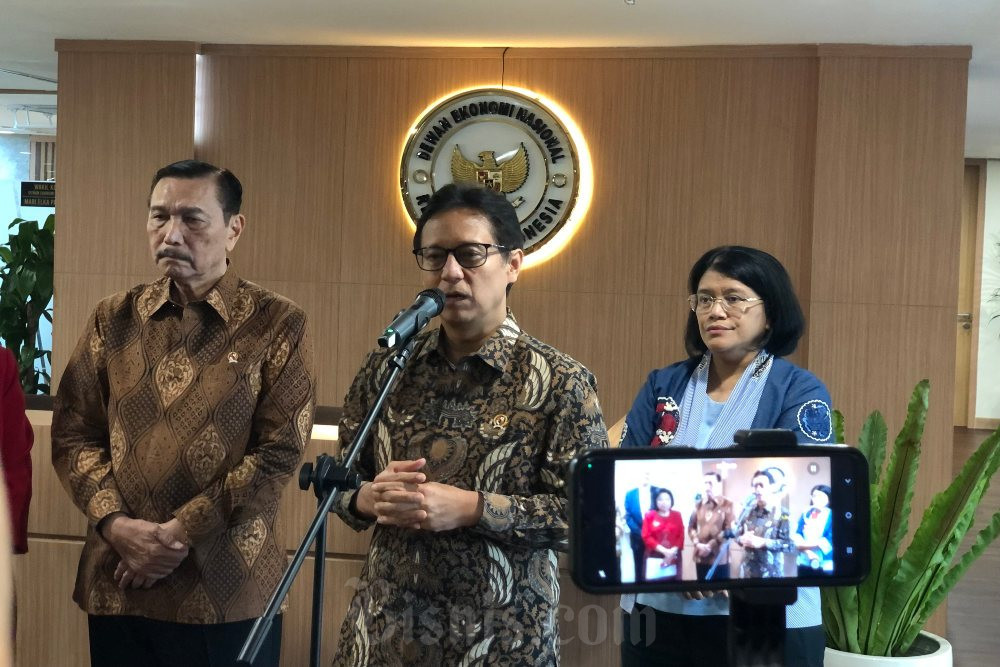
The latest official statements in June 2026 suggest the government is now focused on commercial activation, not construction. During a visit to SK Plasma Core Indonesia on 3 June 2026, Health Minister Budi Gunadi Sadikin said the ministry would facilitate the commercialization of the country's first plasma fractionation factory through strategic partnerships. He also said the government wanted to integrate institutions such as Danantara and state owned pharmaceutical players like Bio Farma to make sure the project produces tangible results. That is an important signal. It means the plasma fractionation plant is now being treated as a national ecosystem project, not just a private investment.
There is also a deeper economic logic behind the timeline. The Ministry of Health said in 2026 that the government is preparing a healthcare roadmap that covers the next 5, 15, and 30 years, spanning pharmaceuticals, hospitals, and medical devices. Within that framework, the plasma fractionation plant is a near term win with long term consequences. If commercial operations begin as expected, Indonesia can start reducing import dependence sooner, while simultaneously building technical skills, regulatory experience, and local supply chain capacity. In other words, the value is not only in the medicines produced, but in the industrial learning that comes with producing them domestically.
What The Plasma Fractionation Plant Could Mean In 2027
If the plasma fractionation plant reaches full operation in 2027, the most immediate impact will likely be on import substitution. Indonesia has been highly dependent on foreign plasma derived products, and that has made the country exposed to external supply conditions. Domestic output could improve availability, reduce delays, and eventually ease price pressure for hospitals and patients. The Ministry of Health's 2023 remarks already highlighted that blood plasma collection in Indonesia was being underutilized, with around 200,000 liters of local plasma described as previously discarded because there was no processing facility. Turning that wasted input into domestic medicines is one of the clearest economic and health gains in the story.
The project may also reshape how Indonesia thinks about health industrial policy. For a long time, the country has been a large consumer market for imported medicines, medical devices, and specialty therapies. A successful plasma fractionation plant would show that Indonesia can move into a more advanced role, where it does not only consume healthcare products but also manufactures them at scale. That shift matters for investor confidence, for industrial policy credibility, and for the broader downstreaming agenda that the government has been promoting across strategic sectors.
There is also a public health dimension that should not be overlooked. Plasma derived medicinal products are often needed in urgent, high stakes situations. In that context, supply continuity matters as much as price. A domestically based plasma fractionation plant can make procurement more predictable for hospitals and the national health system, especially if the collection network and the processing facility are linked efficiently. The Ministry of Health has already emphasized the need to strengthen upstream supply through national plasma centers, which suggests the plant will work best if collection, regulation, and manufacturing are managed as one integrated chain.
The final point is perhaps the most important. The plasma fractionation plant is not simply about one factory in Karawang. It is about whether Indonesia can convert an old weakness, dependence on imported plasma products, into a strategic strength. The project already has the ingredients that usually separate symbolic announcements from meaningful industrial change: a clear site, defined capacity, a named private and sovereign partnership, a near complete construction stage, and a visible government commitment to commercialization. If execution stays on track, 2027 could become the year Indonesia begins to produce a category of medicines that has long been out of reach domestically.
Read More