





 Tuesday, 22-09-26








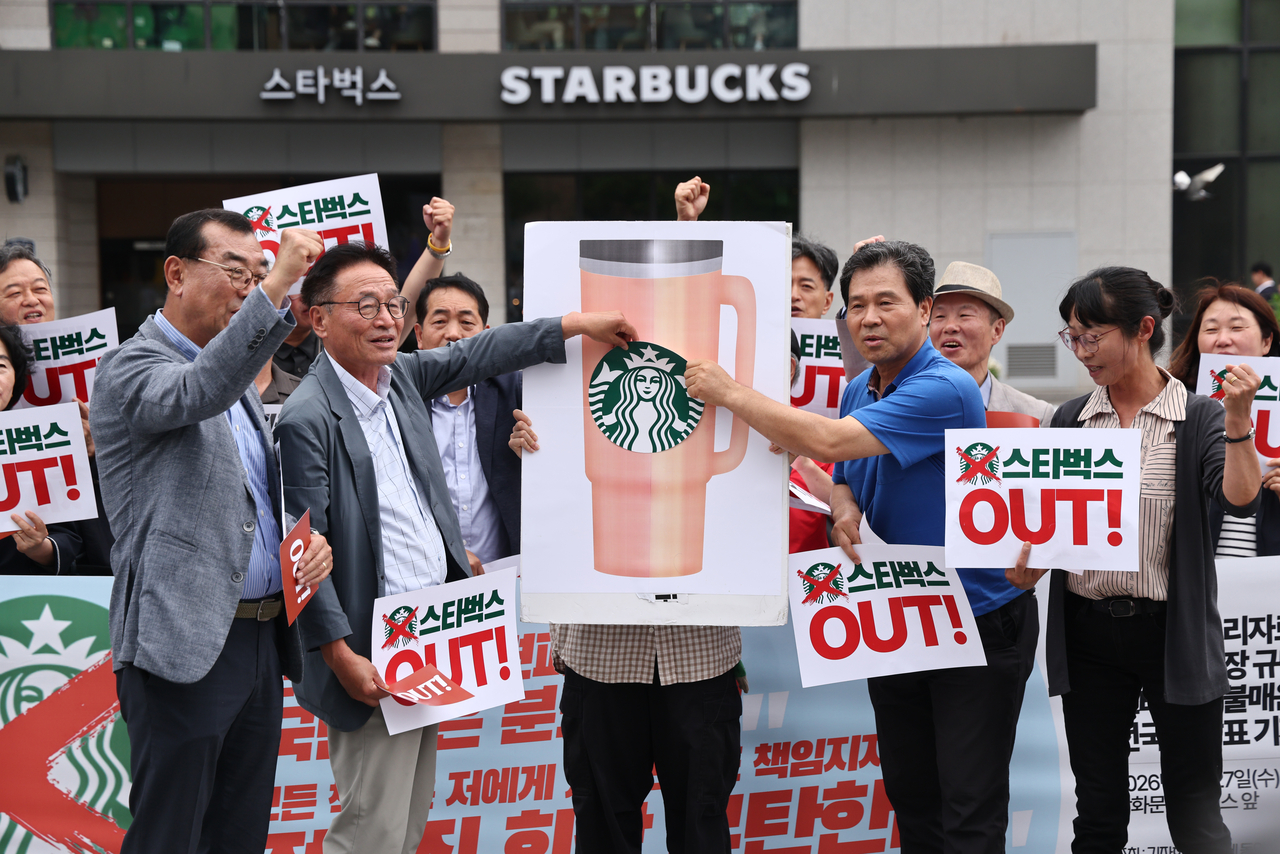
The controversy began when Starbucks Korea promoted its large-sized “Tank Series” tumblers and labeled May 18 as “Tank Day.” The campaign immediately triggered public outrage after it was linked to the anniversary of the 1980 Gwangju Uprising.
Consumers criticized the messaging as insensitive, with backlash spreading rapidly across social media and public discourse.
A passerby in Seoul told The Korea Times, “I think this was extremely careless. I have no idea what they were thinking with the event and the wording.”
Gwangju Uprising Sensitivity and Historical Context
The backlash intensified due to the historical significance of May 18 in South Korea. The date marks the Gwangju Uprising in 1980, when citizens protested military rule and faced a violent crackdown involving troops, tanks, and helicopters.
The event left hundreds dead or missing and has since become a defining symbol of South Korea’s pro-democracy movement.
A 29-year-old consumer said the campaign reflected a lack of awareness, noting that even sensitive cultural references are widely understood in modern Korean society.
Sales Drop, Apology, and Leadership Changes at Shinsegae
The controversy quickly escalated beyond public criticism into financial and corporate consequences. Market data cited weekly payment volume losses of more than 8 billion won following the backlash.
Shinsegae Group, which owns Starbucks Korea, issued a public apology and removed the company’s chief executive. Chairman Chung Yong-jin also delivered a televised apology, acknowledging public anger and promising stronger respect for historical sensitivities.
The company described the campaign as an “inappropriate marketing” decision amid growing scrutiny.
Boycott Movement Expands Across Consumers, Workers, and Politics
The backlash expanded into organized boycott actions across multiple sectors. Delivery workers’ unions announced they would refuse Starbucks orders, calling the campaign disrespectful to the Gwangju legacy.
Political figures also joined the criticism. Some officials urged staff and campaign workers to avoid Starbucks products, while others called for stronger legal penalties for mocking pro-democracy movements.
A Democratic Party leader stated that avoiding Starbucks would better reflect public sentiment during the ongoing political climate.
Cultural Missteps Highlight Risks of Global Brand Localization
Brand experts highlighted the incident as a case study in a failed localization strategy. They argued that global companies often focus on surface-level adaptation while missing deeper cultural and historical sensitivities.
One expert noted that the issue was not only the campaign itself, but the failure to recognize the emotional weight attached to the date and its symbolism.
Starbucks has operated in South Korea since 1999 and remains one of its largest international markets, but the incident underscores that long-term presence does not guarantee cultural immunity.
PHOTO: YONHAP
This article is a summary of two original articles. The full versions can be read at the following links:
This article was created with AI assistance.
We make every effort to ensure the accuracy of our content, some information may be incorrect or outdated. Please let us know of any corrections at [email protected].
Read More