





 Monday, 12-10-26








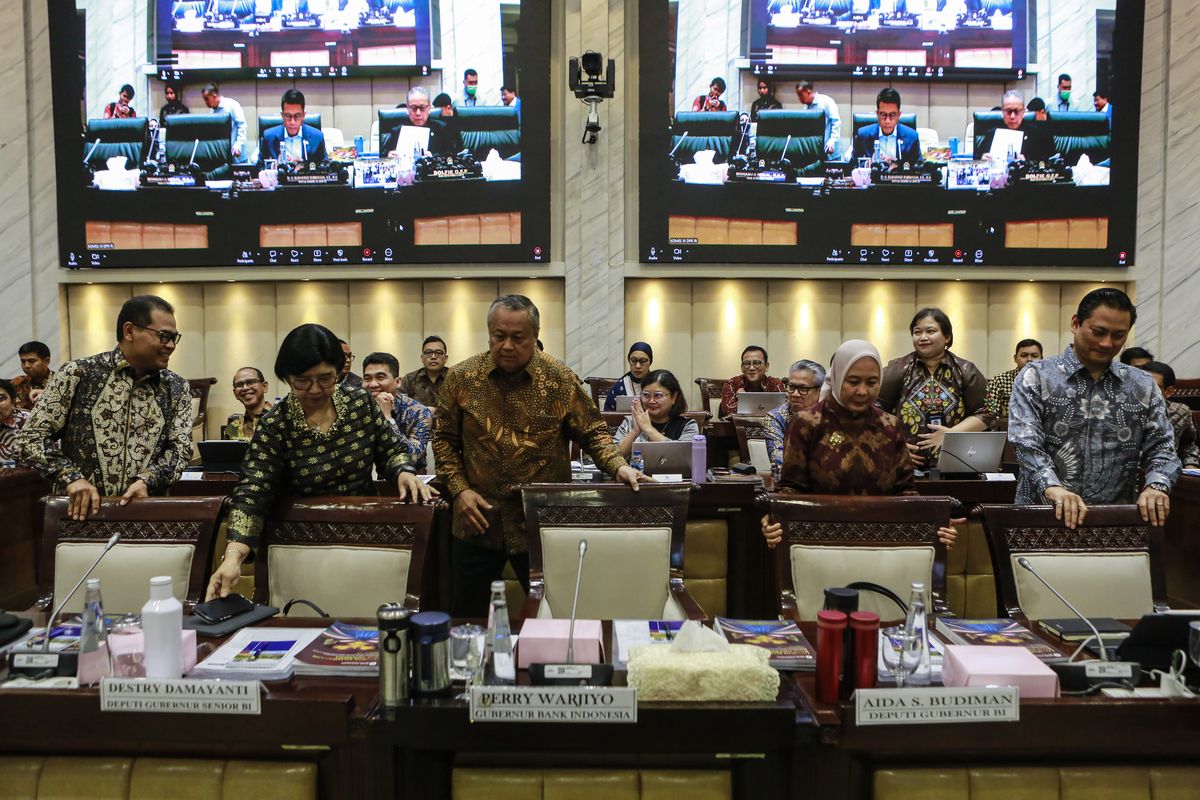
Bank Indonesia has introduced five major policy steps aimed at strengthening Indonesia economic growth amid mounting global uncertainty and rising domestic economic pressure. The central bank’s strategy reflects an increasingly delicate balancing act between maintaining macroeconomic stability and ensuring that economic momentum remains strong enough to support investment, employment, and household consumption.
The announcement comes at a critical moment for Indonesia’s economy. Global financial markets remain volatile, geopolitical tensions continue to affect trade flows and commodity prices, and major economies are still navigating high interest rate environments. At the same time, Indonesia recently raised the BI benchmark interest rate to defend the rupiah and stabilize inflation expectations. While tighter monetary policy may help preserve financial stability, it also creates pressure on borrowing costs and business activity. As a result, Bank Indonesia is now emphasizing complementary measures designed to sustain Indonesia economic growth despite tighter financial conditions.
According to the report, the central bank’s strategy includes liquidity support, macroprudential incentives, digital finance expansion, payment system acceleration, and stronger coordination with government institutions. Together, these policies are intended to stimulate economic activity while preserving investor confidence and financial system resilience. The broader objective is clear: Indonesia wants to maintain growth momentum without sacrificing macroeconomic discipline.
This latest policy package also reflects how central banks are evolving beyond traditional inflation control roles. Modern monetary authorities are increasingly expected to support economic competitiveness, digital transformation, and financial inclusion while simultaneously protecting currency stability. Bank Indonesia’s five-step strategy demonstrates that wider policy role very clearly.
Why Bank Indonesia Is Prioritizing Growth Support
The urgency surrounding Indonesia economic growth stems from both external and domestic challenges. Internationally, global uncertainty continues to weigh on emerging market economies. Higher interest rates in developed countries have strengthened the US dollar and increased capital flow volatility across global financial markets. Emerging economies like Indonesia remain vulnerable to sudden changes in investor sentiment, particularly during periods of geopolitical tension and financial instability.
Domestically, Indonesia faces the challenge of sustaining consumption and investment while navigating tighter monetary conditions. The recent BI rate increase was designed to stabilize the rupiah and manage inflation risks, but higher interest rates can also reduce credit expansion and weaken business confidence if not balanced carefully.
Bank Indonesia therefore appears to be pursuing a dual-track strategy. On one side, it maintains monetary discipline to preserve financial stability. On the other side, it introduces targeted measures intended to keep economic activity moving. This balancing approach is becoming increasingly common among central banks globally, especially in emerging economies facing external volatility.
The focus on Indonesia economic growth also reflects the government’s broader development agenda. Indonesia is attempting to accelerate industrialization, attract foreign investment, expand downstream industries, and strengthen digital economic capabilities. Sustained economic growth is essential for achieving those long-term ambitions.
At the same time, policymakers understand that growth quality matters just as much as growth speed. Economic expansion driven purely by excessive liquidity or speculative activity can create vulnerabilities later. Bank Indonesia’s strategy therefore emphasizes productive sectors, financial resilience, and structural support rather than uncontrolled stimulus.
The five policy measures introduced by the central bank are designed to create a supportive environment where businesses, consumers, and financial institutions can continue operating confidently despite global uncertainty.
Liquidity Support And Credit Expansion Measures
One of the key pillars in Bank Indonesia’s strategy for Indonesia economic growth is liquidity support. Adequate liquidity is critical for maintaining healthy financial system activity, especially during periods when interest rates are rising.
Liquidity support helps banks continue extending credit to businesses and households even when broader monetary conditions tighten. Without sufficient liquidity, banks may become more cautious in lending, potentially slowing investment, business expansion, and consumer spending. Bank Indonesia appears determined to prevent such a scenario by ensuring the financial system remains adequately supplied with funding.
The central bank is also emphasizing macroprudential incentives to encourage credit growth in priority sectors. These incentives are designed to stimulate financing for industries that contribute significantly to economic activity, employment generation, and long-term development objectives.
Credit expansion remains one of the most important drivers of Indonesia economic growth. Businesses rely on financing to expand operations, invest in equipment, hire workers, and develop new projects. Households similarly depend on access to credit for housing, consumption, and entrepreneurship. Maintaining healthy credit flows therefore becomes essential for sustaining economic momentum.
Bank Indonesia’s strategy suggests the institution is attempting to direct liquidity toward productive sectors rather than speculative activities. This distinction matters because productive lending supports real economic output, while speculative excess can create financial instability.
The focus on liquidity also reflects lessons learned from previous economic disruptions. During periods of financial stress, limited liquidity can quickly amplify economic slowdowns. By proactively maintaining supportive financial conditions, Bank Indonesia hopes to strengthen resilience against external shocks.
At the same time, policymakers must remain cautious about inflationary risks. Excessive liquidity without proper controls could eventually create price pressures or financial imbalances. This is why the central bank’s approach combines supportive measures with ongoing monetary discipline.
Digital Finance And Payment System Acceleration
Another major component of the strategy involves accelerating digital finance and payment system development. Bank Indonesia increasingly views digital transformation as a key driver of Indonesia economic growth, particularly in improving efficiency, financial inclusion, and business competitiveness.
Digital payment systems have expanded rapidly across Indonesia in recent years, driven by e-commerce growth, fintech innovation, and widespread smartphone adoption. The central bank believes strengthening this ecosystem can help improve transaction efficiency, reduce economic friction, and support broader economic participation.
The expansion of digital finance also creates opportunities for small and medium-sized enterprises. Many smaller businesses historically faced limited access to formal financial services, but digital platforms are helping close that gap. Improved financial access can stimulate entrepreneurship, expand consumer markets, and strengthen local economic activity.
Bank Indonesia’s emphasis on payment system acceleration aligns with Indonesia’s broader ambition to become a leading digital economy in Southeast Asia. The country’s digital market continues growing rapidly across sectors such as e-commerce, financial technology, logistics, and online services.
The connection between digitalization and Indonesia economic growth is increasingly important because productivity improvements often depend on technological adoption. Faster payments, improved data systems, and integrated digital infrastructure can help businesses operate more efficiently and competitively.
Digital finance also plays a role in economic resilience. Electronic payment systems can improve transaction transparency, strengthen financial monitoring, and expand access to financial services during periods of disruption. These capabilities became particularly visible during the pandemic, when digital systems supported economic continuity despite physical restrictions.
However, digital transformation also requires strong regulatory oversight. Cybersecurity, consumer protection, and data governance remain important challenges as financial systems become increasingly digitalized. Bank Indonesia therefore faces the dual responsibility of encouraging innovation while maintaining financial stability and public trust.
Coordination Between Monetary And Fiscal Authorities
A major theme in Bank Indonesia’s approach to Indonesia economic growth is policy coordination. Modern economic management increasingly requires close cooperation between central banks, finance ministries, regulators, and government institutions.
The central bank’s latest measures highlight the importance of coordinated action between monetary policy and broader government programs. Monetary tools alone cannot fully sustain economic growth, especially during periods of global uncertainty. Fiscal policy, infrastructure investment, industrial policy, and regulatory reforms also play critical roles.
Indonesia’s government is currently pursuing multiple long-term economic priorities, including downstream industrialization, infrastructure expansion, energy transition development, and investment attraction. Bank Indonesia’s supportive measures appear designed to complement those national objectives.
Policy coordination becomes especially important when balancing growth support with financial stability. For example, fiscal stimulus without monetary discipline could trigger inflationary pressure, while overly restrictive monetary policy could weaken economic momentum. Coordinated strategies help policymakers manage those trade-offs more effectively.
The central bank’s approach also reflects confidence in Indonesia’s broader economic fundamentals. Despite external pressures, Indonesia continues benefiting from strong domestic consumption, abundant natural resources, expanding digital sectors, and relatively stable banking conditions. Policymakers appear focused on preserving those strengths while navigating short-term volatility.
Investor confidence is another critical factor. Markets generally respond positively when policymakers demonstrate coordination and policy clarity. Consistent communication between institutions can reduce uncertainty and strengthen confidence in economic management.
At the same time, the effectiveness of coordinated policies depends heavily on execution quality. Businesses and investors will closely monitor whether the announced measures translate into meaningful improvements in financing conditions, business activity, and consumer sentiment.
Challenges Facing Indonesia Economic Growth
Despite the supportive measures introduced by Bank Indonesia, significant challenges remain. Global economic conditions continue to present major risks for emerging markets. Commodity price volatility, geopolitical tensions, and shifting capital flows can quickly affect financial stability and economic momentum.
Indonesia also faces structural challenges related to productivity, industrial competitiveness, labor market quality, and infrastructure development. While liquidity support and digital finance initiatives may help in the short term, long-term Indonesia economic growth will still depend on broader structural reforms.
Consumer purchasing power remains another important factor. Inflationary pressure, rising borrowing costs, and uncertain global conditions can influence household spending behavior. Since domestic consumption contributes significantly to Indonesia’s economy, maintaining consumer confidence will remain essential.
Businesses similarly face pressure from financing costs, supply chain uncertainty, and global demand fluctuations. Even with supportive liquidity policies, companies may remain cautious about expansion if external conditions deteriorate further.
The central bank must therefore continue balancing multiple priorities simultaneously. Supporting Indonesia economic growth cannot come at the expense of currency stability or inflation control. Likewise, maintaining macroeconomic discipline should not excessively suppress business activity.
This balancing act is becoming increasingly complex for central banks worldwide. Policymakers must navigate economic uncertainty while adapting to rapid technological change, evolving financial systems, and shifting geopolitical dynamics.
Indonesia’s Economic Outlook Moving Forward
Bank Indonesia’s five-step strategy demonstrates a proactive effort to preserve economic momentum while maintaining financial resilience. The combination of liquidity support, macroprudential incentives, digital finance expansion, payment system acceleration, and institutional coordination reflects a comprehensive approach to economic management.
The focus on Indonesia economic growth highlights the government’s determination to maintain stability without sacrificing long-term development ambitions. Policymakers understand that sustained growth remains essential for job creation, investment attraction, poverty reduction, and industrial transformation.
At the same time, the success of these policies will depend on external conditions and implementation effectiveness. Global volatility remains difficult to predict, and emerging economies must remain adaptable as financial conditions evolve.
For businesses and investors, the central bank’s strategy sends an important signal that authorities remain committed to supporting economic activity despite tighter monetary conditions. That commitment may help preserve confidence during uncertain periods.
Ultimately, Indonesia’s economic resilience will likely depend on its ability to combine macroeconomic discipline with structural transformation. Bank Indonesia’s latest measures suggest policymakers are attempting exactly that balance. The coming months will reveal how effectively those strategies translate into sustained economic momentum and stronger financial stability.
Read More