





 Saturday, 10-10-26








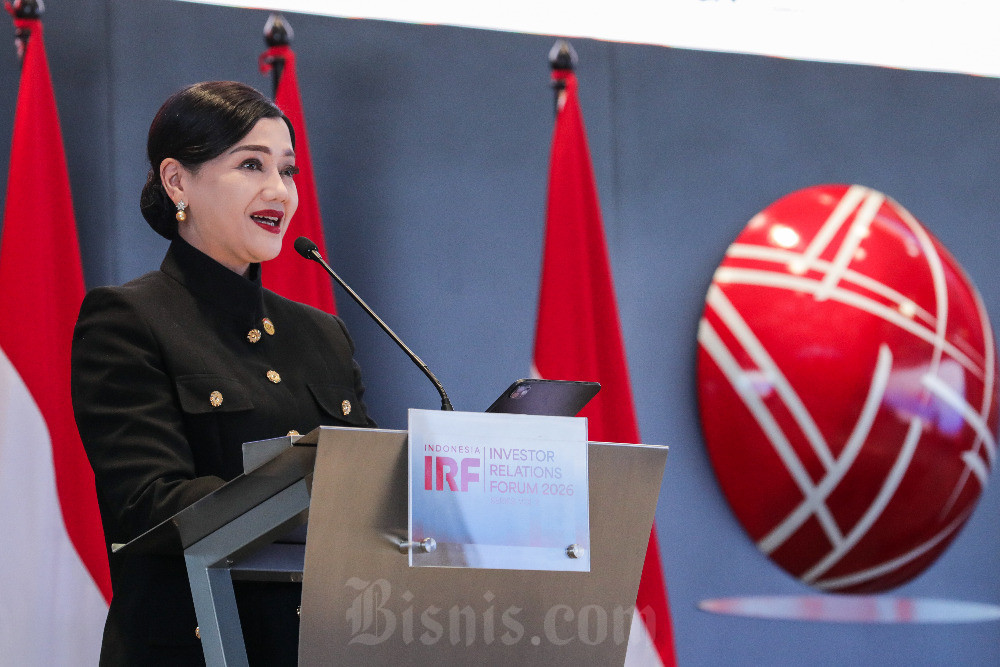
Indonesia’s mutual fund market is showing a surprising amount of resilience at a time when broader financial sentiment remains uneven. The latest update from the Financial Services Authority, or OJK, shows that mutual fund AUM has climbed to Rp718.44 trillion, supported by a Rp49.71 trillion increase in net asset value, equal to 6.39 percent year to date. OJK said the rise was driven by net subscriptions from retail investors, even as the stock market faced pressure from global and domestic sentiment.
That reading matters because it suggests Indonesia’s fund industry is not merely surviving volatility, it is still attracting money. In April 2026, OJK had already said the investment management industry remained resilient, with assets under management reaching Rp1,072.64 trillion and mutual fund net asset value at Rp711.89 trillion as of 29 April. OJK also reported 26.49 million domestic capital market investors by that point, up 30.06 percent year to date.
Retail Investors Are Still Putting Money To Work
The most important detail in the latest mutual fund AUM update is not just the headline size of the market, but the source of the inflows. OJK said the increase came from net subscription by retail investors, which means ordinary investors continued adding money even while market conditions looked uneasy. That is a strong signal of confidence in mutual funds as a tool for gradual wealth building, portfolio diversification, and short term parking of funds during uncertain periods.
This kind of behavior fits a pattern that has become more visible in Indonesia over the past year. OJK’s official April 2026 report showed that mutual fund net subscriptions remained positive at Rp8.11 trillion for the month and Rp37.24 trillion year to date. In the same report, OJK said the overall investment management industry was still performing well, which suggests that the mutual fund AUM increase was not an isolated spike but part of a broader trend of steady domestic participation.
The retail base matters because it gives the market a cushion when foreign money becomes more cautious. OJK has repeatedly emphasized the role of domestic investors in strengthening market depth and stability. By January 2026, the regulator said capital market investors had already reached 21.07 million, and by April that figure had climbed to 26.49 million. That is a rapid expansion in participation over a short period, and it helps explain why mutual fund AUM in Indonesia keeps holding up despite swings in equities sentiment.
There is also a behavioral angle here. Mutual funds tend to appeal to investors who want professional management without the stress of picking individual stocks. When volatility rises, many retail investors prefer pooled products, especially money market funds, fixed income funds, and balanced funds. That does not mean every investor is fleeing risk. More often, it means they are shifting toward products that feel more controlled while they wait for clearer market direction. That is an inference, but it is consistent with OJK’s report that retail subscriptions were the main driver of the increase.
Market Volatility Has Not Broken Investor Confidence
The broader market backdrop helps explain why the mutual fund AUM story stands out. KONTAN reported that OJK attributed recent market weakness to a mix of global geopolitical tension, expectations of tighter monetary policy, and domestic sentiment tied to MSCI rebalancing. OJK said the decline in the Jakarta Composite Index was still relatively moderate compared with some regional bourses, even after the market reopened from a long holiday period.
Tirto similarly reported that Friderica Widyasari Dewi said the industry was still growing despite IHSG correction, and that the year to date increase of Rp49.71 trillion came from retail net subscriptions. Tirto also noted that the first trading day after the MSCI announcement saw IHSG fall 1.98 percent, while another 1.85 percent decline followed after the holiday break. The message from both reports is clear: volatility is real, but it has not stopped investors from adding to mutual funds.
That resilience is especially interesting because OJK’s own April 2026 data showed that the capital market was not standing still. Alongside rising mutual fund net asset value, the regulator reported capital market fundraising of Rp56.35 trillion year to date, supported by one IPO, one rights issue, six public debt or sukuk offerings, and 44 shelf registration EBUS issuances. The pipeline also remained healthy, with 71 public offerings valued at Rp49.84 trillion. In other words, the market environment was choppy, but activity remained broad based.
For investors, this matters because it reinforces a simple idea: volatility does not automatically equal weakness. In many cases, it creates entry points. A rising mutual fund AUM number during a noisy market can indicate that investors are not panicking. They may be reallocating, averaging in, or choosing professionally managed products instead of leaving money idle. That is one reason fund industry growth can sometimes continue even when the stock market looks shaky. The data from OJK supports that interpretation.
What The Rise In Mutual Fund AUM Says About Indonesia’s Market
The latest mutual fund AUM figures also tell a bigger story about Indonesia’s financial deepening. OJK closed 2025 by saying the investment management industry had Rp1,039 trillion in managed funds, up 24.16 percent year to date. By late April 2026, the industry’s AUM had climbed further to Rp1,072.64 trillion. This shows that the sector has kept expanding through different market cycles, not just during favorable months.
That growth is important because mutual funds play a practical role in building a broader investor base. They lower the barrier to entry for people who are new to capital markets, and they allow investors to gain exposure to equities, bonds, or money market instruments without needing deep market knowledge. As OJK’s investor figures continue to rise, mutual funds are becoming one of the main on ramps into formal investing in Indonesia.
The policy environment also appears supportive. OJK has launched initiatives aimed at expanding financial inclusion and strengthening investor education, including the PINTAR Reksa Dana program in April 2026. That is relevant because fund growth is not only about market returns. It is also about distribution, literacy, and trust. When regulators and market players make fund access easier to understand and easier to use, mutual fund AUM tends to benefit over time.
From a market structure perspective, the current numbers suggest that Indonesia’s mutual fund industry is moving beyond a narrow niche. The combination of higher investor participation, steady net subscriptions, and a managed asset base above Rp718 trillion shows real scale. If that momentum continues, mutual funds could become even more important as a stabilizing channel for domestic savings, especially when global sentiment remains uncertain. That conclusion is supported by OJK’s recurring reports of investor growth and positive fund inflows.
The main takeaway is straightforward. The mutual fund AUM increase is not just a technical market statistic. It is a sign that Indonesian retail investors are still willing to commit capital, even when headlines are dominated by volatility, index rebalancing, and global uncertainty. In that sense, the industry’s current momentum says as much about investor psychology as it does about fund performance. And right now, that psychology looks more constructive than many would expect.
Read More