





 Wednesday, 10-06-26








Indonesia has been ranked second globally in economic resilience to global energy shocks based on a report by J.P. Morgan Asset Management titled Pandora’s Bog: The Global Energy Shock of 2026, released on March 21, 2026 (23/04).
The finding confirms the government’s consistent policy direction in strengthening energy resilience amid geopolitical dynamics and global energy price fluctuations.
JP Morgan Report Measures Indonesia’s Strong Insulation Factor
The report analyzed 52 countries representing around 82% of global energy consumption using a total insulation factor indicator.
This indicator combines four main domestic energy components, including gas production, coal production, nuclear power, and renewable energy, as a percentage of useful final energy.
Indonesia recorded an insulation factor of 77%, slightly below South Africa at 79%, and higher than China at 76% and the United States at 70%.
Domestic Energy Sources Support National Resilience
Indonesia’s resilience is mainly supported by domestic coal production, which contributes around 48% of national final energy consumption.
Domestic natural gas contributes 22%, while renewable energy accounts for 7% of the national energy mix.
The report also groups Indonesia with China, India, South Africa, Vietnam, and the Philippines as countries benefiting significantly from domestic coal production during energy shocks.
Minimal Exposure to Global Energy Distribution Routes
Indonesia is assessed to have very low direct exposure to global energy distribution routes currently under global attention.
Oil and gas imports through the Strait of Hormuz contribute only around 1% of total national primary energy consumption.
This figure is significantly lower than countries such as South Korea at 33%, Taiwan and Thailand at 27%, and Singapore at 26%.
The report also highlights developed countries, including Italy, Japan, South Korea, Singapore, and the Netherlands, as the most vulnerable due to high dependence on oil and gas imports.
Government Affirms Policy Direction and Strengthens Future Strategy
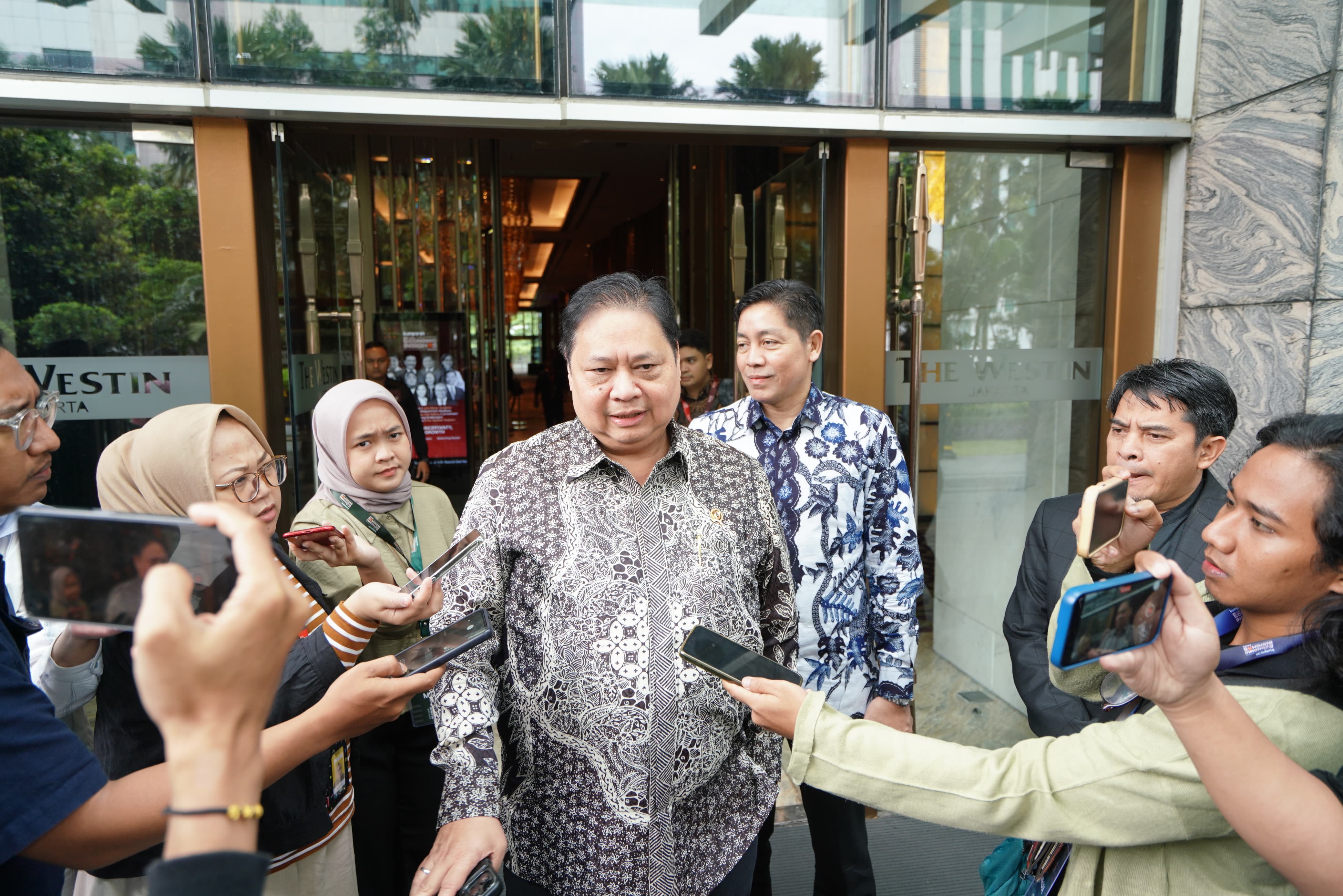
Coordinating Minister for Economic Affairs Airlangga Hartarto stated that the recognition reflects collective work across ministries and institutions in maintaining national energy resilience.
“This result is not merely an appreciation of current conditions, but a validation of the Government’s long-term policy choices in maintaining a balance between domestic energy utilization and accelerating energy transition,” said Airlangga.
“Amid global energy price volatility, this position provides more controlled fiscal space for the 2026 State Budget and helps protect purchasing power and business continuity,” he added.
The government will continue strengthening policies, including optimizing domestic oil and gas production to reduce the deficit in the oil and gas balance, accelerating renewable energy development in line with RUKN and RUPTL, expanding electric vehicle adoption, and diversifying energy supply sources and logistics routes.
PHOTO: COORDINATING MINISTRY FOR ECONOMIC AFFAIRS
This article was created with AI assistance.
We make every effort to ensure the accuracy of our content, some information may be incorrect or outdated. Please let us know of any corrections at [email protected].
Read More