





 Wednesday, 29-07-26








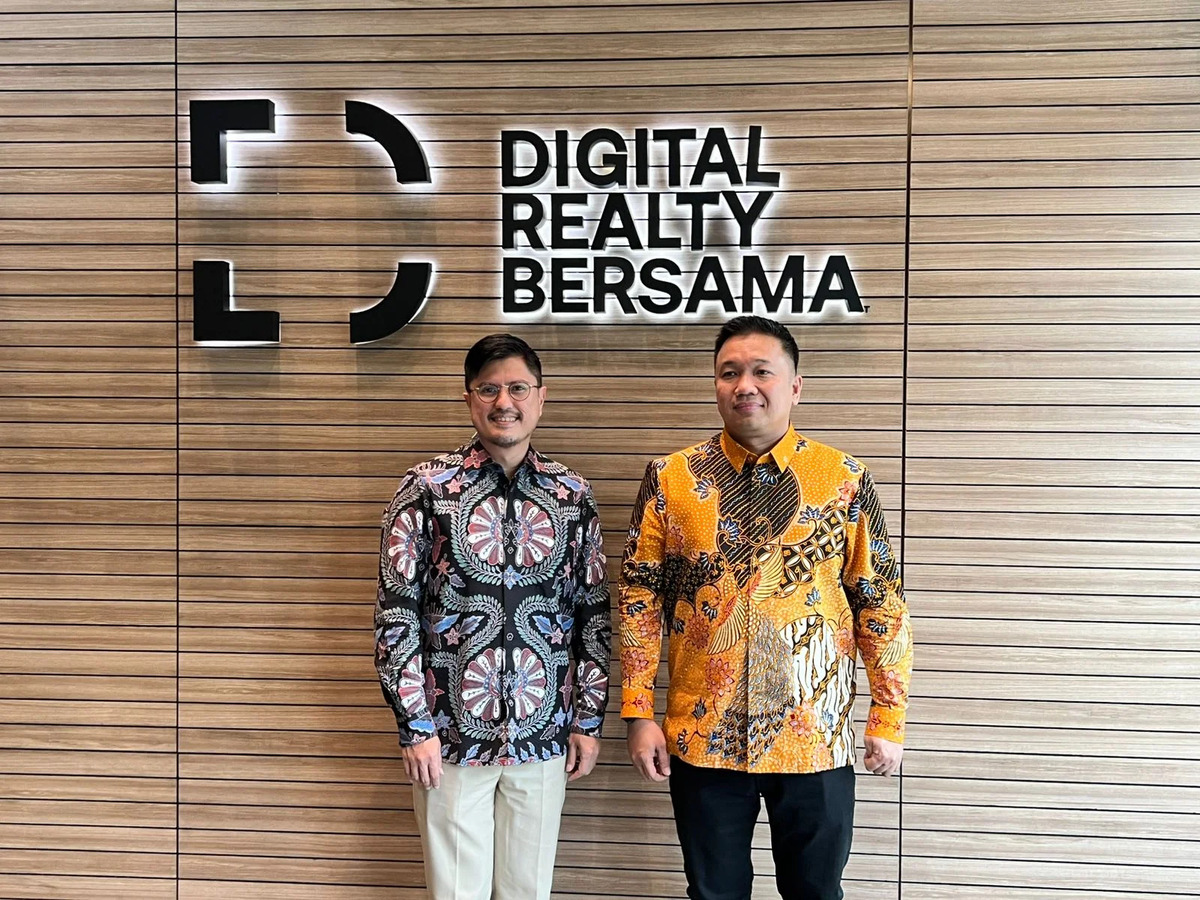
Indonesia’s digital infrastructure market is entering a sharper, more specialized phase, and the latest reporting around Digital Realty Bersama points to one clear conclusion: Indonesia AI Data Center Demand is rising fast. According to coverage of the company’s media briefing in Jakarta on April 22, 2026, the operator expects AI-related data center capacity in Indonesia to double by the end of 2026, from roughly 500 MW toward 1,000 MW. That forecast reflects not only stronger enterprise demand, but also the growing pressure on facilities to support heavier AI workloads, higher power density, and more advanced cooling systems.
The same reporting shows that Digital Realty Bersama is not treating AI as a distant trend. The company is already preparing its facilities for GPU-heavy workloads, with its CGK11 site said to need only a few months of modification to become AI-ready. The firm also plans to expand capacity by about 27 MW, signaling that the next wave of Indonesia AI Data Center Demand is already translating into concrete investment decisions.
AI Workloads Are Redrawing The Data Center Map
The most important change in the market is not simply that more data centers are needed. It is that AI workloads demand a different kind of infrastructure. Digital Realty Bersama’s executives said that AI-related demand often starts at 20 kilowatts per rack and can reach as high as 100 kilowatts per rack, far above the load profile of traditional enterprise computing. That kind of density changes every assumption about layout, airflow, electrical design, and long-term facility planning.
This is why the company’s comments matter beyond one operator. When a facility is designed for public cloud and hyperscale clients, it still has to evolve once workloads shift from conventional hosting to AI inference and training. In Katadata’s reporting, Digital Realty Bersama said its infrastructure already supports AI hardware such as GPU equipment, but still needs modest modification to meet the higher thermal and power demands of modern AI environments. That is a strong signal that Indonesia AI Data Center Demand is no longer theoretical. It is forcing operators to redesign capacity in real time.
The implications are broader for the market as a whole. If one large operator sees AI demand pushing up rack density and forcing expansion, other providers will likely face the same pressure. That means the conversation around Indonesia AI Data Center Demand is quickly becoming a conversation about facility class, power architecture, and who can deliver AI-ready space fastest. The competitive edge will increasingly belong to operators that can upgrade without long downtime and without compromising reliability.
Why Power And Cooling Matter More Than Ever
The other major theme is electricity. Digital Realty Bersama’s executives repeatedly highlighted power availability as one of the main industry bottlenecks. That aligns with the broader reality of AI infrastructure: more compute means more electricity, and more electricity means greater stress on the grid, the utility connection, and the site’s backup systems. One report even summarized the challenge as electricity, infrastructure, and low AI adoption maturity in Indonesia.
Cooling is becoming just as critical. In Katadata’s report, Digital Realty Bersama explained that conventional precision air conditioning is no longer enough for some AI workloads, so the company is deploying liquid cooling and chip-level cooling. That is a notable shift because liquid cooling is not simply a performance upgrade. It is often a prerequisite for keeping dense AI racks stable, especially when heat output rises sharply under continuous compute loads. In other words, Indonesia AI Data Center Demand is not only a question of more space. It is a question of whether the site can physically handle the heat.
The company also framed AI power consumption as roughly ten times heavier than traditional computing in certain use cases, and its executives emphasized that the market is moving toward larger workloads. That matters for financial planning too. Higher power density usually means higher capital expenditure, greater engineering complexity, and a stronger need for long-term utility coordination. For operators and investors, the economic logic is clear: the winners in Indonesia AI Data Center Demand will be the firms that can control energy costs while still meeting AI-grade technical requirements.
Jakarta Still Leads, But The Edge Is Expanding
The growth story is not evenly distributed. Reporting on the briefing shows that AI infrastructure in Indonesia is developing more actively outside central Jakarta, especially in Cibitung and Karawang, where land is more available and building constraints are less severe. That makes sense, because large AI racks can be physically demanding. One report noted that a GPU rack can weigh around 2 tons, which makes vertical stacking in dense urban environments much harder to justify.
At the same time, Jakarta remains important for a different reason. Digital Realty Bersama said that its inner-city facilities still serve enterprise clients, especially banking and other financial services, where low latency is critical for real-time applications. That distinction is important for understanding the market. Not all data center demand is identical. AI-heavy compute may move outward to larger parcels, while latency-sensitive financial workloads stay close to the urban core. That split is likely to define the next stage of Indonesia AI Data Center Demand.
The report also points to a regional benchmark that helps explain why Indonesia is under pressure to accelerate. Digital Realty Bersama said AI data center growth in Indonesia is around 500 MW annually, while Johor Bahru is already above 1,000 MW annually. Whether one treats that as a direct comparison or a rough competitive indicator, the message is the same: Indonesia has momentum, but it is still behind the faster-moving regional hubs. That gap is a reminder that Indonesia AI Data Center Demand is growing from a solid base, yet still has room to scale much further.
What Digital Realty's Plans Mean For The Market
Digital Realty Bersama’s planned 27 MW expansion is more than a capacity number. It is a commercial signal. A company does not commit to new space, land use, and infrastructure retrofits unless it sees a market that can absorb that capacity. The firm’s current footprint includes CGK10 in West Jakarta and CGK11 in Central Jakarta, with a total reported capacity of 63 MW, more than 9,000 racks, and over 20,000 square meters of data hall space. That scale gives it room to capture the next wave of AI and cloud demand.
The company also said it has secured a Renewable Energy Certificate from PLN, which adds another important layer to the growth story. As AI data centers become more energy intensive, sustainability credentials will matter more to enterprise customers and global clients. Green power access can make a facility more attractive, especially when buyers are trying to balance performance, ESG reporting, and reliability. For the market, this suggests that Indonesia AI Data Center Demand will not be won on capacity alone. Clean power and credible sustainability claims will increasingly shape procurement decisions.
There is also a demand-education problem. Digital Realty Bersama’s leadership said AI adoption in Indonesia is still relatively early and often exploratory, meaning many businesses are still testing use cases rather than deploying at scale. That is a meaningful insight because it suggests demand can expand further as customers become more confident in AI productivity gains. In practice, that means today’s Indonesia AI Data Center Demand may be only the starting point, not the peak.
The final takeaway is straightforward. Indonesia is not just seeing more data center activity. It is seeing a shift toward a new class of infrastructure built around AI, high density, and advanced cooling. Digital Realty Bersama’s plans, as reported, show that operators are already preparing for that future. If the industry can keep pace on power, land, and engineering, Indonesia AI Data Center Demand could become one of the most important digital infrastructure stories in Southeast Asia over the next two years.
Read More