





 Sunday, 25-10-26








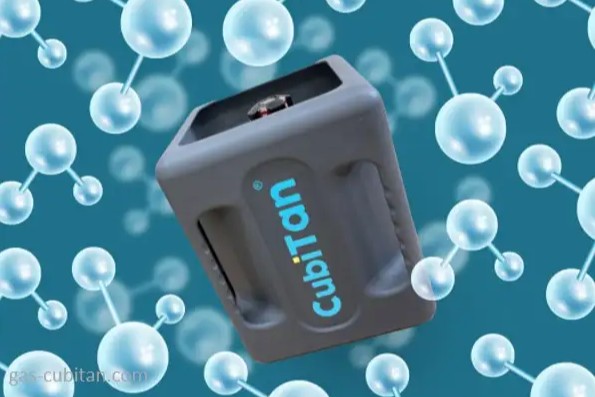
The National Research and Innovation Agency (BRIN) is developing CubiTan, a methane gas storage system based on Metal-Organic Frameworks (MOF), as a potential alternative to subsidized LPG cylinders (15/04).
The innovation is designed to support national energy resilience through advanced material technology.
CubiTan is developed through international collaboration between BRIN, Yachiyo Engineering, and Atomis from Japan.
The system was presented during the Workshop on 2D Functional Materials for Energy, Environment, and Health Applications in ICE BSD, Tangerang Selatan.
MOF-Based Gas Storage Technology with Safety Features
CubiTan uses MOF materials as gas adsorbents due to their high surface area and strong adsorption capability. The system is integrated into a High-Pressure Gas Cylinder made of Carbon Fiber Reinforced Polymer (CFRP).
According to BRIN researcher Canggih Setya Budi, the system is equipped with several safety and monitoring components. These include ACNWI communication systems, temperature sensors, pressure shock sensors, and wireless features.
Performance and Operational Advantages Over Conventional LPG
CubiTan offers several advantages compared to conventional LPG “melon” cylinders, particularly in weight and safety.
The CubiTan cylinder weighs around 11.7 kg, significantly lighter than conventional cylinders, which weigh approximately 30.5 kg.
Canggih explained that the system maintains competitive gas storage performance while operating at lower pressure levels.
During a laboratory test at BRIN Serpong, Prof. Susumu Kitagawa tested the system for cooking use, and it performed comparably to conventional LPG cylinders.
Technical Challenges and Development Roadmap for Household Use
Currently, CubiTan operates at a high pressure of around 200 bar. The BRIN research team is working to gradually reduce this operational pressure.
“We have tried reducing it to 80 and 60 bars. The next challenge is reaching around 15 bars, equivalent to current household usage,” Canggih said.
He added that the current gas filling infrastructure still relies on high-pressure systems, requiring strong CFRP materials that can withstand up to 700 bar, though they remain expensive.
Collaboration and Energy Independence Targets
BRIN is strengthening international collaboration, including with Kyoto University under a Sister Lab scheme involving Prof. Susumu Kitagawa, a Nobel Chemistry 2025 laureate. International academic activities, such as a Nobel Lecture, have also been conducted to support research collaboration.
At the national level, CubiTan is expected to reduce dependence on imported LPG and lower energy subsidy costs. The technology is also targeted to support energy independence, economic growth, job creation, and the development of a self-reliant “gas merah putih” ecosystem.
PHOTO: BRIN
This article was created with AI assistance.
We make every effort to ensure the accuracy of our content, some information may be incorrect or outdated. Please let us know of any corrections at [email protected].
Read More