





 Tuesday, 22-09-26








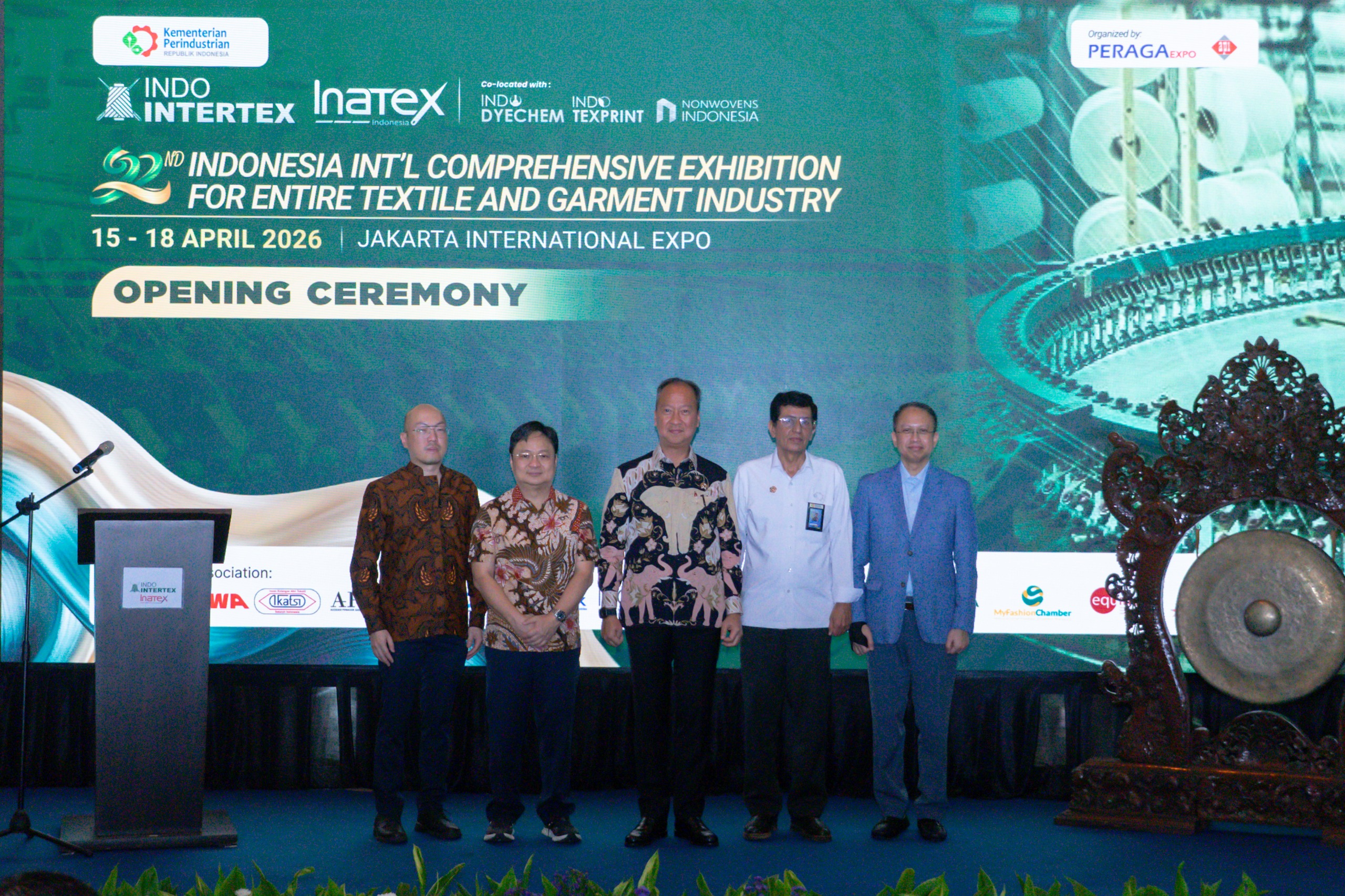
Indonesia’s textile and textile products industry continues to show resilience amid global uncertainty, as highlighted during the opening of Indo Intertex – Inatex 2026 in Jakarta (15/04).
Industry Minister Agus Gumiwang Kartasasmita stated that the sector remains a “sunrise industry” supported by stable national economic fundamentals and ongoing collaboration across stakeholders.
The exhibition is part of government efforts to strengthen industry competitiveness through expanded networks, investment, and technology adoption.
Manufacturing Sector Shows Strong Contribution to Economy
Indonesia’s economy grew by 5.11% in 2025, while the manufacturing sector recorded a higher growth of 5.30%.
This marked the first time in 14 years that manufacturing growth exceeded national economic growth.
The sector contributed 19.07% to Gross Domestic Product and accounted for 84.89% of total national exports.
It also absorbed 20.31 million workers, reflecting its significant role in the economy.
The Industrial Confidence Index reached 51.86 in March 2026, indicating the sector remains in an expansion phase.
Textile Industry Records Growth, Exports, and Investment Gains
In 2025, the textile industry grew by 3.55% year-on-year.
Exports reached USD 12.08 billion, with a surplus of USD 3.45 billion, mainly driven by garment exports.
The sector attracted investment worth Rp20.23 trillion and employed 3.96 million workers, or 19.48% of the total manufacturing workforce.
The minister stated that this performance reflects continued investor confidence despite global geopolitical and economic uncertainty.
Indo Intertex Inatex 2026 Drives Collaboration and Opportunities
The Indo Intertex – Inatex 2026 serves as a platform for business matching between domestic and international industry players.
It provides opportunities for partnerships, investment, and innovation within the textile sector.
The event also demonstrates optimism that the textile industry remains a promising sector for future growth.
Government Strengthens Strategy Through Technology and Sustainability
The industry continues to face challenges, including rising global raw material prices, supply chain disruptions, and shifting international demand.
The government is monitoring global trade developments and supply chain changes while coordinating with industry stakeholders.
Strategic policies include expanding market access, providing fiscal and non-fiscal incentives, and improving productivity across the industry.
Future efforts will focus on accelerating Industry 4.0 adoption, implementing sustainability principles, and developing high-value-added products to meet global standards and expand export markets.
Shifts in global supply chains and increasing demand for sustainable textiles also create opportunities for investment and partnerships.
“Pelaku industri yang mampu bertahan dan resilien akan lebih cepat bangkit dan melesat ketika situasi kembali normal,” the minister said.
The government emphasized its role as a strategic partner to support the textile industry in addressing challenges and capturing opportunities.
PHOTO: MINISTRY OF INDUSTRY
This article was created with AI assistance.
We make every effort to ensure the accuracy of our content, some information may be incorrect or outdated. Please let us know of any corrections at [email protected].
Read More