





 Friday, 19-06-26








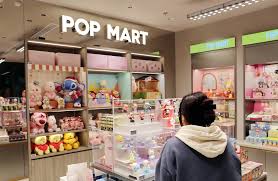
The rapid rise of China’s designer toy giant Pop Mart is facing a critical test as the Pop Mart Overseas Slowdown begins to weigh heavily on its financial performance and investor confidence. Once celebrated as a breakout success in the global collectibles market, the company is now confronting the realities of international expansion, where growth is proving far more difficult than anticipated.
The Pop Mart Overseas Slowdown has already had tangible consequences. Shares of the company have declined significantly, erasing billions of dollars in market value and sharply reducing the wealth of its founder, Wang Ning. The downturn highlights the fragile nature of consumer-driven businesses that rely heavily on hype, brand loyalty, and international demand cycles.
The Rise of Pop Mart and Its Global Ambitions
Pop Mart built its success on the concept of designer toys, particularly blind box collectibles that create a sense of excitement and scarcity among consumers. Its flagship intellectual properties, including Labubu and Molly, became cultural phenomena, especially among younger consumers in China and across Asia.
The company’s domestic growth was fueled by a combination of clever marketing, strong retail presence, and collaborations with artists. However, as the Chinese market matured, Pop Mart turned its focus outward, aiming to replicate its success in international markets such as Southeast Asia, Europe, and North America.
At the heart of this strategy was the assumption that global consumers would respond similarly to the brand’s unique retail experience and collectible culture. For a time, this appeared to be true. Pop Mart stores in major cities attracted attention, and overseas revenue began to grow as a proportion of total sales.
However, the Pop Mart Overseas Slowdown suggests that the company may have overestimated the scalability of its business model across different cultural and economic contexts. While the brand resonates strongly in China, international markets present different consumer behaviors, purchasing power dynamics, and competitive landscapes.
What Is Driving the Pop Mart Overseas Slowdown
Several factors are contributing to the Pop Mart Overseas Slowdown, and they reveal deeper structural challenges in the company’s global strategy.
First, demand in overseas markets is proving less consistent than in China. The blind box model relies heavily on repeat purchases and emotional engagement, which can vary significantly across cultures. In some markets, consumers may view the products as novelty items rather than long-term collectibles, limiting repeat sales.
Second, macroeconomic conditions are playing a role. Slower economic growth in key international markets has affected discretionary spending, particularly among younger consumers who form the core of Pop Mart’s customer base. When economic uncertainty rises, spending on non-essential items such as designer toys often declines.
Third, operational challenges have emerged as Pop Mart expands its retail footprint. Managing international supply chains, navigating regulatory environments, and maintaining brand consistency across regions require significant resources. These complexities can reduce efficiency and increase costs, further impacting profitability.
The Pop Mart Overseas Slowdown is also linked to intensifying competition. As the designer toy market gains popularity, new entrants are emerging, offering similar products at competitive prices. Established global brands are also entering the space, leveraging their existing distribution networks and brand recognition.
Market Reaction and Impact on Valuation
The financial markets have responded quickly to the Pop Mart Overseas Slowdown. Investors, who once viewed the company as a high-growth story, are reassessing its long-term prospects. This shift in sentiment has led to a decline in share prices, significantly reducing the company’s market capitalization.
For founder Wang Ning, the impact has been particularly stark. A substantial portion of his wealth is tied to Pop Mart’s stock performance, meaning that fluctuations in share price directly affect his net worth. The recent downturn has resulted in billions of dollars in losses, underscoring the volatility of founder-led companies in public markets.
The Pop Mart Overseas Slowdown has also raised broader questions about valuation in the consumer discretionary sector. Companies that rely on trends and brand appeal often command premium valuations during growth phases, but these valuations can quickly contract when growth slows.
Investors are now paying closer attention to metrics such as same-store sales growth, international revenue contribution, and profit margins. The ability of Pop Mart to stabilize its overseas business will be critical in restoring confidence.
Rethinking International Expansion Strategies
The challenges highlighted by the Pop Mart Overseas Slowdown offer valuable lessons for companies pursuing global expansion. One key takeaway is the importance of localization. What works in one market does not automatically translate to another, particularly in industries driven by cultural preferences.
Pop Mart may need to adapt its product offerings, marketing strategies, and retail experiences to better align with local tastes. This could involve collaborating with international artists, creating region-specific products, or adjusting pricing strategies to match local purchasing power.
Another consideration is the pace of expansion. Rapid growth can strain resources and lead to operational inefficiencies. A more measured approach, focusing on key markets with strong growth potential, may be more sustainable in the long term.
The Pop Mart Overseas Slowdown also highlights the need for diversification. Relying heavily on a single product category or business model can increase vulnerability to market fluctuations. Expanding into new product lines, digital platforms, or experiential retail could help mitigate risks.
The Future of Pop Mart in a Changing Market
Despite the current challenges, the long-term outlook for Pop Mart is not necessarily negative. The company still possesses strong brand recognition, a loyal customer base, and a proven ability to create compelling intellectual properties.
The key question is how effectively Pop Mart can respond to the Pop Mart Overseas Slowdown and adapt its strategy. This will likely involve a combination of operational improvements, strategic investments, and innovation.
Digital transformation could play a significant role. By leveraging e-commerce platforms, social media, and digital collectibles, Pop Mart can reach a broader audience and create new revenue streams. This approach may also help reduce reliance on physical retail, which can be costly and complex to manage internationally.
Additionally, partnerships and collaborations could provide new growth opportunities. By working with global brands, entertainment franchises, and local creators, Pop Mart can expand its appeal and enter new markets more effectively.
The Pop Mart Overseas Slowdown may ultimately serve as a turning point for the company. While it presents immediate challenges, it also offers an opportunity to refine its strategy and build a more resilient business model.
A Broader Reflection on Consumer Trends
The story of the Pop Mart Overseas Slowdown reflects broader trends in the global consumer landscape. As markets become more interconnected, companies are increasingly seeking growth beyond their home countries. However, success in international markets requires more than simply replicating a domestic formula.
Understanding local consumers, adapting to changing economic conditions, and managing operational complexity are all critical factors. Companies that can navigate these challenges are more likely to achieve sustainable growth.
For Pop Mart, the journey is far from over. The company’s ability to innovate and adapt will determine whether it can regain momentum and continue its global expansion. The Pop Mart Overseas Slowdown is a reminder that even the most successful growth stories must evolve to remain competitive in a dynamic market.
Read More