





 Wednesday, 10-06-26








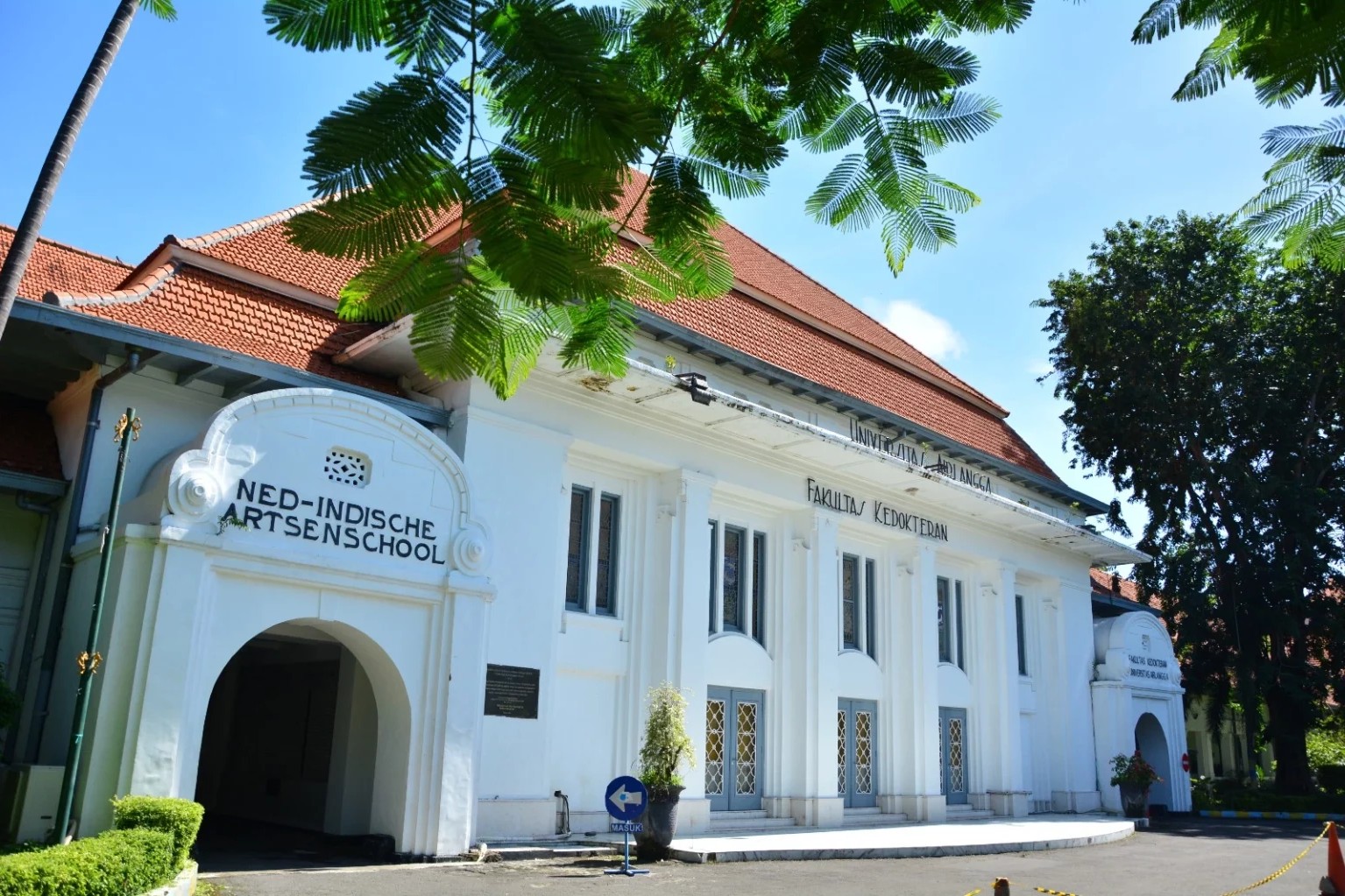
UNAIR’s Faculty of Medicine (FK) hosted a virtual guest lecture titled Artificial Intelligence in Healthcare: From ChatGPT to Baymax, The Singapore Perspective on Zoom (25/02). The session, organized by Graha Masyarakat Ilmiah Kedokteran (GRAMIK), highlighted AI’s growing role in transforming healthcare globally.
Dr. Dwiyanti Puspitasari dr DTMH MCTM (TP) SpA(K), opened the event, emphasizing that the current generation of doctors plays a key role in adapting to rapidly advancing technology. “We are no longer just doctors in training or practitioners in the field. We are a generation bridging traditional stethoscopes with sophisticated AI algorithms. The future of healthcare is being built today, and now is the time to understand its direction and blueprint,” she said.
Rapid Developments in Medical AI
Lou Xuanming BEng PhD from Singapore University of Technology and Design (SUTD) was the main speaker. He explained that AI simulates human intelligence by analyzing data to recognize patterns, make predictions, and assist in decision-making. However, AI operates based on probability rather than human understanding.
He noted that AI development in healthcare is progressing very quickly, especially in Singapore. “AI and healthcare are evolving rapidly worldwide. In Singapore, something new appears almost daily. Even I must continue learning as changes happen so fast,” Lou said.
Lou also used the character Baymax as an example of ideal future healthcare. The robot’s ability to scan, diagnose, and provide empathetic support illustrates the potential of AI. Some real-world applications are already emerging, such as AI-assisted X-ray and MRI analysis and large language models (LLM) for medical data processing.
Real-World Applications in Singaporean Healthcare
Lou described how AI is already applied in Singapore’s healthcare system. Automated medical record systems allow doctors to focus on patients rather than typing. “Patients often feel doctors focus too much on screens. With AI, conversations can be transcribed and summarized into structured reports, maintaining interaction quality,” he explained.
AI also supports diagnostics. Computer vision technology detects diabetic retinopathy through fundus scans. Analyses that once took days can now be done in minutes, increasing efficiency and speeding up medical intervention.
Challenges and Ethical Considerations
Lou highlighted the importance of regulation, data quality, and ethical oversight in AI adoption. “AI is not a replacement for doctors, but a partner in enhancing healthcare quality. Humans still have empathy, observation, and reasoning that machines cannot replicate. AI accelerates processes, but the final decision remains with humans,” he said.
PHOTO: UNAIR
This article was created with AI assistance.
We make every effort to ensure the accuracy of our content, some information may be incorrect or outdated. Please let us know of any corrections at [email protected].
Read More