





 Thursday, 28-05-26








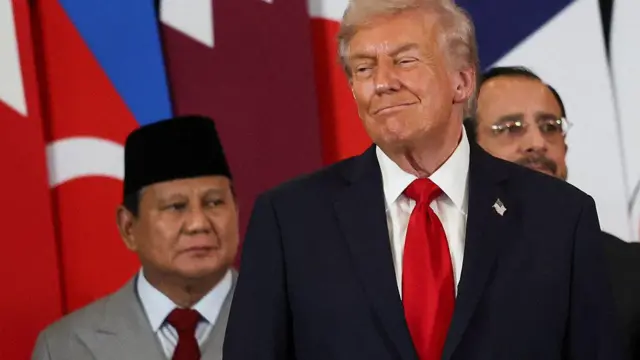
The Trump tariffs cancellation has once again thrust United States trade policy into the global spotlight. After a US court decision nullified a series of tariffs imposed during the Trump administration, American officials moved quickly to clarify that existing trade agreements remain valid and enforceable.
The ruling, which effectively formalized the Trump tariffs cancellation, raised immediate questions among trading partners about the legal and diplomatic consequences. Would bilateral and multilateral agreements negotiated during that period lose their standing? Would supply chains face new uncertainty?
According to US authorities, the answer is no. While the Trump tariffs cancellation addresses specific tariff measures, it does not dismantle broader trade agreements or invalidate the United States’ commitments under international frameworks.
The clarification is significant for countries closely tied to US trade flows, including Indonesia and other Southeast Asian economies. At a time of heightened global trade fragmentation, any signal of instability in US policy can ripple across financial markets and commodity sectors.
Legal Context Behind The Trump Tariffs Cancellation
The Trump tariffs cancellation stems from judicial review of trade measures introduced under national security and executive authority provisions. During his presidency, Donald Trump imposed tariffs on a range of imported goods, citing domestic industry protection and strategic concerns.
These measures triggered disputes at the World Trade Organization and legal challenges within US courts. Over time, the legal basis of certain tariffs came under scrutiny, culminating in a decision that invalidated specific components of the tariff regime.
It is important to distinguish between tariff measures and trade agreements. Tariffs are unilateral instruments, often enacted through executive action. Trade agreements, by contrast, are negotiated frameworks ratified through formal processes involving multiple branches of government.
US officials emphasized that the Trump tariffs cancellation affects tariff implementation, not the structural trade agreements that underpin US economic relations. Free trade agreements, bilateral investment treaties, and commitments under the World Trade Organization remain intact.
This clarification was aimed at calming concerns among exporters and importers who feared contractual uncertainty. For businesses operating across borders, predictability is as valuable as market access.
The Trump tariffs cancellation therefore represents a legal recalibration rather than a wholesale policy reversal.
Impact On Global Trade And Supply Chains
The Trump tariffs cancellation arrives at a time when global supply chains are already navigating volatility. Geopolitical tensions, industrial policy shifts, and reshoring trends have reshaped trade flows in recent years.
For manufacturers and commodity traders, tariffs can dramatically alter cost structures. The removal or invalidation of tariffs may reduce import costs for certain goods, potentially lowering input prices for US manufacturers and easing inflationary pressures.
However, the broader question concerns strategic direction. During the Trump era, tariffs became a central tool of economic policy, particularly in relation to China. Even with the Trump tariffs cancellation, the United States continues to maintain a firm stance on trade enforcement and domestic industry support.
For Southeast Asian exporters, including Indonesia, the reassurance that trade agreements remain in force is crucial. Many ASEAN economies rely heavily on access to the US market for textiles, electronics, footwear, and agricultural products.
The Trump tariffs cancellation does not dismantle preferential frameworks or undermine existing trade cooperation. Instead, it clarifies that while specific duties may be struck down, the architecture of trade engagement remains stable.
Financial markets responded cautiously. Investors generally favor policy certainty. The prompt clarification by US officials helped mitigate fears of abrupt trade disruption.
Trade Policy Continuity Beyond The Trump Era
The Trump tariffs cancellation also highlights the evolving nature of US trade policy. While administrations change, institutional commitments often endure.
Under subsequent leadership, the United States has recalibrated its trade strategy but has not fully abandoned tariff leverage as a policy instrument. Industrial policy initiatives, supply chain security measures, and strategic trade controls remain part of the toolkit.
Yet, the affirmation that trade agreements stand despite the Trump tariffs cancellation signals continuity in core commitments. Trade agreements involve binding obligations that cannot be easily undone by judicial rulings targeting specific executive actions.
For Indonesia and other trading partners, this continuity is essential. Long term investment decisions in export oriented industries depend on predictable access to major markets.
The Trump tariffs cancellation may reduce immediate trade friction in some sectors. However, it does not eliminate broader structural debates about protectionism, fair trade, and economic security that continue to shape US policy.
Implications For Indonesia And Emerging Economies
Emerging economies closely monitor shifts in US trade dynamics. The United States remains one of the world’s largest consumer markets and a key destination for manufactured goods.
Indonesia, for example, exports products ranging from palm oil derivatives and rubber goods to electronics components and apparel. Any instability linked to the Trump tariffs cancellation could have reverberated through these sectors.
The official confirmation that trade agreements remain valid helps stabilize expectations. Exporters can proceed with planning under existing frameworks without fearing sudden loss of preferential treatment.
Moreover, the episode underscores the importance of diversification. While US market access is critical, many emerging economies are simultaneously strengthening trade ties within Asia, Europe, and the Middle East to hedge against policy swings.
The Trump tariffs cancellation serves as a reminder that unilateral trade measures can face legal constraints. It also demonstrates that institutional safeguards can prevent abrupt dismantling of broader trade architecture.
For policymakers in developing nations, the lesson is twofold. First, legal systems can act as checks on executive trade actions. Second, long term agreements provide a more stable foundation than temporary tariff regimes.
The Broader Debate On Tariffs And Globalization
The Trump tariffs cancellation inevitably revives debate about the effectiveness of tariffs as an economic strategy. Supporters argue that tariffs protect domestic industries and strengthen bargaining power. Critics contend that they increase consumer prices and invite retaliation.
Economic research on the impact of tariffs during the Trump administration showed mixed outcomes. Some sectors experienced temporary relief, while others faced higher input costs and disrupted supply chains.
The cancellation of certain tariffs does not resolve these debates. Instead, it highlights the complex interplay between law, politics, and economics in trade policymaking.
As global trade continues to evolve, governments are balancing national security concerns with the benefits of open markets. The Trump tariffs cancellation illustrates how legal institutions shape that balance.
For global businesses, the immediate takeaway is reassurance. Trade agreements remain intact. Market access commitments are unchanged. The legal recalibration affects specific duties, not the foundational structure of US trade engagement.
In an era defined by uncertainty, clarity carries weight. The Trump tariffs cancellation may close one chapter of trade controversy, but it leaves intact the broader framework that supports international commerce.
For now, the message from Washington is clear. Despite judicial adjustments, the United States remains bound by its trade agreements, and its trading partners can continue to rely on those commitments.
Read More