





 Saturday, 24-10-26








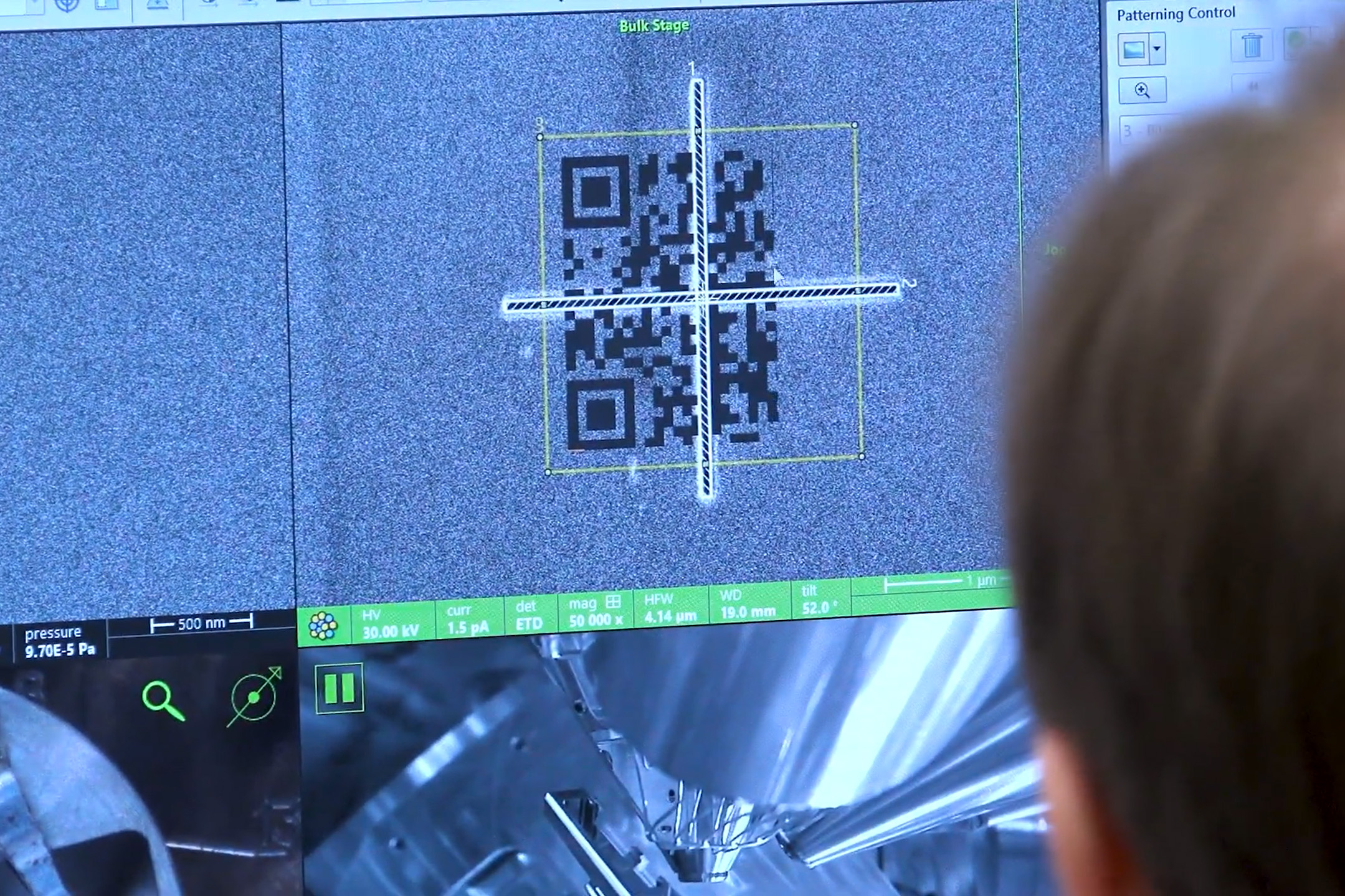
A collaboration between TU Wien and Cerabyte has set a Guinness World Record by creating the smallest ever readable QR codes, featuring 49-nanometer pixels (18/02). These codes are smaller than bacteria and require an electron microscope to read.
QR Codes Measure Only 1.98 Square Micrometers
The new QR codes measure just 1.98 square micrometers, making them 37% smaller than the previous record holder. “We have created a tiny, but stable and repeatedly readable QR code,” said Prof. Paul Mayrhofer from the Institute of Materials Science and Technology at TU Wien. The codes are invisible to the naked eye and cannot be read with an optical microscope.
Tiny QR Codes Enable High-Density Data Storage
Using this QR code technology, a single-layer A4 film could store over 2TB of data. The codes are milled into a thin ceramic layer, which the researchers say is “indefinitely” durable. They do not need energy or cooling to maintain. Comparisons have been made to ancient civilizations storing information on stone tablets.
Future Developments: Writing Speeds and Complex Structures
The TU Wien and Cerabyte teams plan to optimize writing speeds and scale up manufacturing. They are also exploring more complex data structures beyond QR codes.
Cerabyte’s recent advances in storage density and durability have attracted attention from the industry. Western Digital (WD) was revealed as a key investor in May last year, supporting ongoing research into high-density ceramic storage.
PHOTO: TU WIEN
This article was created with AI assistance.
We make every effort to ensure the accuracy of our content, some information may be incorrect or outdated. Please let us know of any corrections at [email protected].
Read More