





 Thursday, 11-06-26








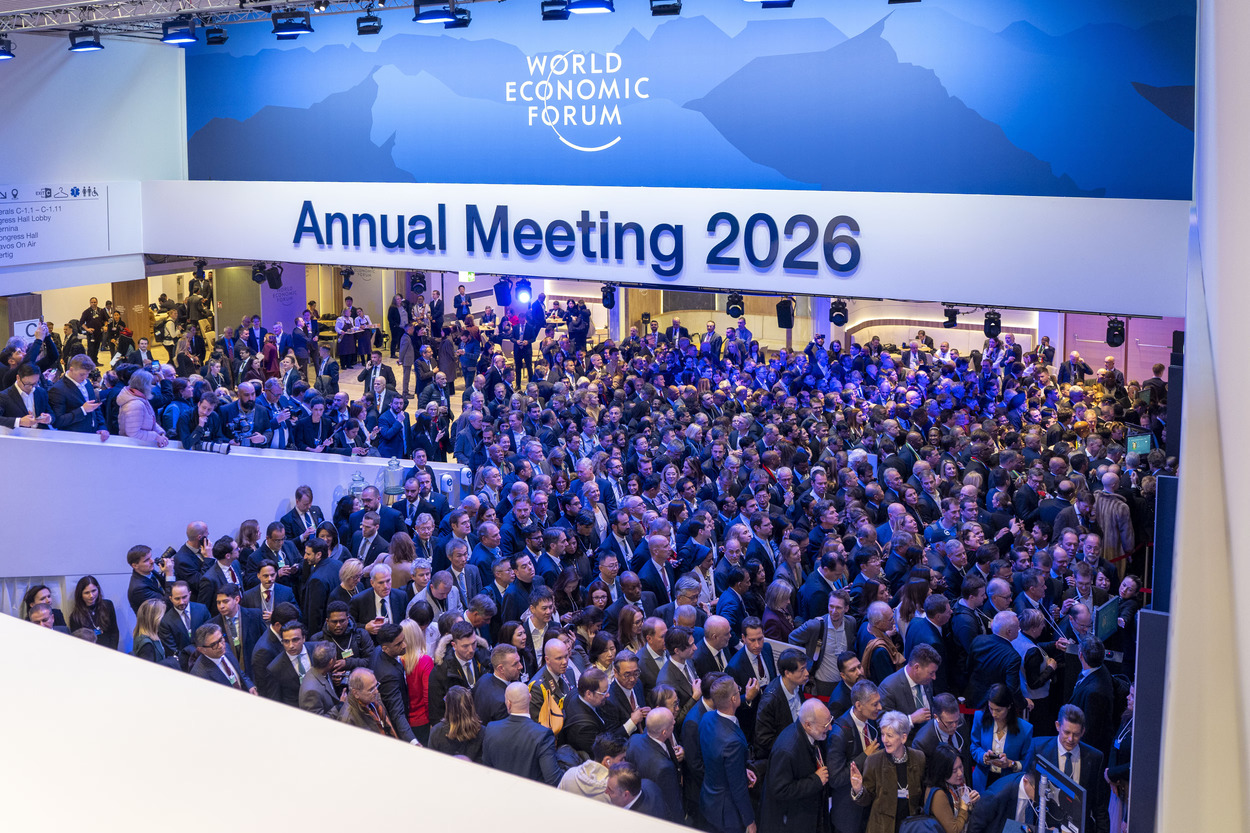
At the World Economic Forum Annual Meeting 2026 in Davos, global leaders grappled with deep shifts in global politics and economics. Among the most noteworthy developments was the emphasis on a middle powers global strategy as a response to the perceived erosion of a traditional “rules-based” world order. Middle powers – defined not by sheer scale but by significant regional influence and capacity to contribute to global solutions – articulated a shared view that the old certainties of international cooperation are waning and that new collaborative strategies are essential for navigating this era of complexity and geopolitical rivalry. This article explores the evolving concept of a middle powers global strategy as presented at Davos, the reasoning behind it, and its potential implications for international relations in 2026 and beyond.
The term “middle powers global strategy” encompasses how mid-level countries perceive the global moment, their strategic choices, and the collective forms of cooperation they are building to address shared challenges. These states are advocating for approaches that strengthen resilience, encourage adaptable cooperation mechanisms, and prioritize strategic autonomy in a world where great power rivalry appears structural rather than episodic.
The Conceptual Shift in International Relations
One of the central arguments emerging from forum discussions was that the longstanding rules-based international order has weakened. This system, which once offered predictability through established institutions and normative frameworks, is now described by many middle power leaders as less reliable and increasingly strained by geopolitical competition. Canadian Prime Minister Mark Carney, in his address at the forum, insisted that the world is experiencing a “rupture” in the old order, not merely a transition. This framing set the tone for how middle powers articulated their global strategy.
For decades, many states operated under a shared assumption that multilateral institutions and norms would offer stability and predictability. However, as Carney noted, this narrative often masked significant inequalities in how rules were applied and enforced, especially when powerful states pursued their interests using economic tools and diplomatic leverage. In such a context, the idea that integration and cooperation inherently produced mutual benefits has been challenged.
Instead of relying on nostalgia for a global order that may no longer function as once assumed, middle powers are advocating for a forward-looking global strategy that accepts the current geopolitical landscape while seeking to build resilient collaborative frameworks. This represents a conceptual shift from passive reliance on institutional frameworks to proactive co-creation of new partnerships and coalitions.
Redefining Sovereignty and Resilience
Another core element of the middle powers global strategy is a redefinition of sovereignty. At Davos, leaders emphasized that sovereignty in today’s context is not about isolation or retreat into national fortresses. Rather, it involves building resilience across social, economic, and strategic dimensions. Middle powers expressed that resilience enables countries to withstand external pressures without capitulating to coercive tactics used by more powerful states. This form of sovereignty appears firmly grounded in capability rather than withdrawal.
For example, discussions in Davos referenced the need for nations to invest in domestic capacities while also engaging in targeted partnerships. Rather than waiting for universal consensus through traditional multilateral institutions, middle powers are exploring more flexible coalition models that allow for pragmatic cooperation on specific issues. These coalitions reflect overlapping interests rather than universal agreement, demonstrating a nuanced approach to collective action within a fractured global environment.
This reimagined sovereignty is manifested in the way several countries discussed their global roles. For instance, leaders from Asia and the Middle East highlighted the need to build robust economic structures that emphasized resilience over efficiency, especially in areas like supply chains, industrial strategy, and energy security. This focus on resilience reflects a practical orientation within the broader middle powers global strategy.
Collective Action and Building New Coalitions
A significant takeaway from the Davos 2026 discussions was the emphasis on collective action among middle powers as a strategic response to the complexities of the current global landscape. Rather than waiting for legacy institutions to adapt, many mid-tier states are already forming dense networks of cooperation built around shared interests. These networks aim to address collective problems such as climate change, economic uncertainty, and regional security challenges.
Middle powers are advocating that future cooperation should not be confined to rigid institutional mandates. Instead, their strategy emphasizes flexible partnerships that can operate on an issue-by-issue basis while maintaining a commitment to shared values such as human rights, economic inclusion, and sustainability. Such an approach allows for more nimble responses to emerging global challenges and enables countries to contribute where they have comparative strengths.
In Davos, leaders articulated that these collaborative structures must not only address immediate geopolitical concerns but also create spaces where diverse states can contribute meaningfully to global public goods. This involves not only political cooperation but also economic collaboration that supports resilient supply chains, equitable access to technology, and joint efforts to mitigate climate impacts.
The Role of Middle Powers in a Multipolar World
The discussions at Davos suggested that middle powers are increasingly aware of their unique position in the emerging multipolar world. Unlike great powers that command extensive military and economic resources, middle powers derive influence from their ability to bridge regions, build consensus among diverse actors, and offer alternative perspectives on global issues. Their global strategy reflects a willingness to shape international outcomes collaboratively rather than compete against more powerful states.
This role is particularly significant in areas where traditional multilateral institutions may struggle to adapt quickly. For example, global challenges such as climate change, public health coordination, and equitable economic development require solutions that transcend the capabilities of any single nation or power bloc. Middle powers are positioning themselves as facilitators of shared initiatives that can deliver practical results while honoring the distinct priorities of different regions.
By emphasizing practicality over philosophical stare decisis about the old world order, the middle powers global strategy advocates for a collective orientation that marries national interests with a commitment to global public goods. This approach recognizes the evolving nature of global interdependence and seeks to integrate national resilience into broader cooperative frameworks.
Practical Implications for Global Governance
A key question for the future of international relations is how the middle powers global strategy will influence global governance structures. If middle powers continue to build coalitions that operate alongside or outside of traditional institutions, it may result in a more diversified architecture of global cooperation. Such an outcome could complement existing frameworks like the United Nations or Bretton Woods institutions by offering alternative channels for collective problem-solving.
For example, plurilateral arrangements – partnerships involving a subset of states with shared goals – could emerge as functional complements to universal multilateral institutions. These arrangements may be better suited to address rapidly evolving issues, such as technological governance, climate adaptation, and economic resilience strategies.
However, this evolving architecture also poses challenges. If middle powers establish parallel systems of cooperation without integrating them into a broader vision of inclusive global governance, fragmentation could intensify. The success of the middle powers global strategy may ultimately depend on balancing pragmatism with inclusivity so that diverse states, including smaller and less resourced nations, can participate meaningfully in shaping global outcomes.
Why Middle Powers Must Act Together
The repeated emphasis in Davos discussions was that middle powers cannot rely solely on great powers to define future global norms or frameworks. As geopolitical competition intensifies, nations with mid-level influence risk marginalization if they do not act collectively. The assertion “if we’re not at the table, we’re on the menu” captures the urgency with which middle powers view their global strategic role.
By forging collaborative pathways, middle powers aim to protect their strategic autonomy and contribute to a world order that accommodates diverse interests and values. Their global strategy is framed not as an alternative to existing frameworks but as an adaptive strategy that complements enduring goals such as peace, inclusive growth, and sustainability.
Conclusion: The Future of Middle Powers Global Strategy
In 2026, the concept of a middle powers global strategy is gaining traction as an actionable framework for navigating a fragmented geopolitics. Rooted in resilience, cooperation, and adaptability, this strategy reflects the collective response of mid-tier states to the perceived limitations of a fading rules-based order and intensifying great-power rivalry.
By redefining sovereignty as resilience, building flexible coalitions, and advocating for pragmatic cooperation, middle powers are offering a pathway that aligns national interests with collective global outcomes. Whether this strategy will reshape global governance in the long term remains an open question, but its articulation at Davos 2026 signals a growing recognition that international cooperation must evolve to meet the demands of a complex, multipolar world.
Read More