





 Monday, 21-09-26








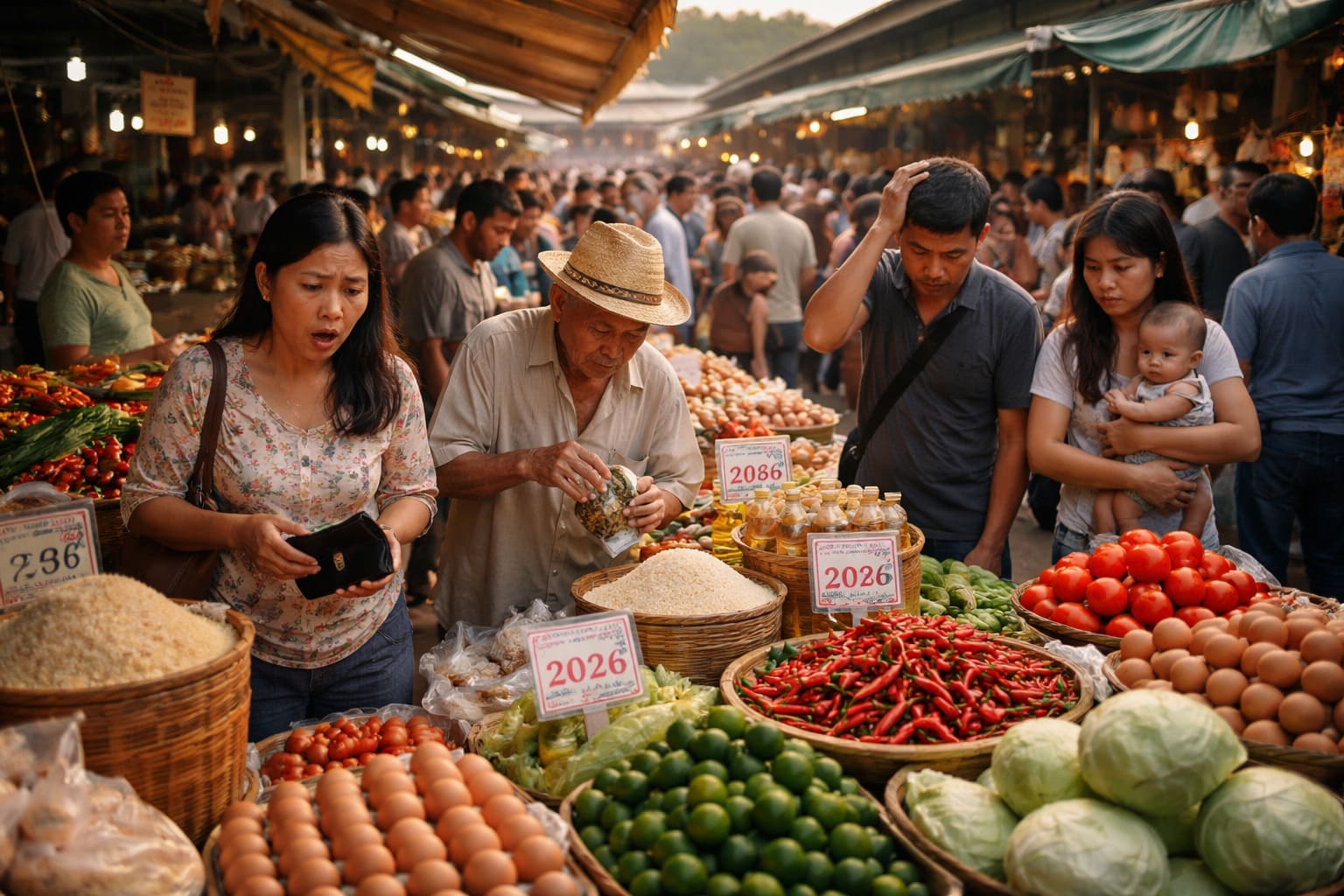
As we navigate through 2026, the global economic landscape continues to stabilize following years of post-pandemic volatility and geopolitical disruptions. For the diverse economies of Southeast Asia (ASEAN), food inflation remains a critical metric—not just for macroeconomic stability, but for the daily livelihoods of over 680 million people.
While the broader Asia-Pacific region is currently witnessing some of the lowest food price growth rates globally, the situation in Southeast Asia is a complex tapestry of government intervention, climate sensitivity, and shifting supply chains.
The Regional Landscape: A Shift Toward Stability
Entering 2026, the general consensus among financial institutions like the World Bank and various regional central banks is one of cautious optimism. After the projected declines in global commodity prices throughout 2025, the market has reached a new equilibrium.
In many Southeast Asian nations, headline inflation is hovering within target ranges of 1.5% to 3.5%. However, "food inflation" often tells a different story than headline figures. Because food makes up a significantly larger portion of the Consumer Price Index (CPI) basket in developing ASEAN nations compared to Western economies, even minor fluctuations in the price of rice, chili, or cooking oil can have outsized social impacts.
Country-Specific Projections for 2026
- Indonesia: Managing the "Volatile Foods" - Indonesia started 2026 with a headline inflation rate of approximately 3.55% in January. The primary driver remains the "volatile foods" category. Items such as bird's eye chili, shallots, and garlic often see double-digit price hikes leading up to the Ramadan and Eid al-Fitr seasons. The Indonesian government continues to rely on market interventions and price ceilings to keep these staples affordable for the lower-income population.
- The Philippines: Navigating Growth and Costs - The Philippines remains a high-growth story in 2026, but this demand-side pressure has kept inflation slightly higher than its neighbors, projected at around 6.1%. While global grain prices have softened, the Philippines remains sensitive to the "imported inflation" of specialized food products and the logistical costs of distributing food across its archipelago.
- Vietnam: The Resilience of Production - As a major global exporter of rice and coffee, Vietnam’s internal food inflation is generally well-managed, forecasted at roughly 3.5% for 2026. The main risks here are not supply shortages, but rather the domestic impact of global export prices and seasonal flooding in the Mekong Delta which can cause localized price spikes.
- Singapore and Malaysia: The Low-Inflation Leaders - Singapore is seeing some of the lowest food inflation rates in the region, hovering near 0.9%. As a nation that imports over 90% of its food, Singapore has benefited immensely from the stabilization of global supply chains. Similarly, Malaysia’s food inflation is expected to remain stable at under 2%, supported by government subsidies on essential items.
Key Drivers of Food Inflation in 2026
Understanding why prices are moving the way they are requires looking at three primary pillars: climate, commodities, and currency.
1. The Climate Crisis and Agricultural Yields
Climate change is no longer a future threat; it is a current inflationary driver. In 2026, we are seeing the continued effects of "climate-flation." Unpredictable monsoon patterns and rising temperatures in Thailand and Vietnam, the region’s rice bowls, directly affect yields. When harvests are smaller, domestic prices rise, and export-dependent neighbors feel the pinch.
2. Global Commodity Stabilization
The World Bank reports that global grain prices (wheat and maize) have softened due to record-breaking supplies from major producers outside the region. This has lowered the cost of animal feed, which in turn helps stabilize the price of poultry and pork across Southeast Asia. However, the market for edible oils, particularly palm oil, remains tight due to increased demand for biofuels, keeping cooking oil prices a sensitive topic in Malaysia and Indonesia.
3. Currency Fluctuations and Import Costs
Since many ASEAN countries import fertilizers and specific food groups (like dairy and wheat), the strength of local currencies against the US Dollar plays a massive role. In 2026, as the US Federal Reserve's interest rate cycle plateaus, Southeast Asian currencies have found more firm footing, reducing the "imported inflation" that plagued the region in previous years.
The Role of Government Policy
Governments in Southeast Asia are increasingly proactive in 2026. We are seeing a shift from reactive subsidies to structural agricultural reforms.
- Digital Supply Chains: Countries like Thailand and Indonesia are investing in ag-tech to better connect farmers directly to markets, reducing the "middleman" markups that often drive up retail food prices.
- Strategic Reserves: The expansion of national rice buffers has helped mitigate the impact of sudden supply shocks.
- Subsidized Logistics: In nations with complex geography like the Philippines and Indonesia, governments are subsidizing the transport of food from surplus regions to deficit regions to equalize pricing.
What Consumers Should Expect for the Remainder of 2026
For the average consumer in Southeast Asia, 2026 is a year of relative predictability. While the era of "ultra-cheap" food may be over due to permanently higher labor and environmental costs, the hyper-inflationary spikes of the early 2020s have largely subsided.
However, consumers should still expect:
- Seasonal Volatility: Significant price increases during lunar New Year, Ramadan, and Christmas.
- Premium for Sustainability: A growing price gap between "standard" produce and sustainably sourced or organic options.
- Shrinkflation: Particularly in processed foods, where manufacturers may maintain price points by slightly reducing package sizes to offset higher raw material costs.
The 2026 food inflation outlook for Southeast Asia is a testament to the region's resilience. Through a combination of favorable global commodity cycles and savvy local policy management, ASEAN has managed to avoid the worst of the global food crisis. While climate risks and regional demand will always provide a baseline of volatility, the overall trend is one of stability.
As we look toward 2027, the focus will likely shift from managing "inflation" to ensuring "food security"—ensuring that while prices remain stable, the nutritional quality and accessibility of food continue to improve for all.
Read More