





 Friday, 02-10-26








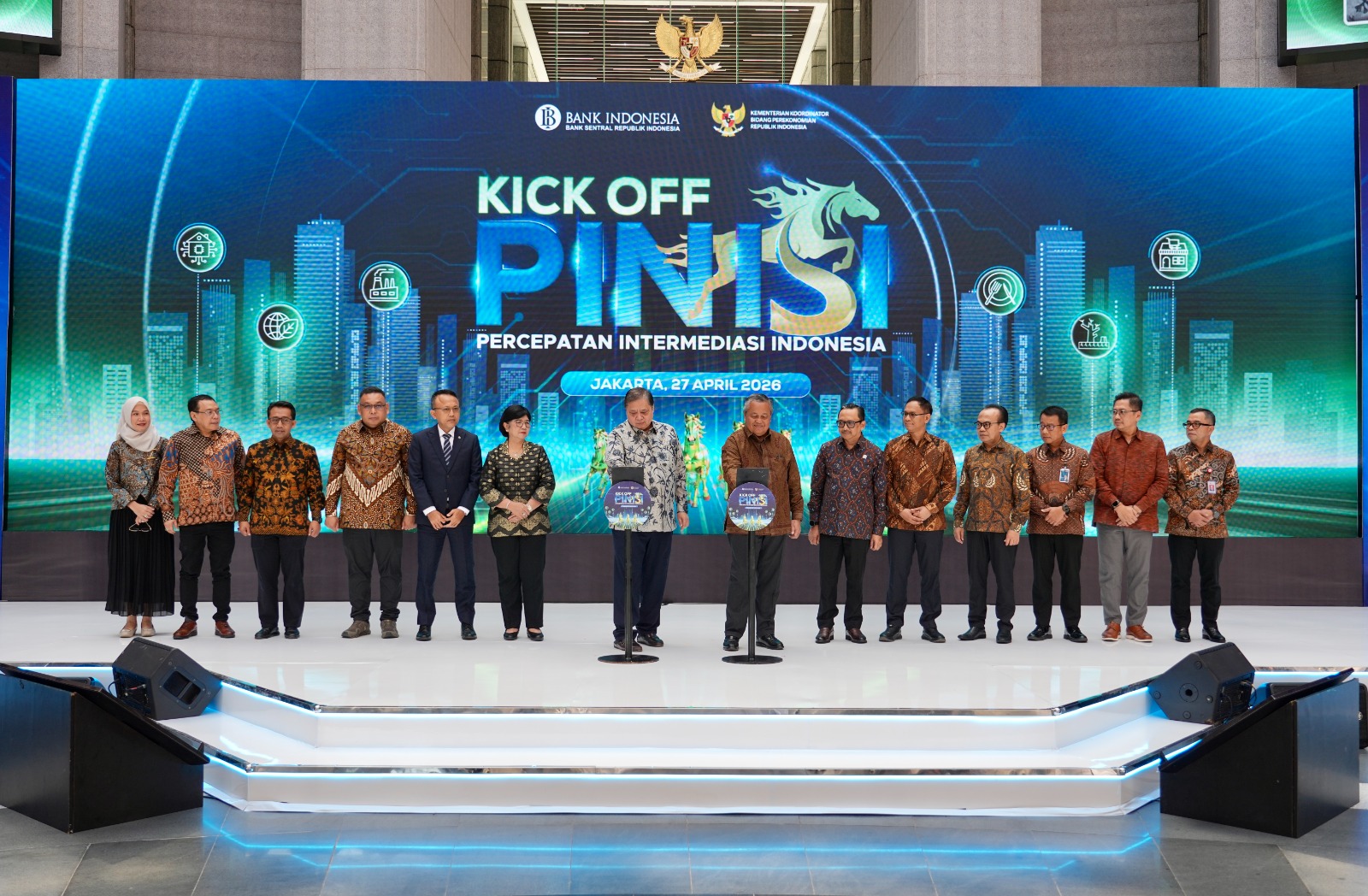
Indonesia is strengthening efforts to sustain its economic growth through accelerated financial intermediation, marked by the launch of the Percepatan Intermediasi Indonesia (PINISI 2026) program in Jakarta (27/04).
The initiative was officially kicked off by Bank Indonesia Governor Perry Warjiyo and Coordinating Minister for Economic Affairs Airlangga Hartarto, alongside government officials, investors, and business leaders.
The program reflects a joint commitment among Bank Indonesia, the government, and stakeholders to improve the distribution of financing to the real sector while addressing intermediation challenges.
Addressing Key Challenges in Domestic Economic Growth
Governor Perry Warjiyo stated that Indonesia must rely more on domestic demand amid unfavorable global conditions. He identified three main challenges: restoring business confidence and aligning financing with national priority projects, strengthening domestic growth engines and financing capacity, and ensuring policy transmission to the real economy.
“To support Indonesia's economic growth in 2026 at 4.9–5.7% and continue increasing, BI is strengthening its policy mix, including macroprudential policy to encourage credit growth while maintaining financial system stability," he said.
Financial Sector Plays a Strategic Role in Development Financing
Coordinating Minister Airlangga Hartarto emphasized that the financial services sector is essential in driving development financing. “The financial services sector holds a strategic role as the engine of development financing. Credit must grow healthily, reach MSMEs, and sectors that create added value and jobs," he said.
As of March 31, 2026, government credit programs reached Rp78.39 trillion, or 24.88% of the annual target. He stressed that collaboration among all stakeholders is necessary. “The success of this agenda cannot be carried out by the Government alone. The strength of PINISI lies in the complementary roles of all parties," he added.
Banking Sector Shows Strong Capacity to Expand Lending
Bank Indonesia continues to strengthen its policy mix to support sustainable growth, including macroprudential measures to encourage lending. Bank credit grew 9.49% year-on-year in March 2026, showing an increase from the previous month.
Senior Deputy Governor Destry Damayanti noted that financing potential remains significant, especially for productive sectors. She highlighted that undisbursed loans reached Rp2,527.46 trillion, or 22.59% of total credit ceilings in March 2026.
Bank Indonesia is optimizing its Macroprudential Liquidity Incentive Policy (KLM) to encourage banks to channel credit to priority sectors and accelerate lending rate reductions. Banking liquidity remains adequate, with a liquidity ratio (AL/DPK) of 27.85% and third-party funds growing 13.55% year-on-year.
PINISI 2026 Facilitates Policy Dialogue and Investment Matching
The PINISI 2026 kickoff runs from April 27–28, 2026, involving ministries, financial institutions, domestic and global investors, and business actors. The agenda includes policy dialogues, project showcases, and business matching for government and banking priority programs.
This initiative underscores the commitment of Bank Indonesia, the government, and stakeholders to accelerate intermediation and promote investment to maintain sustainable economic growth.
PHOTO: BANK INDONESIA
This article was created with AI assistance.
We make every effort to ensure the accuracy of our content, some information may be incorrect or outdated. Please let us know of any corrections at [email protected].
Read More