





 Thursday, 28-05-26








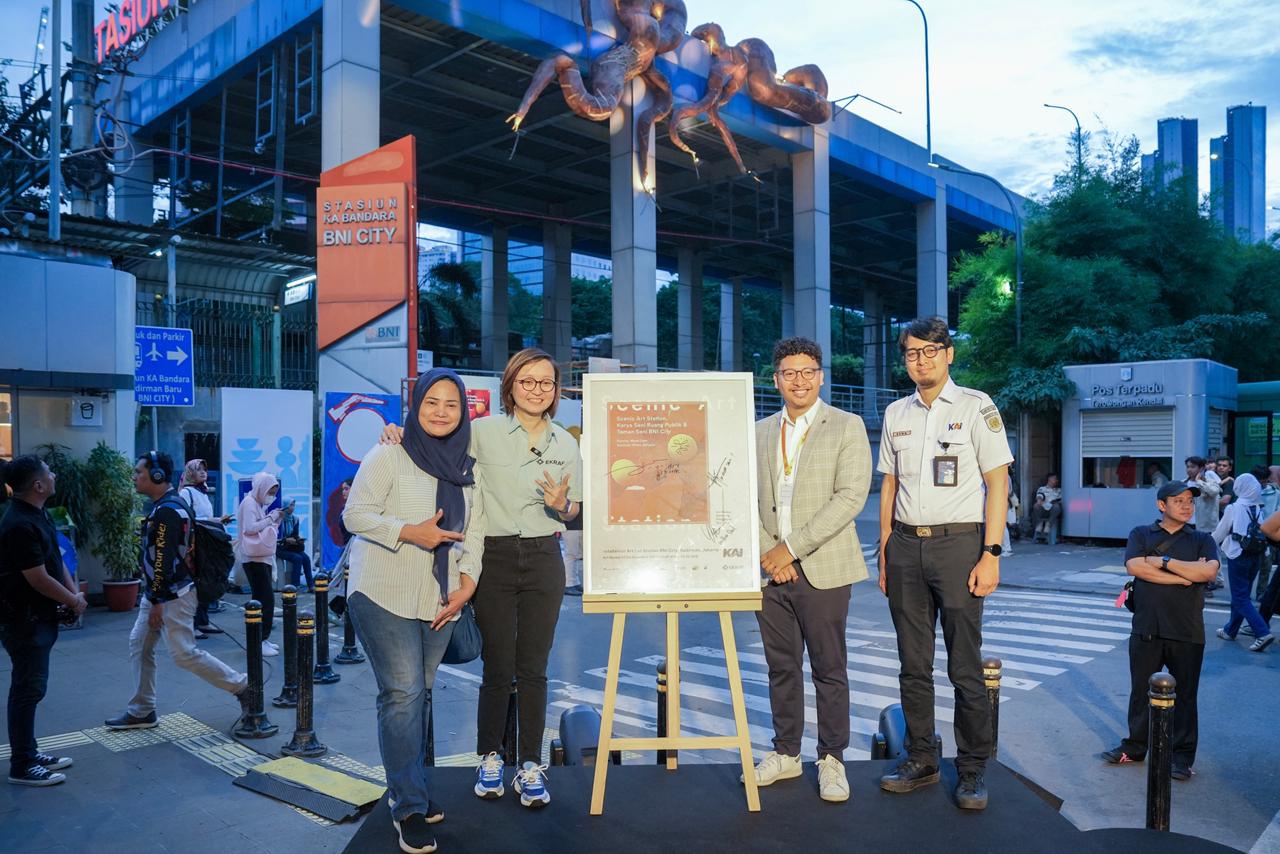
Deputy Minister of Creative Economy and Deputy Head of the Creative Economy Agency (Ekraf), Irene Umar, officially inaugurated the Scenic Art Station at BNI City Station, Jakarta, transforming the transit area into a public art space for daily commuters (27/12).
The initiative introduces a gallery-style art experience within an urban transit hub serving around 65,000 daily users in the Dukuh Atas area.
Public Transit Reimagined as a Creative Interaction Space
The Scenic Art Station is designed to shift the function of the station from a transit point into a space for interaction and creative engagement. The project positions public infrastructure as an accessible platform for artistic expression.
“We also thank the DKI Jakarta Provincial Government for providing a Transit Orientation Hub for 65,000 people who pass through Dukuh Atas every day. We see public spaces as a canvas for all creative economy fighters and for the community here,” Irene Umar said.
Art Integrated Into Daily Urban Life
Scenic Art Station is described as a movement to bring art closer to everyday life. By combining transportation infrastructure with human-centered values, the space offers visual, reflective, and emotional experiences for commuters amid the city’s dense routines.
The approach aims to make public spaces more meaningful for users without changing their primary function.
Taman Seni BNI City Open to the Public for Three Days
From December 27 to 29, 2025, BNI City Station is presented as Taman Seni BNI City, a public art park accessible to the wider community. The program is a collaboration between KAI and the Ministry of Creative Economy.
The art park features creative activities including an art market, art playground, interactive art installations, and a design corner.
Platform for Local Artists and Creative Economy Development
All programs are designed to celebrate creativity, facilitate idea exchange, and provide space for local artists and designers fostered by the Ministry of Creative Economy to interact directly with the public.
According to Irene Umar, activating public spaces through art plays a strategic role in strengthening the creative economy ecosystem.
“The Ministry of Creative Economy is committed to continuously supporting the strengthening of the creative economy ecosystem by utilizing public spaces as value-added creative spaces and encouraging hexahelix collaboration to make it happen,” she said.
The inauguration was attended by Central Jakarta Tourism and Creative Economy Sub-agency Head Shinta Nindyawati, VP of Non Railway Engineering Widya Sena Pradipta, and Project Director Wilbert Deil.
PHOTO: MINISTRY OF TOURISM AND CREATIVE ECONOMY
This article was created with AI assistance.
Read More