





 Friday, 18-09-26








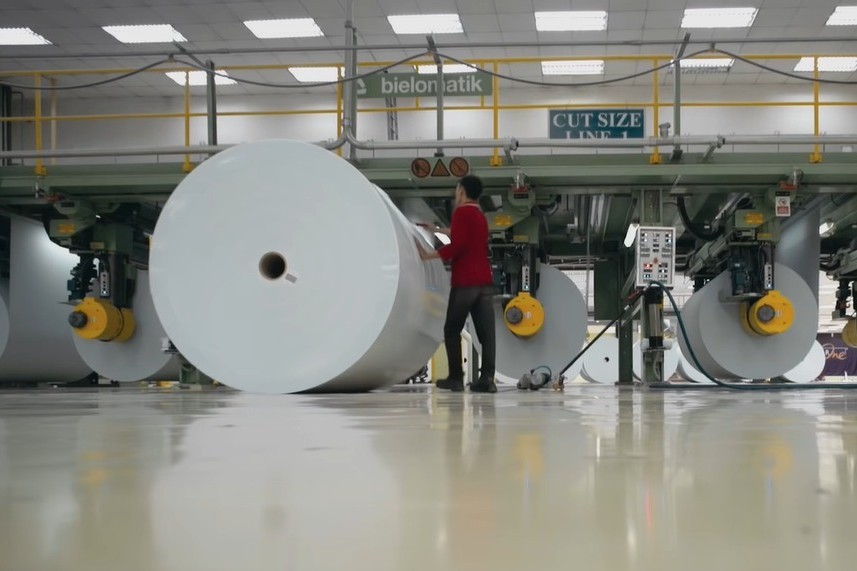
Indonesia’s pulp and paper industry is accelerating its shift toward sustainability while maintaining its role as a key driver of the national economy, as highlighted at the opening seminar of the 2025 Indonesian Pulp and Paper Association (APKI) Working Meeting (23/12).
The seminar carried the theme “Beyond Growth: Transforming Indonesia’s Pulp and Paper Industry Towards a Sustainable Future.”
Agro Industry Dominates Non-Oil Manufacturing Contribution
The Acting Director General of Agro Industry at the Ministry of Industry, Putu Juli Ardika, said the agro industry remains the backbone of Indonesia’s non-oil and gas manufacturing sector.
Data from the Ministry’s Center for Data and Information shows the agro industry contributed 51.74 percent to non-oil manufacturing GDP in the third quarter of 2025.
Food and beverages accounted for 41.06 percent, followed by tobacco processing at 3.98 percent.
Paper and paper products contributed 3.68 percent, while wood, furniture, and other subsectors made up the rest.
Strong Performance and Global Standing of the Sector
Industrial confidence remained positive, with the November 2025 Industrial Confidence Index at 53.45 and the Purchasing Managers’ Index at 53.3, both in the expansion zone.
These figures indicate stable industrial activity.
In 2024, Indonesia’s pulp and paper exports reached USD 8.09 billion with a volume of 11.98 million tons, while imports stood at USD 3.42 billion.
By mid-2025, the country had 113 pulp and paper companies with production capacities of 11.43 million tons of pulp and 21.31 million tons of paper.
Indonesia ranks seventh globally as a pulp producer and sixth as a paper producer.
The sector contributes 3.68 percent to non-oil manufacturing GDP.
Employment Impact and Emissions Challenges
“The industry absorbs more than 288,000 direct workers and around 1.2 million indirect workers,” Putu said.
This underlines the sector’s importance to employment.
Despite strong performance, the pulp and paper industry faces pressure to reduce emissions.
The industrial sector contributes about 34 percent of national emissions, with pulp and paper accounting for 15.55 percent of total industrial emissions.
Government Roadmap and Circular Economy Push
The government has committed to achieving Net Zero Emissions in the industrial sector by 2050, in line with Indonesia’s national target of 2060 or sooner.
A decarbonization roadmap for the pulp and paper industry is being prepared to support this goal.
The roadmap includes energy efficiency improvements, renewable energy use, clean energy mix strengthening, integrated waste management, and adoption of advanced technologies such as CCS and CCUS, as well as sustainable biomass use.
The Ministry is also promoting a circular economy through recycled paper as raw material, which can save up to 60 percent of energy compared to primary pulp production.
“Circular economy not only reduces emissions and waste, but also creates added economic value, reduces import dependence, and opens green job opportunities in various regions,” Putu said.
PHOTO: FORESTINSIGHTS
This article was created with AI assistance.
Read More