





 Saturday, 27-06-26








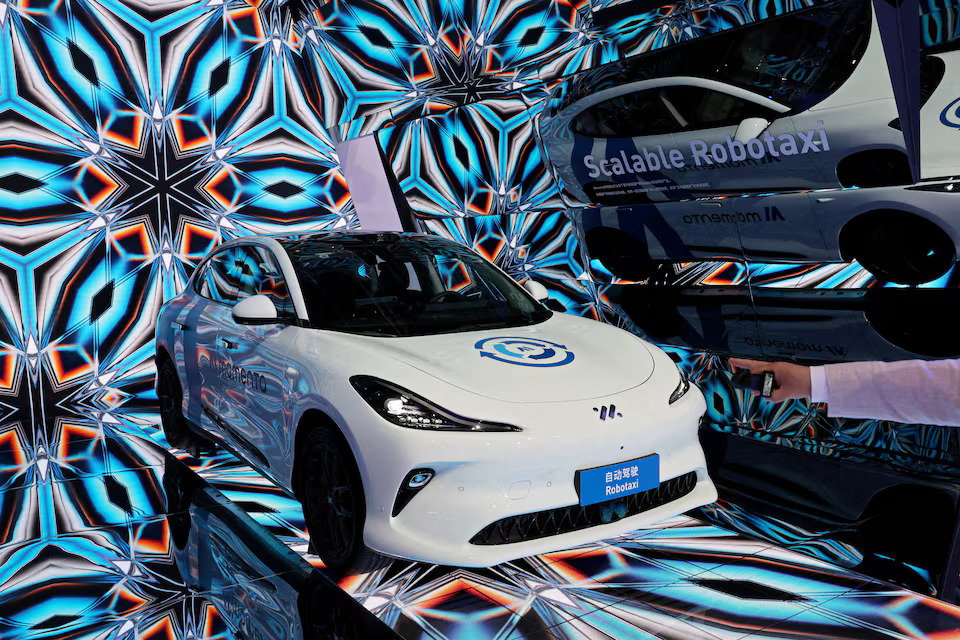
In a landmark strategic move that underscores the global momentum behind autonomous mobility, China’s self-driving technology leader Momenta has entered into a Momenta Grab autonomous partnership with Southeast Asia’s dominant superapp, Grab Holdings. This collaboration aims to advance the deployment of autonomous driving technologies and robotaxi services throughout the region’s complex urban environments, catering to burgeoning demand for safe, efficient, and scalable next-generation mobility solutions. The partnership also includes a strategic investment from Grab into Momenta, though financial details were not disclosed.
This comprehensive article explores the implications of the Momenta-Grab autonomous partnership, the strategic rationale of both companies, the broader context of global autonomous vehicle (AV) development, and the future outlook for autonomous deployment in Southeast Asia. By examining market trends, competitive dynamics, and regulatory environments, this article offers a data-driven and business-oriented perspective tailored for readers interested in emerging mobility technologies, international tech cooperation, and strategic investment patterns.
Understanding the Momenta-Grab Autonomous Partnership
The Momenta Grab autonomous partnership represents a pivotal juncture in autonomous mobility strategy for both companies. Momenta, a prominent Chinese autonomous driving technology company known for its advanced software and data-driven autonomy stack, has entered into a formal strategic collaboration with Grab, a platform synonymous with ride-hailing, food delivery, payments, and broader superapp services in Southeast Asia.
Under this arrangement, Grab has taken a strategic investment stake in Momenta while both firms commit to testing, refining, and ultimately deploying autonomous driving capabilities across multiple Southeast Asian markets. As urbanization accelerates in the region and transportation networks seek to balance congestion, safety, and cost efficiency, autonomous mobility offers the potential to reshape how people and goods move.
Beyond purely technological collaboration, the partnership also embodies a shared commercial vision. Grab gains access to Momenta’s cutting-edge autonomous software and integration expertise, while Momenta leverages Grab’s vast user base, real-world service data, and deep market penetration. This creates a feedback loop that could accelerate real-world refinement of autonomous systems in dense, varied, and often unpredictable Southeast Asian traffic conditions.
Strategic Drivers Behind the Autonomous Collaboration
Several key factors are driving the Momenta Grab autonomous partnership forward:
1. Regional Mobility Demand and Urban Complexity
Southeast Asia faces unique mobility challenges, including rapid urban growth, diversified traffic behaviors, and significant congestion in major metropolitan areas such as Jakarta, Bangkok, Manila, and Kuala Lumpur. Autonomous driving solutions can alleviate congestion, improve road safety, and reduce reliance on human labor for first- and last-mile transport. Collaborative pilots and technology trials are therefore essential to adapt autonomous systems to localized conditions.
2. Competitive Global Landscape
In recent years, Chinese autonomous driving firms have pursued aggressive global expansion. Companies such as Pony.ai, WeRide, and Baidu’s Apollo Go are also extending their autonomous technology footprints globally, often through partnerships with international mobility platforms and local governments. The Momenta-Grab partnership aligns with this broader trend of Chinese AV innovation crossing borders to capture overseas market share.
3. Synergies with Existing Mobility Networks
Grab’s existing ride-hailing and mobility ecosystem provides a ready foundation for autonomous integration. By layering autonomous driving capabilities onto its established platform, Grab can pilot hybrid fleets where autonomous vehicles augment traditional driver networks, enabling safer and potentially more economical service models.
4. Investment and Data Advantage
Grab’s strategic investment in Momenta not only strengthens the financial foundation of the partnership but also fosters data sharing that can enhance AV development. Real-world data from Grab’s platform—spanning user demand patterns, route frequencies, and regional traffic insights—can help refine Momenta’s algorithms to better handle diverse Southeast Asian road conditions.
Technological Underpinnings of Momenta’s Autonomous Capabilities
Momenta’s technology stack is anchored in advanced artificial intelligence, machine learning, and robust sensor fusion frameworks. The company emphasizes a dual-track approach that simultaneously advances mass-market advanced driver-assistance systems (ADAS) and high-order autonomous systems such as robotaxis. This strategy enables Momenta to harness large data sets from connected vehicles and integrate them into scalable autonomous models.
One hallmark of Momenta’s autonomous solution is the use of a highly integrated “flywheel” architecture that accelerates AI learning cycles. By consolidating perception, planning, and control functions into a unified model, Momenta’s platform can continually self-improve based on real-world driving feedback. This is crucial for adapting to dynamic urban environments and addressing edge cases often encountered in dense traffic scenarios.
Additionally, Momenta’s collaborations with global automakers like Mercedes-Benz and BMW for robotaxi and ADAS integrations reinforce its technological credibility. These partnerships demonstrate that the company’s software can be deployed at scale within mass-produced vehicles, a critical requirement for commercial autonomous services.
Market and Competitive Dynamics in Southeast Asia
The Southeast Asian autonomous mobility market is attracting attention from multiple global players. In addition to the Momenta-Grab initiative, other autonomous driving startups and technology firms are testing or piloting services:
- WeRide and Grab: Several announcements indicate strategic equity investments and collaboration between Grab and Chinese autonomous driving firm WeRide, targeting robotaxi fleets across Southeast Asia.
- Baidu Apollo Go: China’s Baidu has announced plans to deploy driverless vehicles on major ride-hailing platforms in Asia and the Middle East, further intensifying competition for autonomous mobility leadership.
This crowded competitive landscape underscores the importance of strategic local partnerships. Grab’s role as a superapp gives it a platform scale advantage, while technology partners like Momenta bring autonomous innovation expertise. Together, they aim to build a differentiated value proposition.
Regulatory and Safety Considerations
Implementing autonomous driving technologies in Southeast Asia requires navigating varying regulatory environments. Governments across the region are increasingly open to trials and pilots of autonomous systems, but safety frameworks and standards remain in development. This necessitates ongoing engagement with local transportation authorities, iterative testing, and robust safety validation protocols.
The Momenta Grab autonomous partnership includes a shared commitment to prioritize safety in deployment, signaling confidence in regulatory compliance and public acceptance. As markets evolve, this focus will be crucial to scaling autonomous driving operations responsibly and securing broader consumer trust.
Economic and Social Impact
The potential economic benefits of autonomous mobility are significant. By reducing operational costs, enhancing service reliability, and unlocking new transport models, autonomous vehicles could reshape the mobility sector’s economics. For Grab, autonomous services may enhance profitability while reducing dependency on human drivers. For Momenta, scaling abroad creates new revenue streams and reinforces its global technology leadership.
Socially, autonomous technology could influence workforce dynamics. Questions about transition pathways for traditional drivers are emerging, including retraining and integration into new operational roles. These socio-economic considerations will shape how AV deployment affects labor markets and urban transportation ecosystems.
Future Outlook for Autonomous Mobility in Southeast Asia
The Momenta Grab autonomous partnership is more than a commercial agreement; it is a strategic blueprint for how autonomous technology can be integrated into modern mobility ecosystems. As pilot programs expand and regulatory frameworks mature, Southeast Asia may become a fertile testing ground for autonomous driving innovations that later scale globally.
Looking ahead, the success of autonomous services will hinge on collaborative execution, data-driven refinement, and proactive engagement with government and industry stakeholders. If effectively realized, autonomous mobility could redefine convenience, safety, and sustainability for millions of riders across the region.
Read More