





 Tuesday, 29-09-26








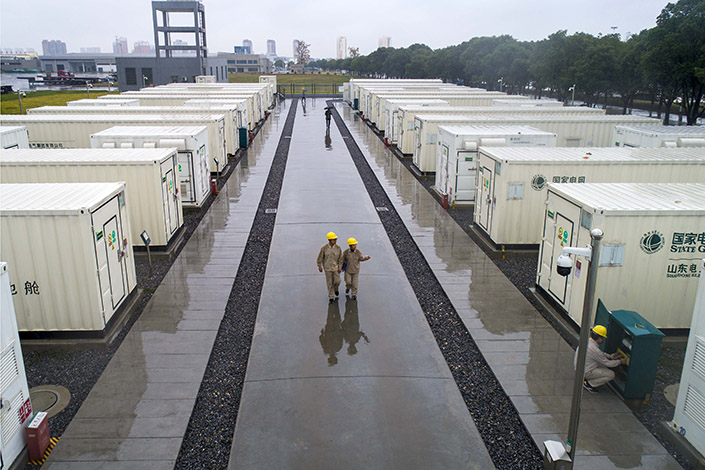
China’s power market has entered a pivotal phase that significantly enhances the economics of battery storage and accelerates the growth of clean energy systems worldwide. As new market reforms unfold domestically alongside surging international demand for reliable energy storage solutions, China battery storage exports are emerging as a major value driver for both Chinese manufacturers and global renewable energy deployments.
The confluence of electricity market reform, robust renewable energy expansion, and pressing reliability needs from critical infrastructure sectors has transformed battery storage from a niche policy tool into a commercially viable, export-oriented industry. Chinese firms are now shipping record volumes of lithium-ion cells for both stationary energy storage systems (ESS) and electric vehicles (EVs), positioning China at the forefront of the evolving clean energy export economy.
This article analyzes the drivers behind this transformation, its implications for global markets, and the future trajectory of China battery storage exports within the broader renewable energy ecosystem.
China’s Power Market Reforms and the Rise of Energy Storage
Historically, China’s battery storage assets were underutilized because of rigid pricing structures in the domestic electricity market, which relied on fixed tariffs that did not reward flexible storage operations. However, recent policy reforms have shifted the system toward market-based pricing and competitive auctions for new power projects, creating financial incentives for storage operators to charge electricity when prices are low and discharge when prices spike. This structural shift has made energy storage more profitable and commercially attractive within China’s evolving power landscape.
The result is a reorientation from storage as a compliance measure toward storage as a commercially viable asset class capable of delivering arbitrage value, grid reliability services, and peak-shaving benefits. For Chinese energy companies, this means scaling up production not only to meet domestic needs but also to supply international markets where similar needs for grid stability, renewable integration, and off-grid support are growing.
Record Growth in Battery Storage Exports
Driven by this domestic transformation and strong overseas demand, China battery storage exports have reached record highs in 2025. According to customs and industry data, Chinese exports of batteries—including those for stationary energy storage and EV applications—exceeded USD 65 billion in value over the first ten months of the year. This performance solidified batteries as China’s most lucrative clean-tech export, overtaking solar photovoltaics.
Market analysts estimate global shipments of lithium-ion storage cells could reach between 800 gigawatt-hours (GWh) in 2026, reflecting growth rates of 33 to 43 percent compared with 2025 forecasts. Chinese manufacturers account for the majority of this expansion, supplying a broad network of international markets that depend on battery storage to back up wind and solar facilities, strengthen aging grid infrastructure, and support energy-intensive data centers.
Chinese technology firms such as Contemporary Amperex Technology Co. Limited (CATL), BYD, EVE Energy, and others lead this export surge, leveraging vast production capacity, economies of scale, and advanced production techniques to maintain global competitiveness.
Global Demand Trends: Renewable Integration and Reliability Needs
The rapid growth of renewable energy capacity globally has heightened the need for flexible energy storage solutions that can smooth the intermittent nature of wind and solar power. Grid systems in Europe, the Middle East, Southeast Asia, and North America face increasing pressure to maintain stability as they integrate higher shares of renewables. These regions are major destinations for China battery storage exports because Chinese batteries offer competitive pricing, reliability, and scalability.
In Europe, for example, utilities are confronting aging infrastructure and higher renewable penetration, creating a pressing need for storage facilities capable of delivering reliable grid support. Meanwhile, in rapidly developing regions such as the Middle East and Africa, renewable projects often lack adequate backup systems, increasing demand for imported battery storage technology.
Another key demand driver is the global build-out of data centers, particularly those dedicated to artificial intelligence (AI) and cloud computing workloads that require uninterrupted power supplies. Traditional grid systems often struggle to meet these reliability requirements, making battery storage a crucial component of data center infrastructure.
Export Geographies and Competitive Position
The global reach of China battery storage exports is expansive. European markets lead import demand, accounting for a substantial share of shipments, followed by emerging demand from Asia Pacific and North America. Chinese battery producers have established supply chains that now extend to more than 100 countries worldwide, with strong uptake in regions focused on renewable power integration and grid resilience.
Despite external pressures such as rising tariffs and geopolitical tensions with the United States and some Western nations, Chinese manufacturers have adapted by diversifying their export destinations and offering competitive cost structures that appeal to markets prioritizing affordability and scalability. In some cases, Chinese firms have sought local partnerships or manufacturing setups in foreign markets to mitigate tariff impacts and logistical costs.
Technology Trends and Manufacturing Leadership
China’s dominance in battery technology stems from its vertical integration across the supply chain, from raw materials and cell production to battery management systems (BMS) and pack assembly. Many of the world’s largest battery cell suppliers are headquartered in China, granting them a competitive advantage in production volume, cost efficiency, and technological innovation.
Advancements in lithium-iron phosphate (LFP) chemistries have also contributed to export growth, particularly for stationary storage applications where safety, lifecycle stability, and cost efficiency are vital considerations. These chemistries have gained market traction as they balance performance and cost in ways that meet the needs of many utility-scale and commercial storage deployments.
Battery quality and innovation continue to improve as manufacturers integrate next-generation cell designs, enhanced BMS frameworks, and modular solutions that simplify deployment and maintenance. Chinese firms also invest in artificial intelligence and automation to streamline R&D, optimize production workflows, and reduce the time from prototype to commercialization.
Economic and Policy Implications
The export boom for battery storage technologies has significant economic implications. China’s battery industry not only generates substantial export revenues but also reinforces its strategic position within global clean energy value chains. As countries decarbonize their power sectors, the demand for energy storage will only intensify, creating a long-term growth trajectory for Chinese battery producers.
From a policy perspective, China’s domestic reforms serve as a model for integrating market principles into energy storage development. By aligning incentives with market signals, China has unlocked commercial value in storage assets that historically operated under cost-recovery constraints. Other nations observing this transition may adopt similar reforms to stimulate investment and operational participation in energy storage markets.
At the same time, trade policy and international cooperation will play a critical role in shaping future market dynamics. Tariff regimes, export controls, and environmental standards could influence how Chinese battery products compete globally, while collaborative frameworks might emerge to standardize safety and performance benchmarks across markets.
Future Outlook for China’s Battery Storage Exports
Looking ahead, China battery storage exports are expected to continue their expansion in line with global decarbonization targets and investment in renewable energy. Forecasts point to robust growth in energy storage installations, which will sustain strong demand for Chinese battery technology.
Innovations in battery chemistry, manufacturing automation, recycling, and second-life applications for grid storage could further enhance the competitiveness of Chinese exports. Additionally, as global energy systems evolve toward higher electrification and digitalization, storage technologies will play a central role in ensuring grid resilience and enabling flexible, clean energy solutions.
Overall, China’s strategic alignment of policy reform, manufacturing capacity, and global market engagement signals a transformative era for energy storage—a shift that will shape how power systems evolve in the coming decade.
Read More