





 Tuesday, 22-09-26








The Ministry of Industry (Kemenperin) is accelerating Indonesia’s transition toward sustainable green industry through the New National Industrialization Strategy (SBIN) (11/12).
The strategy is designed to make the nation’s industrial sector more competitive, independent, and sovereign, aligning with President Prabowo Subianto’s Asta Cita vision, particularly in achieving sustainable energy self-sufficiency as the foundation for industrial development.
Minister of Industry Agus Gumiwang Kartasasmita emphasized that industrial development should deliver tangible benefits to society and drive high-quality job creation.
“Sustainability is a vital element for the future of Indonesia’s industry, as the global landscape grows increasingly complex. Industrial actors are required to be adaptive while strengthening domestic industrial structures,” he said in Jakarta on Thursday (11/12).
Domestic Market and TKDN Policies as Priorities
According to Menperin, approximately 80 percent of national industrial production is absorbed by the domestic market. Strengthening and protecting the domestic market is a key focus of SBIN implementation.
“Government policies will reinforce the Domestic Component Level (TKDN) to ensure public spending contributes significantly to increasing national industrial capacity,” Agus added.
BSKJI and BBSPJPPI Promote Sustainable Industry Practices
To enhance green industry competitiveness and support domestic products, the Industrial Services Standardization and Policy Agency (BSKJI), through the Industrial Pollution Prevention Services Center (BBSPJPPI), held a Business Gathering in Semarang (11/12) themed “Enhancing Green Industry Competitiveness through Domestic Product Support.”
BSKJI Head Emmy Suryandari explained that all technical service units under BSKJI play a strategic role in implementing SBIN. By improving innovation, service quality, and industrial services utilization, BSKJI aims to deliver a tangible and broad impact on the sustainable industry.
“BSKJI units are encouraged to develop services that provide direct benefits to the industrial sector, particularly in strengthening sustainability and domestic production capacity,” she said.
BBSPJPPI Acting Head Apit Pria Nugraha stated that the agency is committed to expanding market access, strengthening collaboration with industry players, and continuously improving service standards. “BBSPJPPI consistently develops service innovations, including diversifying industrial services to strengthen domestic product competitiveness and support national green industry targets,” he said.
Strategic Services Supporting Green Industry
During the Business Gathering, BBSPJPPI presented a range of industrial services critical to the sector, including TKDN verification, industrial technical guidance, consultancy, green industry certification, testing, calibration, Continuous Emission Monitoring System (CEMS) audits, and Adaptive Monitoring Systems (AiMS). These services aim to help industry comply with environmental regulations, increase operational efficiency, and enhance the competitiveness of domestic products in national and global markets.
The event also recognized eight clients with the BBSPJPPI Awards 2025 for high loyalty and positive contributions to collaboration and communication.
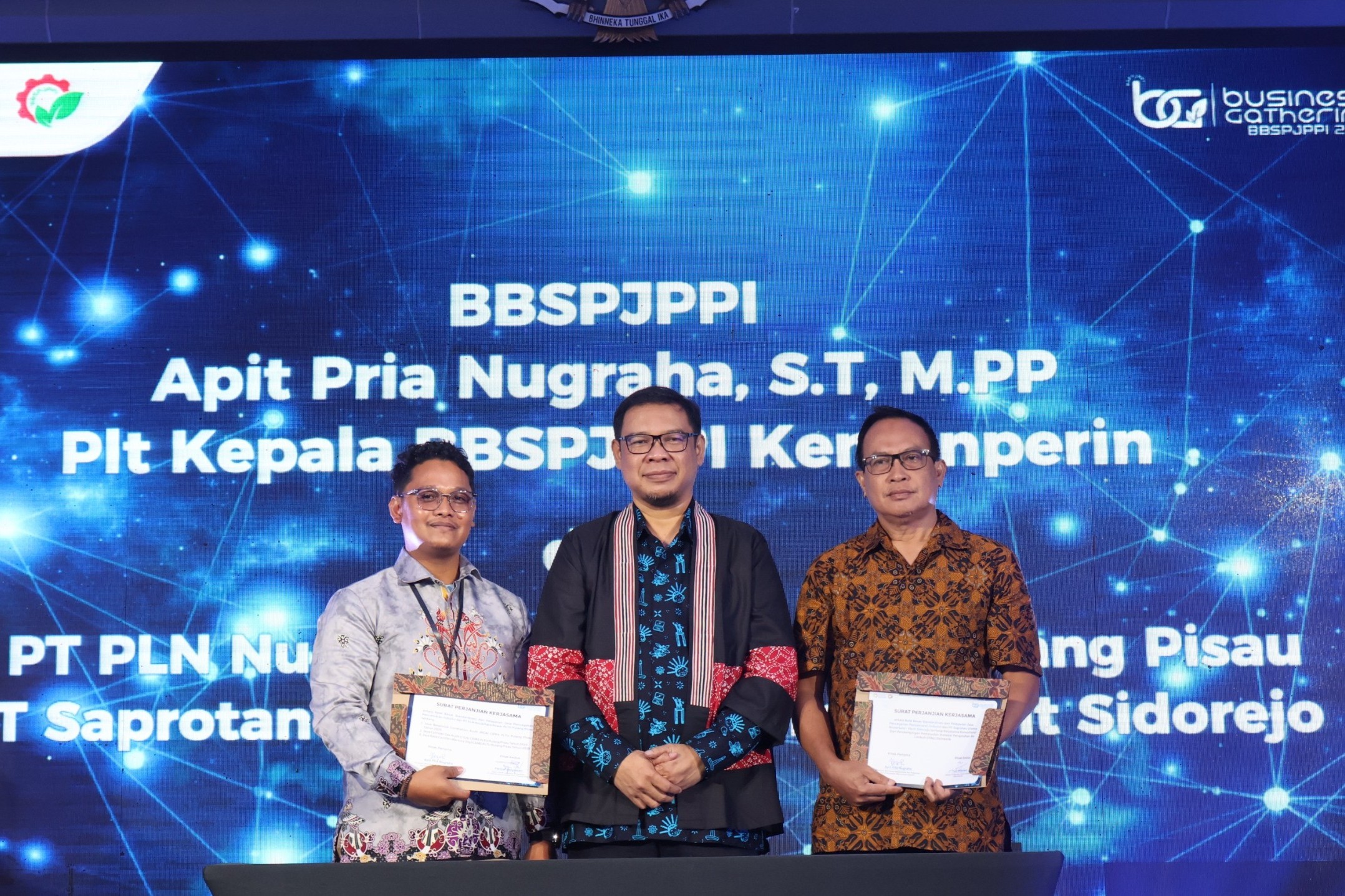
Additionally, two cooperation agreements were signed: consultancy and support for the construction of a domestic wastewater treatment facility (IPAL) at PT Saprotan Utama Nusantara Plant Sidorejo and a CEMS audit at PLTU Pulang Pisau, operated by PT PLN Nusantara Power.
Collaboration as a Key to Green Industry Transformation
Apit emphasized that these partnerships reflect industry confidence in BBSPJPPI’s competence and motivate continued service improvements. “The joint commitment between the government and industry is key to achieving a greener, independent, and more competitive industrial transformation,” he said.
PHOTO: MINISTRY OF INDUSTRY
This article was created with AI assistance.
Read More