





 Tuesday, 27-10-26








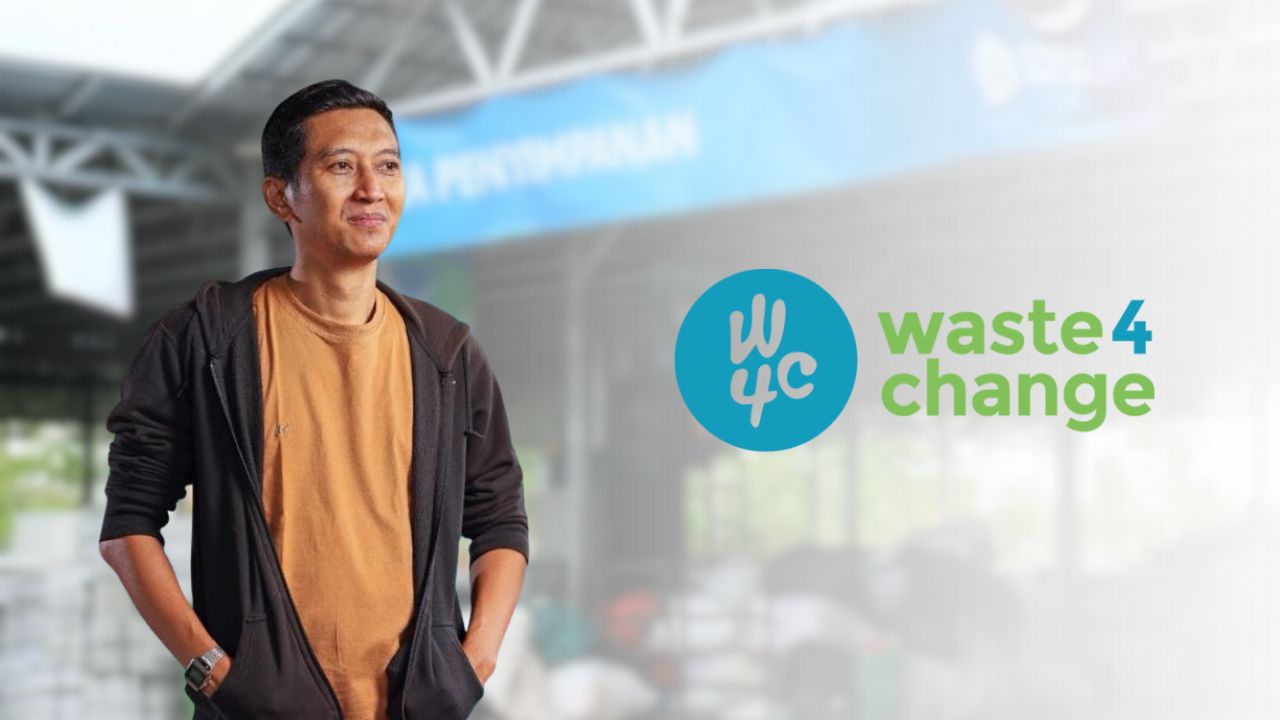
Mohamad Bijaksana Junerosano, widely known as Sano, the founder and CEO of Waste4Change, recently received recognition as The Eco Innovator at the BIG 40 Awards 2025. The award marks another milestone for a company that has grown from a local waste management startup into a leading voice for circular economy practices in Indonesia. Beyond the applause, the honor is a useful lens through which to examine how private innovators can scale climate friendly services, influence policy, and build market models that deliver both environmental and social value.
Why This Award Matters for Waste Management Innovation
Recognition matters. Awards like The Eco Innovator at BIG 40 do not simply signal prestige. They raise visibility in investor circles, strengthen credibility with corporate clients, and help attract policy partners who can enable larger system changes. For Waste4Change the award amplifies proven strengths: community based collection systems, service models for households and businesses, and investment in circular initiatives that convert waste into new resources. These practical interventions make the company more than a service provider; they position it as a systems partner in Indonesia’s transition from linear waste disposal to circular resource use.
This recognition also highlights the business case for sustainability. Waste4Change has repeatedly shown that environmental services can be structured to achieve both impact and growth. The company’s prior awards and strong growth trajectory have illustrated that customers and partners respond to trustworthy, measurable sustainability solutions. In short, recognition consolidates market trust which helps scale operations and expand services to more cities and corporate clients.
Who Is Mohamad Bijaksana Junerosano and Why His Role Is Important
Mohamad Bijaksana Junerosano launched Waste4Change in 2014 with a mission to reduce Indonesia’s waste problems through ethical and inclusive waste management. His leadership has been characterized by a focus on community empowerment, education on waste separation, and partnerships across government, non profit, and the private sector. Under his stewardship, Waste4Change has grown its service footprint, implemented community programs, and engaged in practical innovations such as material recovery and circular supply chain initiatives. These initiatives help break the narrative that environmental action is a cost center. Instead, they present it as an investible, scalable economic activity.
Sano’s background in environmental engineering and his early activism explain his practical bent. He frames waste management as both a technical and behavioral challenge. This combined approach allows Waste4Change to work at multiple leverage points: frontline collection, consumer behavior change, collaboration with local governments, and designing end markets for recoverable materials. The CEO’s public profile and storytelling also help the wider movement by inspiring other entrepreneurs and drawing attention to systemic gaps that require policy and private capital.
How Waste4Change’s Model Advances the Circular Economy in Indonesia
Waste4Change operates across a continuum from household collection and education to corporate partnerships and material processing. The company’s model emphasizes local ownership and capacity building as much as operational efficiency. That dual focus matters because technical solutions alone cannot succeed without durable behavior change and enabling institutions.
Key elements of the model include:
- Community engagement programs that teach and normalize waste separation at the source.
- Service packages for businesses and property managers to manage waste responsibly.
- Efforts to build value chains for recyclables so recovered materials have stable buyers.
- Transparency and accountability through reporting and traceability measures that reassure corporate clients.
Together these elements reduce landfill pressure, create local jobs, and strengthen the supply of recyclable feedstock for downstream manufacturers. By building these linkages, Waste4Change helps turn municipal and corporate waste from an expense into a potential resource stream for circular manufacturing and energy solutions.
Policy and Partnership Implications After the Award
Awards create momentum, but momentum must be converted into durable partnerships and policy shifts. For circular economy scale up, three policy and partnership priorities stand out.
First, municipal procurement reform. Cities need predictable procurement frameworks that reward inclusive, transparent service providers and incorporate environmental performance in contracts.
Second, stronger material markets. Policymakers and industry should collaborate to stabilize demand for recycled materials by creating incentives for manufacturers to use reclaimed feedstock.
Third, finance and technical assistance for local operators. Small to medium waste enterprises need access to patient capital, training, and market connections so they can professionalize and expand.
Recognition for the Waste4Change CEO can accelerate all three areas by increasing the firm’s convening power with local governments, funders, and multinational clients who seek credible partners to implement circular solutions at scale.
What This Means for Investors and Corporate Buyers
For impact investors and corporations with sustainability targets, Waste4Change’s award signals that credible, growth stage climate solutions exist in Indonesia. Investors looking for climate aligned opportunities should consider the demonstrated operational metrics and client base as signs of lower execution risk. For corporate buyers, partnering with an established provider with national recognition reduces procurement risk and supports corporate sustainability claims with verifiable impact.
At a practical level, the award can help the company secure new contracts, test new business lines such as organic processing or recycled material supply, and expand to new regions where municipal systems are still nascent.
Challenges and the Road Ahead
Despite its successes, scaling waste management remains hard. Challenges include fragmented municipal regulations, inconsistent recycling markets, and the need to change consumer behavior at scale. Building reliable end markets for recyclables continues to be an uphill task in many parts of Indonesia. The company must also sustain service quality while expanding, recruit and train local talent, and maintain unit economics that support both impact and investor returns.
However, the award provides leverage. With greater visibility, Waste4Change can amplify lessons learned, attract technical partners, and push for policy reforms that level the playing field for ethical service providers.
The Waste4Change CEO receiving The Eco Innovator recognition at the BIG 40 Awards 2025 is more than a personal accolade. It is a public signal that Indonesia has homegrown innovators who can design and deliver circular economy solutions at scale. For policymakers, investors, and corporate buyers, the moment is an invitation: partner, invest, and reform alongside credible local actors to build systems that capture value from waste, reduce environmental harm, and create livelihoods. The award provides momentum, but the critical work is translating recognition into policy change, market development, and scaled delivery across the archipelago.
Read More