





 Monday, 19-10-26








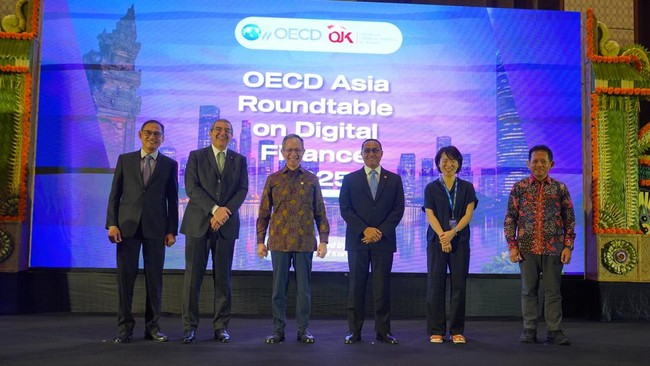
In December 2025, Indonesia took a decisive step to reinforce its digital financial sector. The Financial Services Authority (OJK) and the Organization for Economic Co-operation and Development (OECD) formally agreed to develop responsible and robust frameworks for digital finance governance. This partnership comes at a time when the world’s financial landscape is rapidly evolving due to digital assets, artificial intelligence, and fintech innovation. With this agreement, Indonesia aims not only to embrace technological advancement — but to do so under clear regulation, investor confidence, and consumer protection.
Why Digital Finance Governance Matters Right Now
The digital transformation in finance has accelerated globally and in Indonesia. Financial technologies, digital assets, tokenization of assets like gold, bonds, and property, alongside AI-driven fintech services, are changing how people bank, invest, transact, and access credit. However, such innovations bring along new risks: cyber threats, fraud, data privacy concerns, market instability, and consumer vulnerability. Without proper oversight, the rapid growth of fintech could lead to regulatory gaps or systemic risks.
Recognizing this, OJK and OECD convened the “Asia Roundtable on Digital Finance 2025” in Bali — a forum bringing together regulators, financial authorities, and digital finance stakeholders across Asia. The roundtable aims to align policies, share best practices, and craft a governance framework that balances innovation with stability and consumer protection. By formalizing this collaboration, Indonesia conveys its commitment to global standards and acknowledges that effective Digital Finance Governance is key to sustainable growth in the fintech era.
Key Pillars of the New Governance Framework
Through its partnership with OECD, OJK outlines several foundational pillars that will shape Indonesia’s approach to digital finance governance. Key aspects include:
Responsible AI and Fintech Oversight
Given how AI is increasingly embedded in financial services — from credit scoring to automated advice — OJK has strengthened its guidelines. In 2025, it updated its AI ethics code specifically for fintech to mitigate risks associated with AI use: fairness, transparency, accountability, and data security. This ensures that digital finance platforms leveraging AI operate responsibly, protecting consumer interests and reducing potential harms.
Tokenization of Assets Under Regulatory Sandbox
A core part of the collaboration covers asset tokenization. OJK is exploring controlled frameworks for tokenizing gold, bonds, and property — enabling new forms of investment and liquidity, while ensuring regulatory safeguards of stability, transparency, and risk management. With OECD’s global expertise, these efforts can follow international best practices and help position Indonesia as a trusted digital finance hub in the region.
Financial Inclusion and Digital Access
Many digital finance innovations aim to widen access to financial services — especially among underserved populations, small businesses, and remote regions. OJK aims to leverage inclusive fintech and digital financial solutions to accelerate financial inclusion across Indonesia.
Consumer Protection and Market Integrity
As fintech and digital assets proliferate, safeguarding consumers becomes critical. The new governance framework emphasizes regulation, transparency, security measures, and oversight mechanisms to ensure consumer protection and maintain market integrity.
Alignment with Global Standards Through OECD Partnership
By working with OECD, Indonesia seeks to align its regulatory framework with global best practices. This alignment not only boosts investor confidence but also helps in harmonizing cross-border fintech operations and ensuring interoperability across jurisdictions.
What This Means for the Indonesian Financial Ecosystem
Encouraging Innovation Without Sacrificing Safety
With a strong governance framework, fintech innovators and digital finance companies in Indonesia can develop new products — from digital lending, automated credit scoring, wealth management, to tokenized assets — with clearer regulatory certainty. This reduces compliance risk and may attract more domestic and foreign investment.
At the same time, through oversight and updated AI ethics codes, the government helps prevent misuse, fraud, and systemic risks. This balance between innovation and regulation is essential for long-term sector sustainability.
Expanding Access and Inclusion
The collaboration’s emphasis on inclusion and consumer protection could lead to wider access to financial services, especially for underserved and remote communities. Fintech solutions built under these rules can cater to micro-enterprises, low-income individuals, and previously unbanked populations, potentially narrowing the financial inclusion gap.
This could spur entrepreneurship, economic growth at grassroots level, and improved livelihoods through easier access to credit, savings, and investment.
Building Trust and Investor Confidence
Global partnerships with institutions like OECD signal seriousness about regulatory maturity. For domestic and foreign investors, this reduces regulatory uncertainty and enhances confidence in Indonesia’s digital finance market. Over time, this could lead to increased capital inflows, development of fintech infrastructure, and scaling of digital financial services.
Paving the Way for Regional Digital Finance Leadership
As other Asian economies also promote digital finance, Indonesia’s proactive governance and international alignment could position the country as a regional leader — offering robust, regulated, and inclusive digital finance. This might attract regional fintech firms, encourage cross-border fintech collaboration, and strengthen Indonesia’s role in ASEAN’s digital economy.
Challenges and What to Watch
Although the governance framework sets a strong foundation, some challenges remain.
- Implementation and Enforcement: Having guidelines and regulations is just the first step. Effective enforcement across a diverse and fragmented fintech ecosystem — including crypto, micro-finance, digital lending, and tokenized assets — will require considerable resources, regulatory capacity, and coordination across agencies.
- Balancing Innovation Speed with Risk Management: Over-regulation or slow approval may stifle innovation, while too-lenient rules may expose consumers to risks. Striking the right balance will be key.
- Public Awareness and Financial Literacy: As more people access digital finance, consumers must understand the risks. Without adequate financial and digital literacy, the risk of fraud or misuse remains high. OJK already works on financial literacy campaigns, but reaching all segments of population remains a challenge.
- Cybersecurity and Data Protection: As finance becomes increasingly digital, safeguarding data and preventing cyber threats will be essential. Robust security protocols, regular audits, and strong governance will be needed.
- Global Regulatory Alignment and Cross-Border Risks: While aligning with OECD standards helps, the global nature of digital finance means cross-border regulatory issues, data flows, and compliance burdens must be managed carefully.
A New Chapter for Indonesia’s Digital Finance
The agreement between OJK and OECD to develop comprehensive Digital Finance Governance marks a pivotal moment for Indonesia’s fintech and financial sector. By combining regulatory discipline, international standards, and commitment to inclusion, this collaboration lays the groundwork for a safer, more inclusive, and innovation-friendly financial ecosystem.
For fintech players, consumers, investors, and policymakers, this move signals that digital financial transformation in Indonesia is here to stay — but under governance, ethics, and responsibility. The next few years will test how well these policies are implemented, how effectively risks are managed, and whether Indonesia can leverage this momentum to become a regional digital finance leader.
Read More