





 Tuesday, 22-09-26








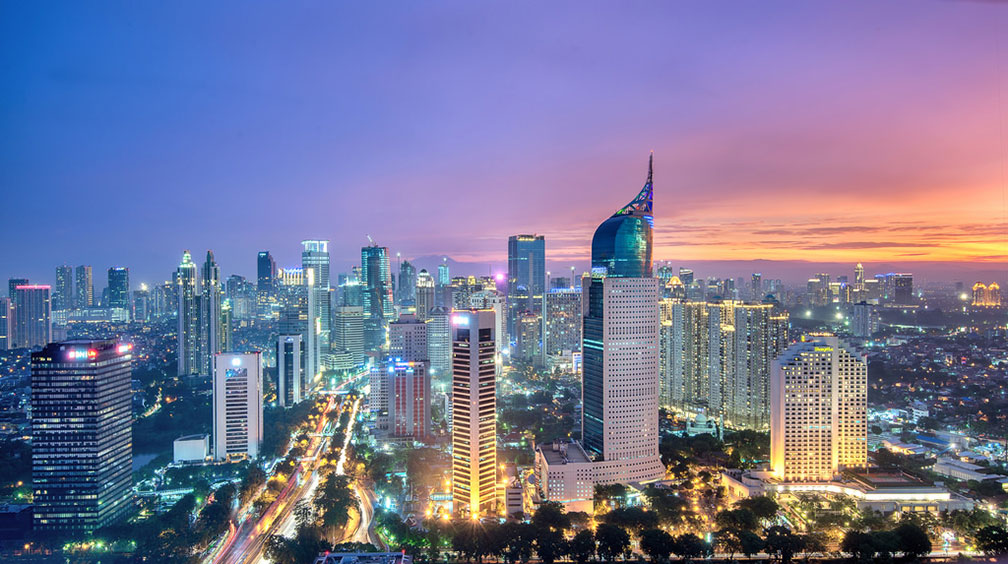
The United Nations’ World Urbanization Prospects 2025 update has produced one of the most discussed changes in recent demographic reporting: Jakarta overtakes Tokyo as the world’s most populous city under the report’s revised urban definitions. This change reflects new, internationally consistent criteria that redraw how we define city boundaries and count populations, and it carries meaningful implications for planning, infrastructure, and policy in the world’s largest urban centers.
Why Jakarta Overtakes Tokyo: Methodology and the Numbers
The headline fact is simple but significant: the UN estimates Jakarta now has about 42 million people, moving ahead of Dhaka and Tokyo in the 2025 rankings. The World Urbanization Prospects 2025 summary applies a standardized, geospatially informed method to delimit urban extents so that comparisons across countries are more consistent. Under the new method Jakarta’s urban footprint and contiguous population count expand relative to prior assessments, producing the figure commonly cited in media coverage.
Tokyo, by contrast, is recalculated under the same standard and is estimated at roughly 33 million people in the larger megalopolis definition used by the report. Dhaka is placed between these two giants, with some 37 million residents under the same criteria. These numbers should be read as comparable aggregates based on one methodology rather than absolute measurements of daily lived experience in local neighborhoods.
Urbanization Patterns: Asia’s Concentration of Megacities
One of the most striking patterns in the 2025 update is Asia’s dominance: nine of the ten largest urban agglomerations are in Asia. The number of megacities, defined as urban areas with at least ten million people, has grown from eight in 1975 to 33 in 2025. That concentration is a product of sustained rural-to-urban migration, high urban fertility rates in some regions, and the expanding geometric footprint of cities where suburbs and peri-urban settlements have merged into vast continuous metropolitan regions.
The finding that cities now account for nearly half of the global population, a huge change from the roughly 20 percent urban share in 1950, reinforces why policy makers and investors increasingly frame national strategies around cities. By 2050, the UN projects that two-thirds of the world’s population growth will be absorbed by cities. This matters for housing, transport, energy, and climate resilience planning.
What the Rankings Mean for Jakarta, Tokyo, and Dhaka
For Jakarta, the headline gives new urgency to long-standing challenges: traffic congestion, flood risk, unequal access to services, and the need for affordable housing. The “Jakarta population 42 million” figure is both a communication of opportunity and a warning. Planning and capital investment will need to scale quickly to prevent quality-of-life declines. For national and local authorities, the recalculated rank will focus international attention and potentially funding on solutions that reduce vulnerability while supporting economic dynamism.
Tokyo’s advance is more nuanced. While its broader regional population in the megalopolis framework remains large, Japan’s demographic shifts such as aging and low fertility mean Tokyo’s relative position can fall even as its urban core grows modestly. The recalibration removes a methodological advantage Tokyo had previously enjoyed and highlights how different definitions can re-order familiar narratives about global urban leadership. Dhaka’s emergence as a close second underscores how rapid urban expansion in South Asia will be a defining feature of the coming decades.
Policy Implications: Infrastructure, Services, and Climate Risk
When a city is counted among the world’s very largest, expectations about its service delivery rise accordingly. The practical consequences include a need for major investments in mass transit, wastewater and drainage systems, emergency management, and more resilient housing stock. Large urban populations concentrate both economic productivity and systemic risks: heat waves, floods, air pollution, and infrastructure failures create outsized social and economic costs. That connection between scale and vulnerability means that cities like Jakarta and Dhaka will need to prioritize climate adaptation alongside expansion of core services.
The UN’s updated rankings also affect how international agencies and investors allocate resources. Cities that are acknowledged as megacities are more likely to be included in cross-border funding schemes, research programs, and bilateral partnerships that target urban resilience, public transport, and inclusive growth initiatives.
What Researchers and Planners Should Watch Next
Readers should be cautious about treating raw rank change as deterministic. Rankings are sensitive to the methods used to define metropolitan boundaries. The UN’s move toward consistent geospatial criteria improves comparability, but local realities such as commuting patterns, municipal boundaries, and service jurisdictions remain complex. Analysts should monitor the detailed datasets behind the summary, track year-on-year population flows, and combine remote sensing with household-level surveys to understand how urban growth actually changes lived conditions.
For planners, three priorities stand out. First, integrate land use planning with transport and affordable housing strategies. Second, invest in climate resilient infrastructure that reduces the risk from floods and extreme events. Third, strengthen governance capacity to manage the administrative complexity of giant metropolitan regions whose functional boundaries cross many local authorities.
The announcement that Jakarta overtakes Tokyo as the world’s most populous city, according to the UN’s World Urbanization Prospects 2025, is both a statistical milestone and a policy prompt. It is a reminder that rapid urbanization, concentrated in Asia, is reshaping economies, governance, and climate risk in ways that demand urgent, well-funded, and inclusive responses. The re-ranking does not change people’s day-to-day lives overnight, but it reframes priorities for national governments, city planners, and international partners who must now treat megacity management as a central development challenge of our time.
Read More