





 Wednesday, 23-09-26








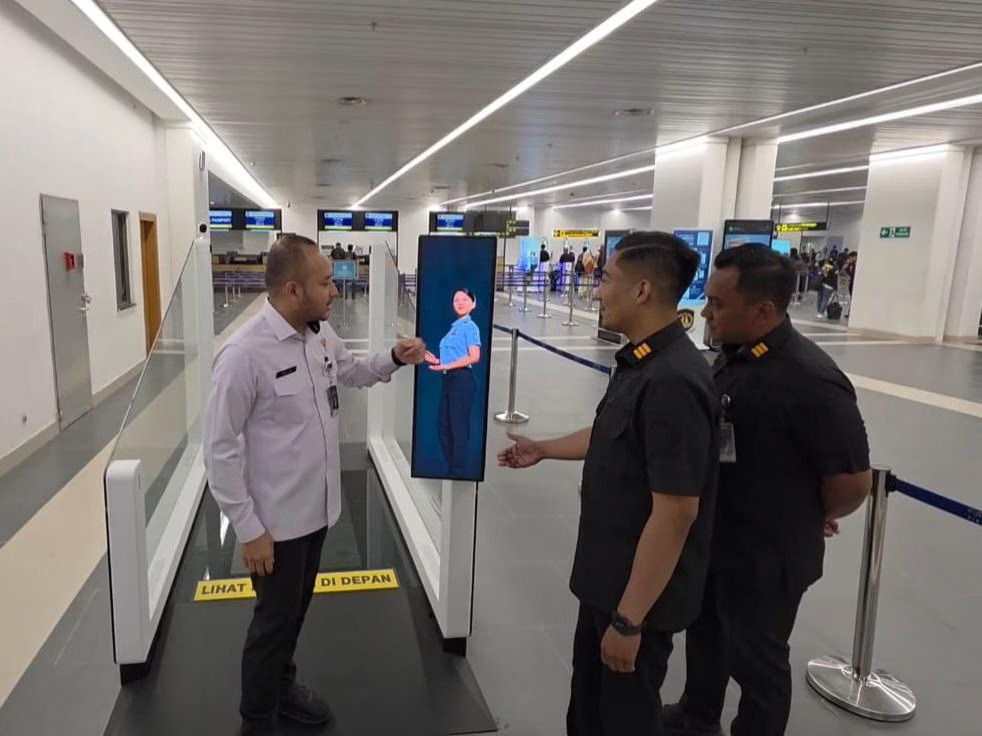
Indonesia has rolled out a pioneering border-control solution: the seamless corridor immigration system that uses facial recognition and artificial intelligence to authenticate travelers as they pass through dedicated corridors. Announced in late November 2025, the system is positioned as a national-scale modernization that aims to simplify arrival procedures for international visitors, reduce queues, and strengthen security through automated biometric checks.
What the Seamless Corridor Immigration System Does and How It Works
The seamless corridor immigration system integrates three main stages of traveler processing. First, travelers upload passport and identity details to the All Indonesia app before arrival. Second, security screening and background checks occur ahead of time. Finally, final authentication happens at the airport when a traveler walks through the biometric corridor and the system matches live facial scans with pre-submitted records. This end-to-end flow reduces dependence on physical documents and speeds throughput at immigration checkpoints.
This implementation relies on AI-powered face recognition and a secure identity database to enable touchless travel. The solution is not purely imported technology; it was implemented through a partnership between travel-technology company Amadeus and Indonesian IT firm Sinergi Teknoglobal Perkasa, ensuring both global capabilities and local operational knowledge.
Early Trials, Performance, And Operational Footprint
Indonesia’s experience with biometric corridors predates this national push. The country previously used similar biometric solutions for the departure process of Hajj and Umrah pilgrims, processing large volumes with pilot figures showing the corridor processed over 30 passengers per minute during trials. These operational tests provided evidence that an airport biometric system at scale can deliver both speed and reliability when properly integrated with identity management and pre-arrival checks.
The initial deployment covers Soekarno-Hatta International Airport in Jakarta, with Juanda International Airport in Surabaya following soon after. Plans are in place to expand the corridors to other major airports, including Bali’s airports, which are a key international tourism gateway for Indonesia. If expansion proceeds, Indonesia could be among the first countries to achieve biometric immigration at scale across multiple international airports.
Benefits for Travelers, Immigration Staff, and National Strategy
For travelers, the most visible benefits are speed and convenience. By pre-registering via the All Indonesia app and undergoing background checks in advance, arriving passengers can bypass document verification and move through the corridor with minimal human interaction. This reduces the friction of travel and is especially helpful for elderly travelers and people with disabilities who may struggle with traditional queues.
For immigration officers, the system reduces manual document checks and routine processing tasks. That allows staff to focus on exceptions, crowd control during peak times, and assistance to passengers who need help, improving both operational efficiency and the quality of human attention for complex cases.
From a national perspective, a functioning seamless corridor can elevate Indonesia’s image as a technology-forward travel hub. Faster, predictable border processing encourages tourism and investment by lowering the time and hassle costs associated with international arrivals. The presence of a robust AI border control capability also signals readiness to handle modern security threats while facilitating legitimate travel.
Privacy, Trust, And Operational Safeguards
Biometric systems inevitably raise policy questions about privacy, data protection, and consent. The All Indonesia app’s role as the initial data intake point gives the government and operators a clear locus for explaining data uses, obtaining traveler consent, and enforcing retention policies. Transparency about what biometric data is stored, how long it is held, and who can access it will be critical to public trust.
Industry and civil society can expect robust data governance frameworks to be required. Technologies such as encryption, differential access controls, and independent audits should be part of any deployment at scale. Ensuring false-match rates remain low and providing rapid redress for misidentifications will matter both for traveler experience and for broader social acceptance of biometric systems.
Tech Partnership and Local Capability Building
The collaboration between Amadeus and Sinergi Teknoglobal Perkasa is designed to combine proven travel-tech systems with local implementation capacity. This mix fosters technology transfer and helps build local teams capable of operating and evolving the platform for Indonesian requirements. The partnership model supports wider goals of digital sovereignty and local employment in high-skill IT roles.
Operational success will require integration with airline systems, customs, health declarations, and quarantine checks. The promise of the All Indonesia platform is a single portal where passengers can manage multiple inbound clearance requirements in one place, streamlining administrative load for both travelers and authorities.
Implications for Tourism and Airport Operations
A reliable seamless corridor immigration system can change traveler decision-making. When immigration lines are predictable and quick, destinations become more attractive, repeat travel increases, and tourism-dependent businesses see faster turnover. Bali, Yogyakarta, and Lombok stand to benefit from reduced arrival friction and improved first impressions for visitors.
At the airport level, throughput improvements reduce congestion in arrival halls and redistribute staff to higher-value tasks. The system’s ability to process 30 or more passengers per minute in trials suggests meaningful capacity gains that scale during peak seasons and large events.
Challenges and the Road Ahead
Operationalizing biometric AI at national scale is not trivial. Challenges include ensuring system robustness under varied lighting and passenger movement, maintaining high accuracy across diverse populations, preventing spoofing or fraud, and securing interoperability across multiple airports and airline partners. Equally important is maintaining public confidence; any serious data breach or notable false identification incident would damage adoption momentum.
Despite the challenges, Indonesia’s step toward a national-scale biometric corridor places it among a small group of countries experimenting with advanced, AI-driven border management. The coming months will be decisive: expanding from pilot airports to a national network will test technical, legal, and social readiness.
Indonesia’s seamless corridor immigration system initiative is a significant experiment in modernizing border controls through biometric AI and centralized traveler management via the All Indonesia app. Early trial data and the international-local partnership model suggest meaningful gains in speed, efficiency, and traveler experience. Success will depend not only on technical performance but also on transparent governance, strong data protections, and careful operational rollout that prioritizes accuracy and public trust. If Indonesia achieves its planned expansion, it could become a reference case for how nations adopt AI border control at scale.
