





 Monday, 14-09-26








Acting Governor Moves Quickly To Reassure Investors
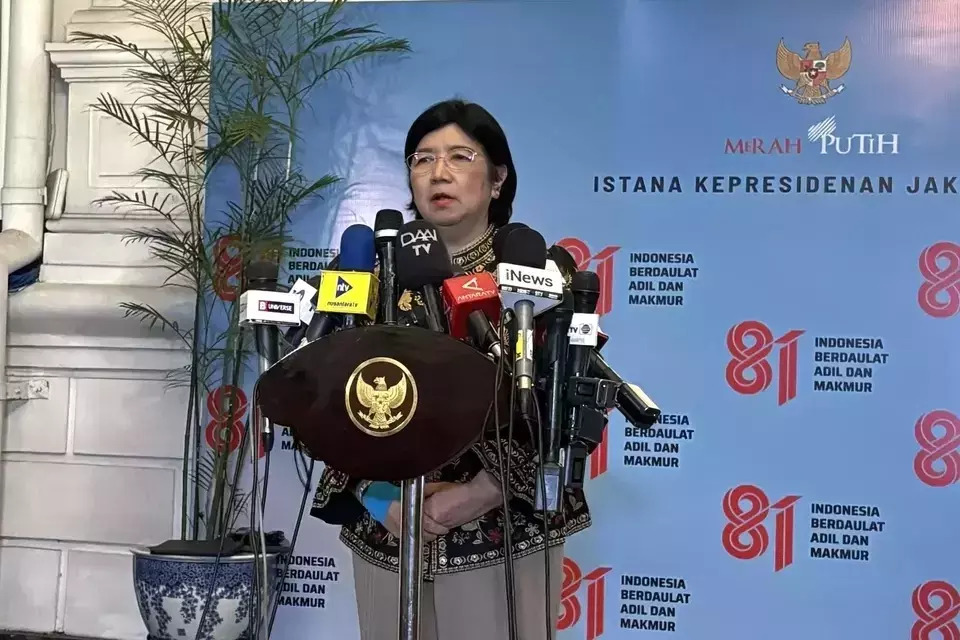
Acting Bank Indonesia Governor Destry Damayanti moved fast to calm nerves after the Perry Warjiyo resignation, telling markets not to panic and promising that the central bank would keep its existing policy direction. Jakarta Globe reported that she said BI would continue to support financial stability, the rupiah, and economic growth, while Reuters noted that the sudden leadership change immediately revived questions about policy credibility and central bank independence.
The message matters because leadership changes at a central bank are never just personnel shifts. In Indonesia’s case, the timing made the event more sensitive. Perry stepped down after eight years, and Destry was appointed acting governor shortly afterward. Reuters reported that the resignation came during a period of fragile investor confidence, a weak rupiah, and lingering concern about whether policy will stay consistent under President Prabowo Subianto’s administration.
Why The Perry Warjiyo Resignation Sent A Signal Beyond BI
The Perry Warjiyo resignation matters because Bank Indonesia is not a symbolic institution. BI’s official mandate is to achieve and maintain rupiah stability, which means currency moves, inflation expectations, capital flows, and market confidence are all part of its daily credibility test. When a long serving governor leaves unexpectedly, investors naturally ask whether the policy mix will change, even if the institution says it will not.
That concern is not abstract. Reuters reported that the rupiah had already been under pressure, sliding near historic lows in 2026, while Indonesian assets were still absorbing earlier political and fiscal shocks. The same Reuters report said markets were watching the next governor closely because the successor choice may matter more than the resignation itself. In other words, the Perry Warjiyo resignation became a test of whether BI can preserve continuity under stress.
Bank Indonesia’s Structure Is Designed For Continuity
Indonesia’s central bank law helps explain why officials are stressing stability. The law says the Governor and Senior Deputy Governor are nominated and appointed by the President with the approval of the House of Representatives. It also says that if the governor’s office becomes vacant, the Senior Deputy Governor serves as acting governor. The Board of Governors is the main policy body, and its decisions are meant to be made collectively.
That structure is important for reading the Perry Warjiyo resignation. It means the bank is not supposed to hinge on one person alone. The law also says the Board of Governors meets at least once a month for general monetary policy and at least once a week to evaluate implementation or set other strategic policy. Destry pointed to that collective setup when she said BI’s policy direction would not change just because the leadership changed. That is the institutional backbone behind the reassurance.
Still, markets do not react only to formal rules. They also react to confidence, signaling, and sequencing. If investors believe a transition is smooth and policy is coordinated, volatility can fade quickly. If they suspect political pressure or internal disagreement, the same transition can become a larger macro story. That is why the Perry Warjiyo resignation is being read not only as a governance event, but also as a credibility event. The formal structure may protect continuity, but market trust has to be earned in real time.
Destry Damayanti’s First Message Was About Policy Stability
Destry’s first public message after the appointment was intentionally steady. Jakarta Globe reported that she said BI would preserve its policy mix to safeguard financial system stability, support the rupiah, and sustain growth. She also emphasized exchange rate stability as a top priority and said the central bank would continue intervening in financial markets using its existing instruments. The bank’s recent move to reduce hedging costs, she added, was part of an effort to attract more foreign capital.
That language is important because it tells markets what BI wants to protect most. First, it wants to avoid a disorderly rupiah move. Second, it wants to keep the flow of foreign money from weakening further. Third, it wants to show that the Perry Warjiyo resignation does not mean a sudden pivot in monetary policy. In a fragile market environment, those are the three signals investors usually want first. They are also the clearest indicators that the acting governor understands the scale of the communication challenge.
Destry also stressed that BI policy decisions are made collectively by the Board of Governors. That point is more than administrative detail. It tells the market that the institution is designed to absorb leadership changes without immediately changing course. When a central bank is under pressure, continuity often matters as much as the actual policy stance, because investors need to know the institution can still function predictably.
Coordination With Government Is Now Part Of The Market Story
The Perry Warjiyo resignation also comes at a time when coordination between fiscal and monetary authorities is under close scrutiny. Jakarta Globe reported that the meeting with President Prabowo Subianto included members of the Financial System Stability Committee, or KSSK, and that the president urged stronger coordination among fiscal, monetary, and financial institutions. The article also said the president wanted Danantara to participate in future KSSK deliberations to improve policy alignment.
That matters because coordination can be either reassuring or worrying, depending on how investors read it. On one hand, better alignment can reduce policy fragmentation and improve crisis management. On the other hand, if investors think coordination means political influence over the central bank, the result can be the opposite. Reuters reported that BI’s independence has already been under scrutiny, especially after recent political appointments and legislation that expanded the institution’s growth support role. That broader context makes the Perry Warjiyo resignation even more sensitive.
Reuters also reported that policy tensions had been building before the resignation, with disagreements over liquidity policy, growth, and the rupiah. That background helps explain why markets are watching not just the appointment process, but also the substance of the next policy phase. If the new leadership can defend the rupiah while preserving investor confidence, the transition may be viewed as orderly. If not, the leadership change could become a bigger story than the resignation itself.
What Markets Will Watch Next
The next phase is about succession. Reuters reported that the president must nominate a new governor and Parliament must approve the choice through a fit and proper test. Until that happens, Destry Damayanti remains the key figure calming markets and signaling continuity. Investors will be watching whether the nominee is viewed as independent, policy credible, and capable of defending BI’s mandate without adding to volatility.
Credit markets are also paying attention. Reuters reported that S&P affirmed Indonesia’s BBB/A-2 ratings with a stable outlook, but said the Perry Warjiyo resignation could add uncertainty around the future direction of monetary policy. The same report noted that Moody’s and Fitch had already cut their outlooks to negative earlier this year because of reduced policymaking credibility and fiscal concerns. That means the leadership transition is not happening in isolation. It is being judged against a broader backdrop of market caution.
For now, the immediate message from BI is simple: policy continuity first, panic later. But the deeper issue is whether investors believe that message will hold once a new governor is named. The Perry Warjiyo resignation has become a stress test for Indonesia’s monetary credibility, and the market will keep reading every signal from BI, the government, and Parliament until that test is resolved.
Read More