





 Wednesday, 28-10-26








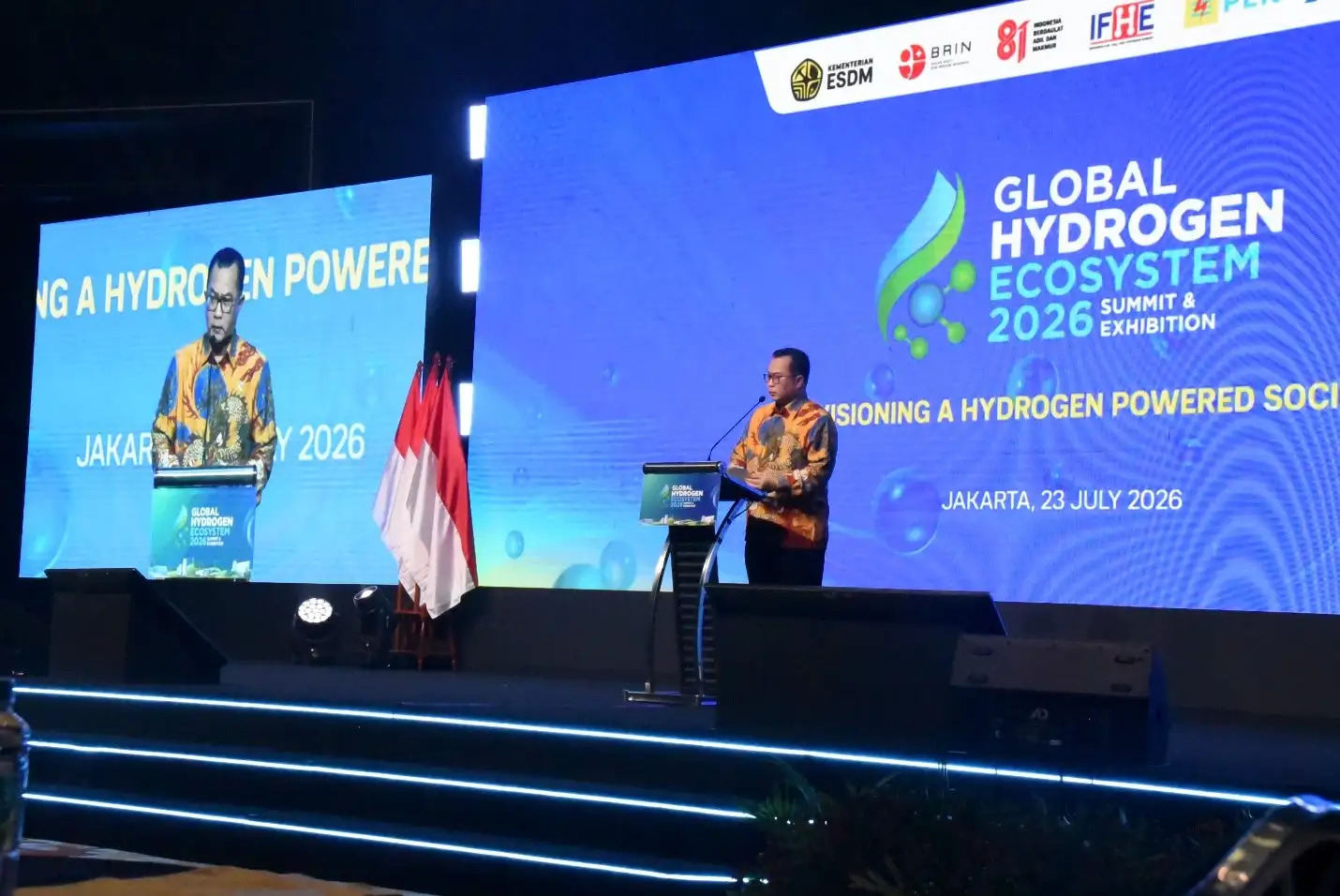
Indonesia's hydrogen conversation is moving beyond laboratories and into the larger question of how a hydrogen ecosystem can actually work in the real economy. That is the central message coming out of BRIN's recent push to strengthen hydrogen research, especially through collaboration with industry, government, and other stakeholders at the Global Hydrogen Ecosystem Summit and Exhibition 2026 in Jakarta. BRIN's position is clear: the challenge is no longer only about mastering technology, but about building the ecosystem that allows research to become usable, scalable, and commercially relevant.
That framing matters because hydrogen is not a single product. It is an energy carrier, a storage option, an industrial input, and potentially a bridge between renewable power and hard to abate sectors. In that sense, the hydrogen ecosystem is not just about production equipment. It includes research institutions, feedstock supply, logistics, end users, regulation, financing, and local acceptance. Hydrogen is already used in industrial processes such as refining, fertilizer production, metals processing, and fuel cell applications, which makes the transition question less theoretical and more industrial.
Why The Hydrogen Ecosystem Matters Now
The appeal of hydrogen is rooted in its versatility. It can be produced from natural gas, biomass, nuclear power, or renewable electricity, and it can be used in mobility, electricity generation, and industrial decarbonization. The U.S. Department of Energy notes that hydrogen can be produced from multiple domestic resources, while Indonesia's own energy ministry explains that electrolysis, steam reforming, gasification, and biological processes are all part of the production landscape. This is why policymakers increasingly discuss hydrogen as part of a wider energy transition portfolio rather than as a standalone solution.
At the same time, the scale of the opportunity is tied to the scale of the system behind it. In practical terms, a hydrogen ecosystem needs supply, transport, storage, industrial demand, and policy certainty to move in the same direction. Without that alignment, hydrogen remains a promising concept that struggles to reach market. That is why BRIN's ecosystem approach is strategically important. It signals a shift from technology demonstration toward deployment readiness, which is where many clean energy innovations either succeed or stall.
What BRIN Wants To Build
BRIN's latest message is not that hydrogen technology is missing. Rather, it is that the surrounding hydrogen ecosystem still needs coordination. According to reporting on the summit, BRIN wants its research agenda to be driven by real needs so that results are easier to downstream and more likely to move into industry use. The agency is also positioning itself as a connector between researchers, policymakers, businesses, and users.
This matters because research institutions often produce strong technical outputs that never fully reach the market. A hydrogen ecosystem changes that dynamic by linking upstream and downstream actors from the start. In BRIN's approach, the research is meant to answer practical questions, not just scientific ones. What type of hydrogen is suitable for a given location? Which industrial users can absorb early demand? Which supply chains are realistic? Which technologies can scale without becoming prohibitively expensive? These are the questions that define whether the hydrogen ecosystem becomes an engine of industrial change or stays a conference talking point.
The summit itself reinforces that point. GHES 2026 was positioned as a platform for policymakers, industry leaders, researchers, investors, and technology players to discuss regulation, business opportunities, and adoption pathways for hydrogen. That kind of forum is important because clean energy transitions rarely happen through a single institution. They happen when standards, capital, policy, and demand begin to reinforce each other.
Biohydrogen Could Create A Different Indonesian Path
One of the more interesting parts of the BRIN discussion is the emphasis on biohydrogen. According to the reporting, BRIN researchers are developing hydrogen production from biomass through microbial fermentation. That approach is especially relevant for Indonesia because it opens the door to decentralized energy solutions in coastal areas and small islands, where fuel logistics are expensive and energy access can be inconsistent.
The idea is not that biohydrogen replaces every other form of energy. Instead, it can serve as part of an integrated energy system. BRIN researchers highlighted the possibility of using hydrogen alongside other renewable sources, while also capturing waste heat from production for seawater desalination. In other words, the hydrogen ecosystem could support not only electricity or fuel supply, but also water access in places where both energy and clean water are limited. That kind of co-benefit is exactly what makes hydrogen interesting in archipelagic countries.
This is also where hydrogen becomes more than a decarbonization story. For remote regions, the value proposition is resilience. If the hydrogen ecosystem can support local generation, lower operating costs, and reduce dependence on imported fuel, the case becomes stronger than a simple emissions narrative. It becomes a development narrative.
The Hard Part Is Moving From Lab To Industry
The most honest part of the conversation is also the most important: scaling is hard. BRIN's researchers acknowledged that technologies which work in the laboratory may behave differently in pilot plants and commercial settings. That is a common problem in clean technology, where promising science often runs into operational complexity, cost pressure, and process instability when it leaves the lab.
For the hydrogen ecosystem to mature, Indonesia needs more than prototypes. It needs pilot facilities, industrial partnerships, off take certainty, standards, infrastructure, and predictable regulation. This is especially true for biohydrogen, which still has to prove that fermentation based processes can maintain performance at larger scale. BRIN's open invitation to industry is therefore more than a partnership slogan. It is an admission that the next phase of development will require shared risk.
That challenge is not unique to Indonesia. Globally, hydrogen projects often rely on policy support, shared infrastructure, and early demand creation to become bankable. The U.S. Department of Energy has described demand certainty and supporting infrastructure as key parts of building a clean hydrogen market, and that logic applies here as well. A hydrogen ecosystem cannot scale on research merit alone. It needs commercial confidence.
Indonesia Has Real Advantages
Indonesia is not starting from zero. The country has abundant renewable energy potential, an established ammonia and fertilizer base, and a strategic location near major Asian markets. A recent IESR study on Indonesia's green hydrogen ecosystem points to 3,687 GW of renewable potential, existing ammonia infrastructure, and a national electrolyzer target of 107 GW by 2060 under the roadmap. The same study projects hydrogen demand rising significantly as the energy transition advances.
Those numbers do not mean Indonesia should produce everything domestically at any cost. They do show that the hydrogen ecosystem can be built around existing industrial strengths. Fertilizer and ammonia are especially relevant because hydrogen is already a feedstock in those sectors. That makes them natural early markets for low carbon hydrogen because the production logic already exists, even if the energy source behind it changes.
The IESR study also outlines a hub based strategy, where hydrogen production, storage, transport, and usage are concentrated in industrial zones with strong renewable access and demand anchors. That is a useful model for Indonesia because it reduces fragmentation and makes the hydrogen ecosystem easier to manage. In practice, it means building around places that already have industrial load, ports, energy access, and policy support rather than trying to spread infrastructure too thinly.
What This Means For Policy And Investment
If Indonesia wants hydrogen to become a real piece of the energy transition, the next stage should be about ecosystem design, not just enthusiasm. Policymakers need to think in terms of market architecture. Which sectors should get priority? Which forms of hydrogen make sense in which regions? Which projects deserve early support because they unlock broader value? These questions matter because the wrong sequencing can make hydrogen too expensive, too scattered, or too slow to adopt.
For investors, the signal is mixed but promising. The opportunity is real because hydrogen intersects with industrial decarbonization, energy security, and regional development. But the risk is also real because many projects will depend on regulation, power pricing, logistics, and long term offtake agreements. A strong hydrogen ecosystem lowers those risks by creating shared infrastructure and clearer demand. That is why BRIN's collaboration push is important. It helps turn hydrogen from a technical possibility into a project pipeline.
A Hydrogen Ecosystem, Not Just A Hydrogen Dream
BRIN's latest initiative reflects a more mature understanding of the energy transition. Hydrogen is not valuable simply because it is new. It is valuable when it can be connected to industry, scaled responsibly, and adapted to Indonesia's geography and economic priorities. The hydrogen ecosystem idea captures that reality better than any headline about technology alone.
If the research pipeline, industrial partnerships, and policy framework continue to move together, hydrogen could become a serious part of Indonesia's low carbon future. The real test is not whether the science sounds exciting. The real test is whether the hydrogen ecosystem can move from summit discussions to operating plants, from pilot projects to commercial scale, and from national ambition to daily utility for businesses and communities.
Read More