





 Sunday, 14-06-26








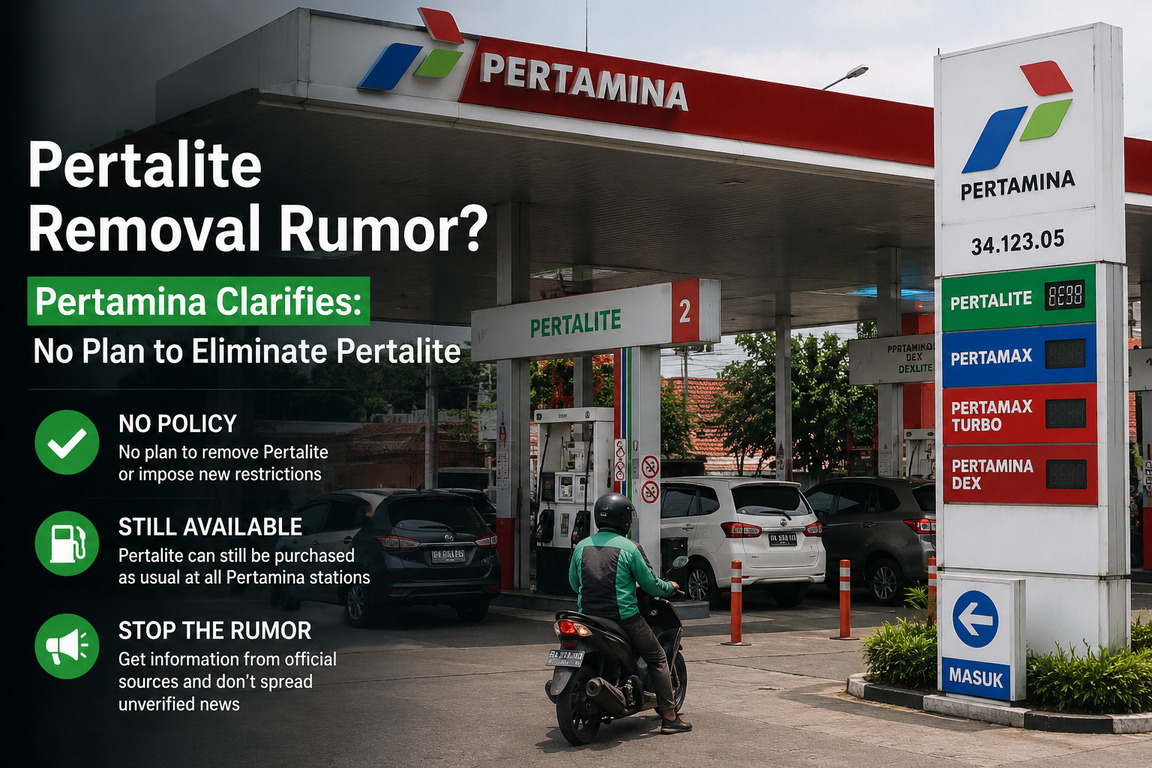
A fresh wave of online chatter has put Indonesia’s subsidized fuel policy back in the spotlight. The latest Pertalite removal rumor spread quickly on social media and messaging platforms, prompting many motorists to worry that the widely used fuel might be phased out. But Pertamina has now addressed the issue directly and said there is no current policy to remove Pertalite or impose a new restriction on ordinary buyers. The company also said the government has not announced a plan to eliminate the fuel.
That clarification matters because Pertalite is one of the most important fuels in Indonesia’s everyday economy. It is the fuel many private vehicle owners rely on, especially middle and lower income households that are sensitive to price changes. When a Pertalite removal rumor spreads, it does not stay as a technical policy debate. It quickly becomes a household budgeting issue, a transport issue, and a trust issue. Pertamina’s response is therefore not just a denial. It is also an attempt to calm a market that has already been strained by fuel price moves and repeated misinformation.
What Pertamina Said About The Rumor
According to Kompas, Pertamina Patra Niaga said there is currently no policy restricting Pertalite purchases at gas stations. The company also said the government has not communicated a plan to introduce new limits for motorcycles or cars. In the same report, Pertamina added that consumers can still buy Pertalite under the existing rules.
The clarification is important because the same issue had already surfaced earlier in May and June 2026. Kompas reported on May 23 that Pertamina denied claims that certain vehicle models would be banned from buying Pertalite from June 1, 2026. Then on June 12, Pertamina again said there was no new restriction and no government direction to impose one. That sequence shows the Pertalite removal rumor is not a new event, but a recurring claim that keeps resurfacing whenever fuel policy becomes a public anxiety point.
Pertamina also explained the rules around buying fuel with a jerry can. The company said jerry cans are not allowed for subsidized fuel, except for fishermen who have official letters from the local government. For non-subsidized fuel, jerry can purchases are still allowed under the applicable rules. Kompas reported that Pertamina also said there is no restriction on Pertalite purchases based on engine capacity or specific car brands.
For consumers, this is the key takeaway. The Pertalite removal rumor does not match Pertamina’s current position. As of the latest clarification, the company says there is no policy to abolish Pertalite and no official restriction based on vehicle type or engine size.
Why The Rumor Spread So Quickly
The speed of the Pertalite removal rumor is not surprising. Fuel policy in Indonesia is highly sensitive because it affects the cost of transportation, logistics, and daily mobility. Even a small change in fuel availability or price can spark public anxiety. That makes Pertalite one of the most watched consumer products in the country.
The timing also matters. Reuters reported on June 10, 2026 that Pertamina had raised prices for some non-subsidized fuels, including Pertamax and Pertamax Green, after a broader rise in energy and subsidy costs. Although Pertalite’s price remained unchanged, the broader fuel environment still made consumers more alert to any rumor involving subsidized fuel. When households see one fuel category becoming more expensive, they naturally become more sensitive to any sign that another category might soon disappear or become harder to access.
That is why misinformation about fuel often spreads faster than ordinary policy updates. A Pertalite removal rumor sounds dramatic, easy to understand, and emotionally loaded. It can be forwarded in seconds, even when the underlying policy has not changed at all. In this case, the rumor gained traction partly because the public had already seen previous confusion around Pertalite restrictions and vehicle eligibility.
There is also a trust factor. When people hear repeated reports about fuel changes, whether about pricing, quotas, or potential restrictions, they may start assuming the worst before any official confirmation arrives. That is a common pattern in energy markets, especially where subsidies are involved. The Pertalite removal rumor fits that pattern well because it touches both price fear and access fear at the same time. This is an inference, but it is strongly supported by the public reaction to the reports and the repeated need for clarification from Pertamina.
What This Means For Drivers And Households
For ordinary drivers, the biggest immediate effect of the Pertalite removal rumor is uncertainty. People begin to wonder whether they should switch fuels, change budgets, or worry about future access. That uncertainty can affect consumer behavior even when the rumor is false. Some drivers may rush to top up. Others may assume a price increase is coming. Still others may distrust official statements until the policy is repeated more than once.
For households, Pertalite is not just a brand name. It is part of the monthly cost structure, especially for families that depend on private motorcycles or cars for commuting, school runs, and short distance business travel. Because the fuel is subsidized, it carries a symbolic meaning as well: it is seen as a basic affordability safeguard. A Pertalite removal rumor therefore carries social weight beyond its literal meaning. It can trigger fear about broader living costs, even if the official message remains unchanged.
Businesses also pay attention. Delivery operators, small traders, ride hailing drivers, and logistics firms all monitor fuel policy closely because it affects operating costs. A rumor about Pertalite can quickly become a business planning issue. Even if there is no formal policy change, the discussion alone can affect route planning, pricing expectations, and consumer demand. In that sense, the Pertalite removal rumor has a wider economic footprint than many casual observers realize. This is an inference drawn from the role of subsidized fuel in the broader transport economy.
The most practical response for consumers is to rely on confirmed government and company statements rather than screenshots or forwarded claims. Kompas reported that Pertamina has repeatedly denied the rumor and reaffirmed that no new restriction has been announced. Until there is an official policy update, the Pertalite removal rumor should be treated as unverified noise, not a change in law or retail fuel rules.
The Bigger Policy Lesson
The bigger lesson from this episode is that energy communication matters as much as energy policy. If the public does not get clear, consistent, and timely information, rumors will fill the gap. That is especially true for subsidized fuels, where any confusion can ripple into politics, pricing expectations, and public sentiment. The Pertalite removal rumor is a reminder that a policy system with high social sensitivity needs equally strong communication discipline.
Pertamina’s clarification also shows that government fuel policy remains under close public scrutiny. The company had to address not only whether Pertalite would be removed, but also whether buying rules would change for certain vehicle types or engine capacities. That kind of attention suggests Indonesia’s fuel market is entering a phase where transparency will be as important as supply. When the public doubts what will happen next, even a small rumor can become a national talking point.
For now, the message is simple. There is no confirmed plan to remove Pertalite, and Pertamina says there is no new restriction on buying it. The Pertalite removal rumor has created noise, but it has not changed the current policy reality. What it has done is reveal how quickly energy anxiety can spread in a country where fuel access still shapes daily life.
Read More