





 Sunday, 14-06-26








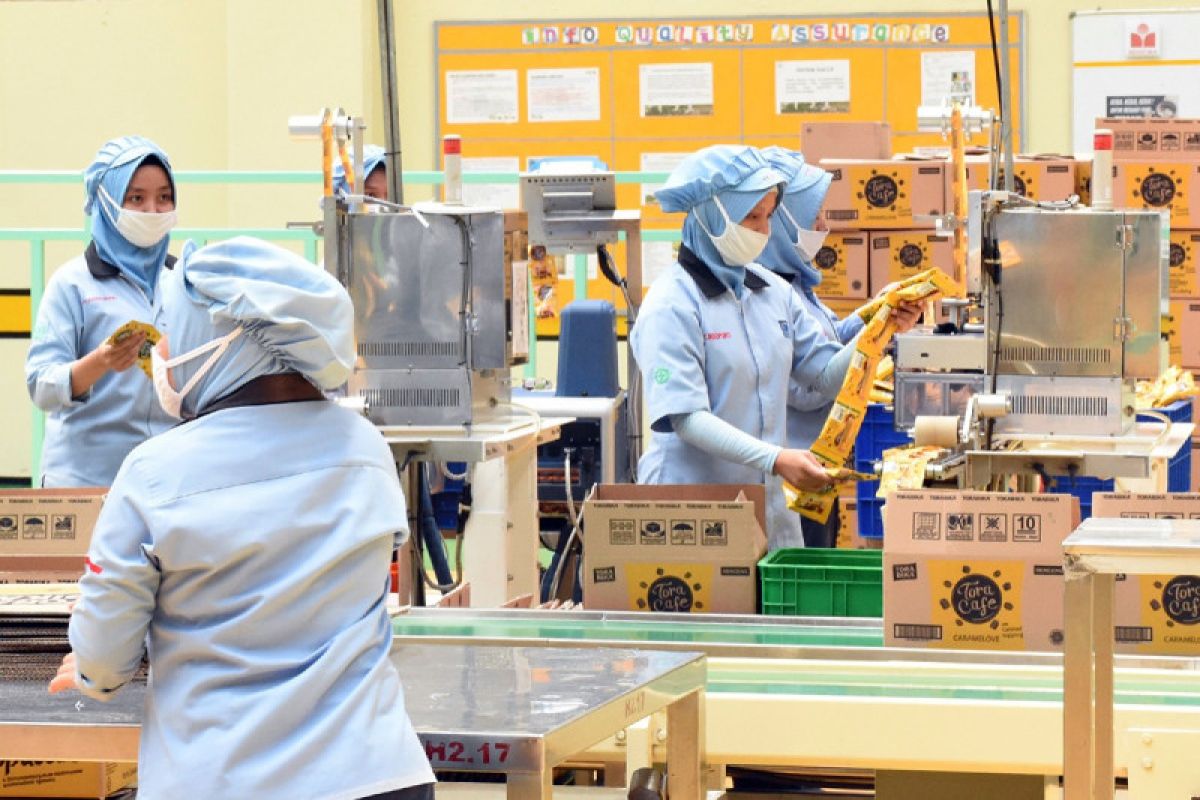
Indonesia’s new manufacturing export target is ambitious on paper, but it is also forcing a difficult national conversation about industrial structure, competitiveness, and long-term growth. The Ministry of Industry wants to lift the export share of manufacturing products from around 20 percent to 30 percent, while keeping the domestic market strong at 70 percent. That shift would mark a major change in how the country sells its industrial output.
The debate matters because the country’s industrial base remains both powerful and fragile. In the first quarter of 2026, manufacturing grew 5.04 percent year on year and contributed 19.07 percent to GDP, while overall economic growth reached 5.61 percent. At the same time, manufacturing exports from January to April 2026 reached US$75.57 billion and accounted for 82.01 percent of total exports. Those numbers show strength, but they also underline how much pressure remains on the sector to stay competitive.
Why The Manufacturing Export Target Matters
The government’s manufacturing export target is not simply about selling more goods overseas. It is about rebalancing Indonesia’s industrial model. According to the Ministry of Industry, the current sales mix is still heavily domestic, with about 80 percent of manufacturing output serving local demand and only 20 percent going to export markets. The new goal is to move toward a 70 percent domestic and 30 percent export composition without weakening supply at home.
That ambition is understandable. A larger export base can help manufacturers spread risk, earn foreign exchange, and reduce dependence on local demand cycles. It can also push companies to improve product quality, logistics, compliance, and productivity. In that sense, the manufacturing export target is really a competitiveness target disguised as a trade ratio. If firms can survive and grow in global markets, they usually become stronger at home as well. That is the strategic logic behind the policy push.
But the numbers also explain why some observers are worried about deindustrialization. When a country talks more about export ratios than about industrial depth, the question arises whether the manufacturing base is broad enough, modern enough, and resilient enough to carry the burden. Indonesia’s manufacturing sector is still the largest contributor to GDP, yet its share is not expanding fast enough to silence concerns that industrialization is losing momentum.
Deindustrialization Is The Real Shadow Over The Debate
The phrase deindustrialization is becoming central to the conversation because the manufacturing export target arrives at a time when many economists still worry about structural weakness. In practical terms, deindustrialization means an economy may move away from manufacturing too early, before its industrial base has reached the scale and sophistication needed to sustain high-quality employment and long-term productivity growth. That concern is especially sensitive in middle-income economies that still rely on factory-led upgrading. This is an economic interpretation of the data and policy direction, not a direct quote from the sources.
Indonesia’s industrial story is not one of collapse. Manufacturing still expanded 5.04 percent in Q1 2026, and BPS showed that it remained the country’s biggest GDP contributor at 19.07 percent. Manufacturing investment also reached Rp182.04 trillion, or 36.49 percent of total realized investment. These are not weak figures. Yet they do not erase the underlying policy question: can the sector deepen its capacity fast enough to avoid sliding into a less productive, less export-intensive pattern over time?
That is why the manufacturing export target is being read as a signal, not just a statistic. A 30 percent export share would suggest a more outward-looking industrial model, one that is better integrated into global value chains. But it would also require better energy reliability, lower logistics costs, stronger skills, and more consistent access to finance. Without those foundations, the target may remain a headline rather than a transformation.
The warning signs are reinforced by the broader macro environment. Reuters reported that the World Bank expects Indonesia’s GDP growth to slow to 5 percent in 2026, citing fiscal pressure, higher subsidy costs, and a weaker rupiah. Those pressures matter for industry because they affect financing, imported input costs, and business confidence. In a tougher macro climate, manufacturers may be less willing to expand capacity or take on the risk needed to compete abroad.
What Must Happen For The Target To Work
For the manufacturing export target to become credible, the policy mix has to go beyond speeches and targets. The Ministry of Industry has already pointed to fiscal and non-fiscal incentives, calibrated import controls, domestic industrial protection, and local currency settlement as tools to strengthen competitiveness. It also plans to accelerate downstreaming, support small and medium industries, develop industrial talent, advance green transformation, and lift productivity through innovation and technology adoption. Those are the right categories of intervention, because the export challenge is not only about market access. It is also about capability.
First, firms need cost discipline. Export markets punish inefficiency quickly. If logistics, energy, and input costs remain too high, Indonesian factories will struggle to win contracts against regional rivals. That is why any manufacturing export target must be paired with reforms that make industrial production more predictable and less expensive. Energy reliability and port efficiency matter just as much as tariff negotiations. This is a policy inference drawn from the ministry’s stated competitiveness agenda and the macro pressures cited by Reuters.
Second, businesses need stronger middle layers in the industrial ecosystem. Large exporters can sometimes manage on their own, but broader export growth depends on suppliers, component makers, testing labs, certification bodies, and logistics operators. If those layers are weak, export growth remains concentrated in a few sectors instead of spreading across the economy. Indonesia’s manufacturing base already contributes heavily to exports, but concentration is not the same as resilience.
Third, domestic demand still matters. The ministry has been clear that the local market remains the foundation of national industry. That is important because an export strategy that neglects local demand can create shortages, price volatility, or political backlash. The more realistic version of the manufacturing export target is not an export-only model. It is a dual-market model in which domestic demand provides stability while exports create scale and global discipline.
In that sense, the policy debate should not be framed as exports versus domestic consumption. It should be framed as whether Indonesia can use the domestic market as a launchpad for competitive manufacturing rather than a comfortable ceiling. If the sector remains too dependent on local demand, the deindustrialization critique will keep resurfacing. If exports rise through genuine productivity gains, the narrative changes from concern to capability.
The Bigger Test For Indonesia's Industrial Future
The real test of the manufacturing export target is whether it can produce a more sophisticated industrial structure, not just a better headline ratio. Indonesia already has scale, a large domestic market, and a manufacturing sector that still leads GDP contribution and export earnings. What it needs now is deeper upgrading, stronger productivity, and a clearer path from domestic strength to international competitiveness.
If that happens, the target of 30 percent export share could become a useful milestone in a longer industrial transformation. If it does not, the deindustrialization debate will intensify, and the country may find itself with a large but underperforming manufacturing base. That is why this policy discussion is bigger than trade shares. It is really about whether Indonesia can still build industry at the pace its economy needs.
Read More