





 Tuesday, 15-09-26








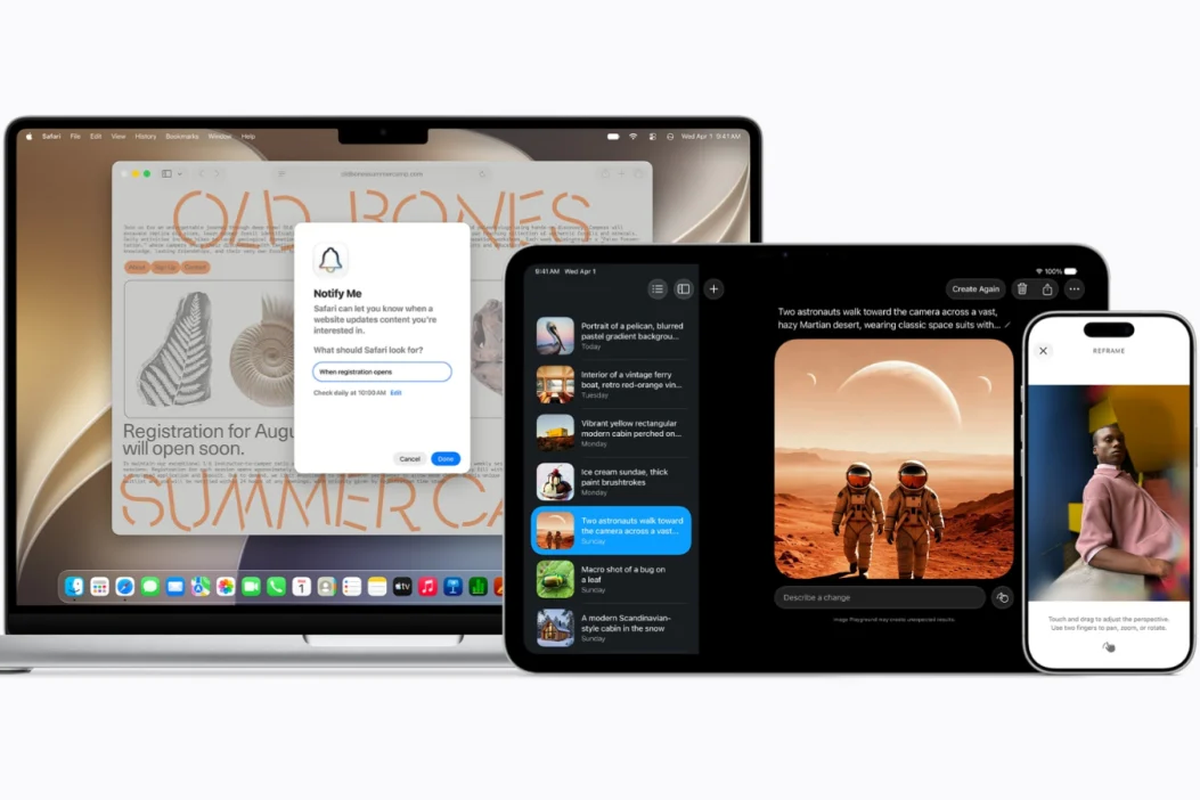
Apple is making one of the most significant moves in Siri’s history by rebuilding Apple Intelligence around a new architecture that blends Apple’s own on-device models with Google technology. According to Apple’s machine learning research team, the third generation of Apple Foundation Models is “custom-built in collaboration with Google” and is designed to power a more capable, more personal, and more system-wide Apple Intelligence experience.
That matters because Siri has spent years lagging behind the best AI assistants on the market. Apple’s latest approach is not a simple feature update. It is a deeper architectural reset that places a new orchestrator at the center of the system, coordinates model behavior across apps, and expands Private Cloud Compute so more demanding AI tasks can be handled securely in the cloud. Apple says the privacy model remains intact even as the company broadens where the workloads run.
Why Apple Is Rebuilding Siri Now
Apple’s new direction is a response to the market, but also to its own product constraints. The company has steadily expanded Apple Intelligence since 2025, adding on-device features such as Writing Tools, visual intelligence, and tighter Siri integration across iPhone, iPad, Mac, Apple Watch, and Apple Vision Pro. But the latest move suggests Apple sees the next jump in capability as something that requires a more flexible model stack than the one it launched first.
The clearest signal is Apple’s statement that the new architecture is centered on a family of Apple Foundation Models spanning on-device and server-based systems. Apple says the models are built to unlock an “entirely new Siri” and other intelligent tools that make everyday apps smarter. One of the on-device models, AFM 3 Core Advanced, is natively multimodal and supports expressive voices and higher-accuracy dictation, which helps explain why Siri is being recast as a more conversational assistant.
This is also a strategic answer to a competitive problem. AI assistants are increasingly judged not just by isolated answers, but by how well they understand context, work across apps, and complete tasks. Apple’s new architecture is built around a system orchestrator that can tailor responses based on the active app and the user’s current task. That is a major shift from the older assistant model, which often felt reactive rather than genuinely contextual.
For Apple, the timing also fits its broader platform cycle. The company has been steadily integrating Apple Intelligence deeper into iOS and its other operating systems, while keeping much of the processing on device and using Private Cloud Compute for larger workloads. In that sense, the new Siri is not a standalone project. It is the visible tip of a broader Apple Intelligence architecture upgrade.
How Google Technology Changes The Equation
The most surprising part of the announcement is not that Apple is using AI more aggressively. It is that Apple is doing so with Google technology in the background. Apple’s research post says the third-generation Apple Foundation Models were custom-built in collaboration with Google using the technologies behind the Gemini family. Google also confirmed a multi-year collaboration under which the next generation of Apple Foundation Models will be based on Google’s Gemini models and cloud technology.
That does not mean Siri is becoming a Google product. Apple says Apple Intelligence will continue to run on Apple devices and Private Cloud Compute, and Google’s role is to help power the next-generation models and workloads behind the scenes. In practical terms, the partnership gives Apple access to stronger model infrastructure while preserving its own interface, its own device ecosystem, and its own privacy framing.
The partnership also helps explain the language around the new architecture. Apple says the models are built to support multimodal use cases, including image understanding, image generation, advanced photo editing, visual question answering, speech generation, improved dictation, and stronger natural language understanding. That is the type of capability set users now expect from modern assistants, and it is also where cloud-assisted model power becomes especially important.
Google, for its part, has been publicly extending Gemini across its own products and developer tools, including access for Apple developers through Google’s own blogged updates. That broader Gemini rollout gives context to why Apple might rely on Google’s model stack for part of the new Siri architecture. The move reflects a wider industry reality: even the biggest platform companies are now collaborating where model scale, cloud infrastructure, and product deployment intersect.
What Users Will Actually Notice
For users, the biggest difference should be that Siri feels more useful in everyday work. Apple says the new Apple Intelligence architecture is meant to support a more personal Siri, stronger understanding of user context, and better app-level action. That could mean more natural voice interactions, fewer dead-end responses, and improved handling of requests that require information from multiple places on the device.
Apple’s own descriptions point to expressive voices and higher-accuracy dictation as part of the upgraded model set. That makes sense because voice quality is not cosmetic in an assistant. When a system can better understand speech, preserve context, and respond in a more natural way, the whole product feels faster and less frustrating. In other words, this is not only about intelligence. It is about usability.
The broader Apple Intelligence architecture also matters for app developers. Apple says developers can integrate app content and actions into Siri AI through App Intents, and can also build features directly into apps using the Foundation Models framework. That is a significant platform move because it turns Apple Intelligence into a developer layer, not only a consumer feature.
From a business perspective, this creates a path for more useful third-party experiences inside the Apple ecosystem. If Siri can act more intelligently across apps, and if developers can expose their app actions more naturally to the assistant, then Apple’s ecosystem becomes more sticky and more valuable. The company is effectively trying to make AI feel native to the system, rather than bolted on as a chatbot overlay.
There is also a hardware dimension. Apple has tied the latest Apple Intelligence features to supported devices and specific platform versions, reinforcing the idea that the new architecture is closely linked to device capability. That is consistent with Apple’s long-standing approach: the better the hardware, the more advanced the software experience can be.
What The New Architecture Means For Apple’s AI Strategy
The new Apple Intelligence architecture is important because it signals a more pragmatic Apple. Instead of insisting on a purely internal AI stack, the company is combining its privacy-centric device strategy with external model technology from Google. That is a notable shift in posture, and it suggests Apple is prioritizing product quality and system integration over ideological purity in model sourcing.
At the same time, Apple has not abandoned its privacy narrative. Quite the opposite. The company has emphasized that Apple Intelligence uses on-device processing where possible, that Private Cloud Compute extends the same privacy and security model to harder requests, and that independent experts can inspect the code running on Apple silicon servers. Apple is clearly trying to prove that stronger AI does not have to mean weaker privacy.
That balance is the real story behind the headline. Apple is trying to make Siri competitive again without making the product feel less like Apple. The new architecture is meant to unlock better reasoning, better multimodal understanding, and better contextual awareness, while still keeping the experience private, system-level, and tightly controlled. If Apple executes well, this could be the moment Siri stops feeling like a legacy voice assistant and starts feeling like a true AI layer across the operating system.
For the market, this also changes the conversation around Apple Intelligence. The question is no longer whether Apple has AI features. It is whether Apple can turn its architecture into a durable advantage that combines performance, privacy, and ecosystem lock-in. With Google technology now embedded in the foundation, the next version of Siri may finally have the technical base it needs to deliver on Apple’s long-promised AI vision.
Read More