





 Thursday, 04-06-26








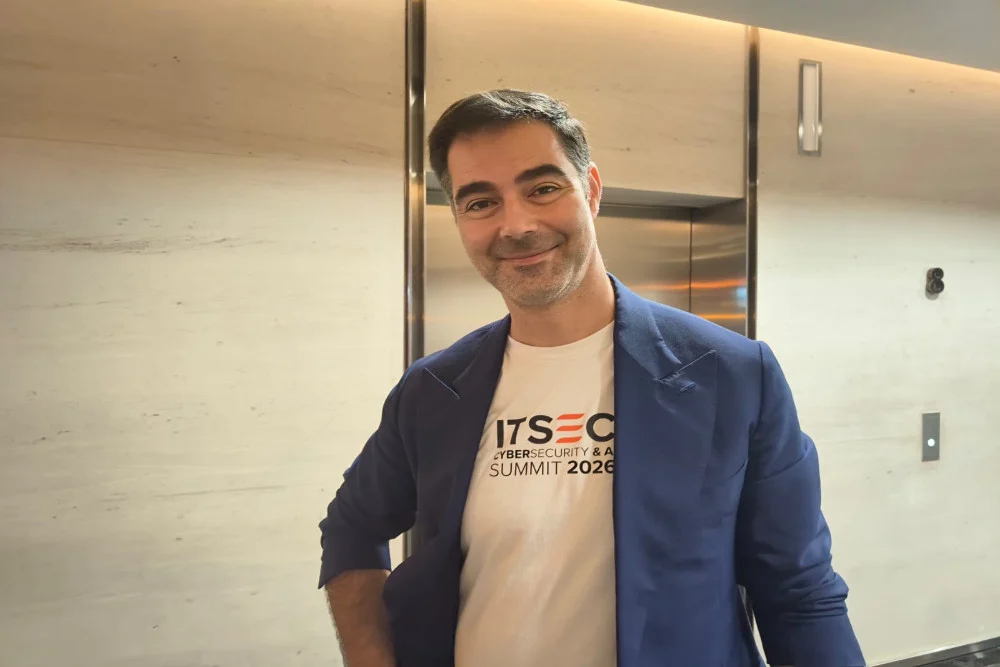
Corporate IT budgets are under fresh scrutiny, but that does not mean digital risk is easing. For ITSEC Asia, the current environment is doing the opposite. It is reinforcing the idea that cybersecurity spending is becoming a structural necessity, not a temporary line item that companies can delay without consequence. The company argues that global uncertainty, from trade friction to tariff pressure, is pushing firms to rethink technology purchases, while cyber threats keep getting more active and more expensive to ignore.
That is the core message behind the latest attention around ITSEC Asia. As corporations review IT budgets more carefully, the security layer remains one of the few areas that cannot simply be postponed. Indonesia’s threat landscape is still intense, with BSSN data showing more than 5.16 billion traffic anomalies in January to November 2025, which is widely cited as roughly 182 attempted attacks every second. In that context, the company’s view is straightforward: cybersecurity spending is not shrinking in importance, even if some discretionary IT categories are under pressure.
Why Companies Are Rechecking Their IT Budgets
A broad reassessment of technology budgets is already underway across many industries. The reason is not just macroeconomic caution. Companies are also trying to separate projects that drive direct business value from projects that can be delayed, scaled down, or removed entirely. In that filtering process, security is increasingly standing apart from the rest of the stack because a breach can be far more costly than the original software purchase ever was. The current market signals around cybersecurity spending reflect that tension between cost control and risk control.
ITSEC Asia’s response to that environment is to position cyber defense as infrastructure, not optional insurance. That framing matters because it changes the internal conversation inside companies. Instead of asking whether a security tool can be deferred until next quarter, leaders are being pushed to ask whether the business can tolerate a bigger exposure window. This is especially relevant in sectors that remain prime targets, including finance, energy, telecommunications, and government, which are repeatedly identified in recent reporting on Indonesia’s cyber activity.
There is also a broader strategic shift taking shape. Organizations are moving away from a reactive security mindset and toward resilience planning, where response time, monitoring quality, and risk governance matter as much as the original protective software. That shift supports cybersecurity spending even when general IT outlays are being reviewed more aggressively, because the decision is no longer about convenience. It is about operational continuity.
Why Cybersecurity Is Becoming A Strategic Business Line
The market case for cyber defense has become more compelling because the threat environment is not standing still. One reason ITSEC Asia and similar firms are gaining attention is that cyber attacks now move with the same speed as digital transformation itself. As more corporate processes migrate to cloud systems, connected devices, and AI-enabled workflows, the attack surface expands. That means cybersecurity spending increasingly protects revenue, reputation, compliance, and customer trust in one budget decision.
Indonesia’s position in the regional threat landscape reinforces that point. Recent reporting cited the country as ranking 12th in Asia Pacific for cyber activity, with attacks cutting across industries rather than staying confined to one vertical. The implication is clear. Security is no longer just an IT department concern. It is a board-level issue because attack impact spreads across operations, finance, legal exposure, and public trust. That is exactly why cybersecurity spending is being reframed as a strategic business line instead of a defensive cost center.
ITSEC Asia has been making a similar argument through its public communications. The company has said that cybersecurity now functions as a strategic infrastructure layer for business continuity and national digital transformation. It has also leaned into AI-related security offerings and talent development through its academy initiatives, which suggests it sees the next phase of the market as a combination of technology, services, and human capability. That is important because the strongest cybersecurity spending programs are rarely just product purchases. They are operating models.
What ITSEC Asia Is Telling The Market
The timing of ITSEC Asia’s message is not accidental. In periods of macro uncertainty, investors and customers want to know which businesses can keep growing even when other technology segments slow down. ITSEC Asia is trying to show that cyber defense is one of those segments. Its argument is that threat actors do not pause when budgets get tighter, and in some cases they exploit the very caution that slows enterprise investment. That is one of the most persuasive reasons cybersecurity spending remains resilient even in a softer IT budget cycle.
The company’s public positioning also highlights a long-term view of the market. It is not just selling point products. It is emphasizing managed security, resilience, governance, and AI-ready defense layers. That matters because buyers increasingly want integrated protection rather than isolated tools. For a corporate customer, that can mean fewer blind spots and a clearer path to compliance. For a vendor, it means more durable revenue relationships and stronger customer stickiness. In both cases, cybersecurity spending becomes more defensible at the budget table.
Another reason the market is paying attention is that cyber threats are no longer framed as abstract technical noise. BSSN data and repeated industry reporting make the risk feel immediate and measurable. When traffic anomalies number in the billions over a single year, the conversation shifts from awareness to action. That is precisely the kind of environment where cybersecurity spending can move from a discretionary item to a nonnegotiable business safeguard.
The Long-Term Outlook For Cyber Defense Budgets
The most important takeaway from the latest market narrative is not that companies are spending more everywhere. They are not. The real trend is more selective spending, with cybersecurity protected better than many other IT categories because the downside is so large. Firms may postpone hardware refreshes, delay software expansion, or stretch procurement cycles, but cyber defense is harder to cut without creating a material gap in risk posture. That is why cybersecurity spending still looks structurally strong even as CFOs review technology costs more aggressively.
For ITSEC Asia, this creates a useful market position. The company is not arguing for growth based on hype. It is arguing for growth based on necessity. If digital attacks remain persistent, if AI expands the threat surface, and if enterprises keep prioritizing resilience, then the spending category it serves should stay relevant for years, not quarters. That is a powerful position in a market where many technology vendors are still trying to prove they are essential.
The broader lesson for business leaders is simple. Cyber defense should be evaluated the way companies evaluate power, connectivity, or payment systems. It is part of the operating backbone. In that sense, cybersecurity spending is less about buying a tool and more about preserving the ability to operate safely, recover quickly, and keep customer trust intact when the next incident arrives. That is the long-term logic behind ITSEC Asia’s message, and it is the reason the market is listening.
Read More