





 Friday, 10-07-26








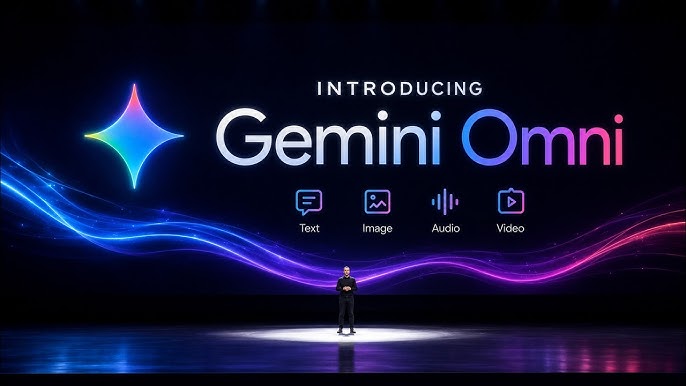
Google has taken another major step in generative AI by introducing Gemini Omni, a new model built to create and edit videos through conversation. The company says Omni is designed to work from any input, starting with video, and can combine text, images, audio, and video to generate high-quality output grounded in Gemini’s real-world knowledge. Google also says users can edit their videos simply by chatting naturally with the model.
The timing is important. Google launched Gemini Omni alongside a wider wave of Gemini updates at I/O 2026, signaling that the company wants Gemini to become more than a chatbot. It wants the app to function as a creative tool, a media editor, and a production layer for everyday users as well as professionals. In Google’s own words, the goal is to make video creation feel as easy as having a conversation.
For creators, marketers, and casual users alike, that is a meaningful shift. Video editing has traditionally required software skills, time, and patience. Gemini Omni attempts to remove those barriers by letting users change scenes, refine visuals, and iterate on content in plain language. If Google can deliver this experience reliably, it could reshape expectations for what AI video tools should feel like. That is the real story behind the launch.
Gemini Omni Turns Video Editing Into A Chat Experience
Google’s official description of Gemini Omni is unusually direct: it is a model that can create anything from any input, starting with video. The company says users can combine images, audio, video, and text as input, then generate high-quality video content grounded in Gemini’s understanding of the real world. It also says people can edit videos through conversation, which is the core feature that makes this launch stand out.
What makes this especially notable is the conversational workflow. Instead of opening a timeline, slicing clips, adjusting keyframes, or learning a menu-driven editor, users can give instructions in natural language. Google says every instruction builds on the last, so the system can remember the thread of the scene while keeping characters consistent and preserving the logic of the video. In practical terms, that means a user could ask for a different background, a new object, a changed camera angle, or an altered action without rebuilding the entire project from scratch.
That is a major usability bet. Most people do not want to learn complicated editing tools when they only need to make a clip cleaner, more dynamic, or more polished. Gemini Omni tries to meet users where they already are, which is inside chat. Google says the model is intended to help people create and edit videos “as easily as having a conversation,” and that framing matters because it lowers the psychological barrier to making content.
The company is also positioning Omni as a creative partner rather than a narrow generation engine. Google says the model allows users to start from scratch, remix camera roll content, or use templates, all while refining ideas conversationally. That suggests the product is meant to support more than one use case. It is for quick social clips, experimental creative drafts, and potentially more structured content creation workflows.
Another important element is distribution. Google says the first model in the Omni family, Gemini Omni Flash, is rolling out to the Gemini app, Google Flow, and YouTube Shorts. The company also says developers and enterprise customers will gain API access in the coming weeks. That matters because a feature like conversational video editing becomes much more powerful when it is available across consumer, creator, and developer surfaces.
Why Gemini Omni Matters For Creators And The AI Market
Gemini Omni arrives at a moment when the AI market is increasingly defined by who can reduce friction the most. Many generative video tools can already produce impressive clips, but the editing process still feels technical or fragmented. Google is trying to collapse that gap by putting generation and revision into the same natural language interface. That approach could be a serious advantage if the model performs well in everyday use.
The implications for creators are obvious. Social media teams could use Gemini Omni to rapidly produce multiple versions of a video concept. Small businesses could create product explainers or promotional clips without hiring an editor for every minor revision. Educators and marketers could ask for scene changes, timing adjustments, or new overlays in a more intuitive way. These are reasonable inferences from Google’s product direction, because the company explicitly says the tool is meant to empower users regardless of technical skill or access to complex software.
Google also seems to be leaning into the idea that creative AI should be multimodal from the start. The company says Omni combines Gemini’s intelligence with generative media models and improves world understanding, multimodality, and editing. In plain terms, that means the model is not just trying to make something look good. It is trying to understand what the user means and keep the result coherent across multiple edits. That is an important distinction in video, where continuity often matters as much as visual quality.
The launch also raises the bar for competitors. Google is clearly trying to make Gemini a central creative interface, not just a text assistant. By putting Omni into the Gemini app and pairing it with Flow and YouTube Shorts, Google is building an ecosystem where creation, remixing, and publishing sit closer together. That kind of integration can matter as much as model quality because it reduces the number of steps between idea and finished content.
From a market perspective, Gemini Omni strengthens Google’s position in the consumer AI race because it links model capability to a widely used product surface. The company is not just releasing a model in isolation. It is tying it to subscriptions, creator tools, and developer access. Google says Omni is available to Google AI subscribers globally who are 18 and over, with feature availability varying by region, which shows the company is already thinking about how to package the capability for real users.
There is also a broader strategic point. If conversational editing becomes normal, the definition of video editing may change. Instead of separating “creation” from “post production,” users may begin to treat content making as a single back and forth with an AI system. That is the direction Google appears to be pushing with Gemini Omni, and it could influence how other platforms design their own creative tools over the next year. This is an inference, but it follows directly from the product behavior Google describes.
What Google Is Signaling With The Gemini Omni Launch
Gemini Omni is more than a feature update. It is a signal about where Google thinks AI is heading. In the keynote and release materials, Google frames Omni as part of a larger “agentic” era, where AI does not just respond to prompts but helps carry out more complex creative work. The company says the first model in the Omni family is available now in the Gemini app, Google Flow, and YouTube Shorts, with broader API access to follow. That rollout pattern suggests Google wants creators and developers to experience the technology quickly, then build around it.
The product also fits neatly with Google’s recent emphasis on making Gemini more useful across everyday and professional tasks. In the same set of updates, Google highlighted new Gemini models, subscription changes, and productivity features, which together show a platform strategy rather than a single product release. Gemini Omni is part of that larger push to make Gemini feel indispensable across communication, creation, and workflow.
For users, the practical takeaway is simple. Google is trying to make advanced video editing feel less like software operation and more like a conversation. That is a compelling promise, especially for people who have ideas but not the time or technical comfort to build them in traditional editing apps. If Gemini Omni works as advertised, it could make short-form video creation faster, easier, and much more accessible.
The bigger question is execution. Conversational editing sounds elegant, but real creative work demands consistency, control, and reliable output. Google says Omni is designed to preserve character identity, maintain scene continuity, and refine edits over multiple turns. Those are exactly the kinds of details that will determine whether users treat it as a novelty or as a serious production tool.
Still, the direction is clear. Google wants Gemini Omni to be the kind of AI that turns rough ideas into finished videos without forcing users to learn a traditional editor first. That is a strong product vision, and it puts conversational media creation closer to the mainstream than ever before.
Read More