





 Tuesday, 07-07-26








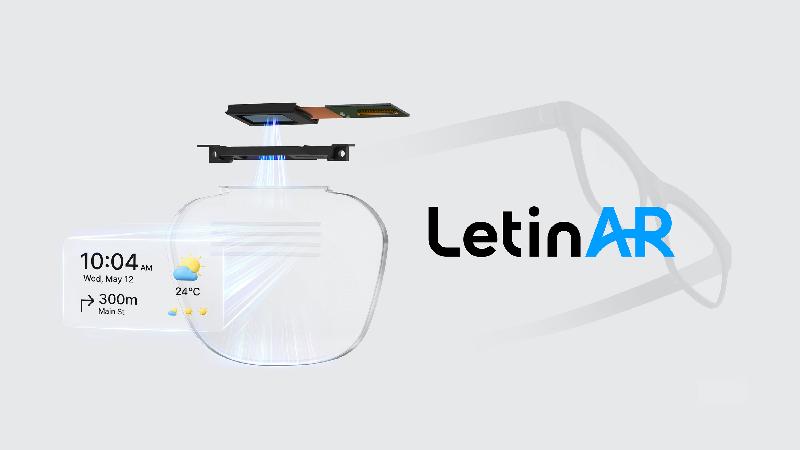
The global race to dominate the AI smart glasses industry is accelerating as South Korean startup LetinAR pushes forward with advanced optical technology designed to rival products developed by major technology companies such as Google, Samsung, and Meta. The company is gaining international attention for developing lightweight and power efficient optical modules that could become the foundation of next generation wearable devices.
As artificial intelligence continues transforming consumer electronics, AI smart glasses are emerging as one of the most competitive sectors in the technology industry. Companies across the United States, China, and South Korea are now investing heavily in smart wearable ecosystems that combine augmented reality, voice assistants, and real time data processing into everyday eyewear.
The growing momentum reflects a broader industry shift toward post smartphone computing devices. Analysts believe AI smart glasses could become a mainstream personal computing platform within the next decade as advancements in semiconductors, batteries, and optics improve usability and affordability.
According to recent industry reports, global shipments of AI smart glasses surged significantly in 2025 and are projected to continue growing rapidly throughout 2026. This rapid expansion is opening opportunities for startups like LetinAR to compete against global technology giants by focusing on one of the industry’s most difficult engineering challenges which is optical efficiency.
Why Optical Technology Matters in AI Smart Glasses
One of the biggest challenges in developing AI smart glasses is creating optical systems that are thin, lightweight, bright, and energy efficient enough for daily use. Most consumers want wearable devices that resemble ordinary glasses instead of bulky augmented reality headsets.
This is where LetinAR is attempting to differentiate itself. The South Korean startup is developing a proprietary optical technology called PinTILT, which is designed to improve light efficiency while reducing the size and weight of smart glasses components.
Traditional smart glasses often rely on waveguide technology, which spreads light across lenses to create digital overlays. While waveguides help maintain slim designs, they frequently suffer from lower brightness and high power consumption. Another alternative known as birdbath optics can produce brighter images but typically results in thicker and heavier hardware.
LetinAR claims its PinTILT technology addresses both problems simultaneously by directing light more precisely toward the user’s eyes. This allows the company to create brighter visual displays while maintaining thinner form factors and lower battery consumption.
Industry experts believe optical modules will play a critical role in determining which companies succeed in the AI smart glasses market. Even the most advanced artificial intelligence software cannot deliver a compelling user experience if devices are uncomfortable or impractical for long term wear.
This technological challenge explains why major corporations including Samsung, Google, Meta, Apple, Huawei, and Xiaomi are aggressively investing in wearable optics research and development.
Competition Intensifies in the AI Smart Glasses Market
The AI smart glasses market is rapidly becoming one of the most strategically important battlegrounds in the global technology industry. Companies are racing to establish leadership in what many analysts describe as the next major computing platform after smartphones.
Recently, Samsung and Google officially introduced new intelligent eyewear products during Google I/O 2026. The companies collaborated with fashion eyewear brands Gentle Monster and Warby Parker to create smart glasses that combine artificial intelligence with consumer friendly designs. The devices are equipped with microphones, cameras, and speakers capable of interacting with users through voice commands and real time environmental recognition.
Meta also continues expanding its smart eyewear ecosystem through its Ray Ban smart glasses partnership, while Apple is reportedly preparing its own wearable AI devices. Chinese technology companies including Huawei and Xiaomi are similarly accelerating development efforts.
This competitive environment creates opportunities for component suppliers like LetinAR. Rather than building consumer products directly, the company focuses on supplying optical modules that other manufacturers can integrate into their own devices.
The strategy resembles how semiconductor companies supply critical hardware to smartphone manufacturers. By specializing in optical systems, LetinAR aims to position itself as a core infrastructure provider within the wearable technology ecosystem.
The startup recently secured approximately $18.5 million in new funding from investors including Korea Development Bank and Lotte Ventures. The funding will support manufacturing expansion and research activities ahead of the company’s planned initial public offering in South Korea in 2027.
AI Smart Glasses Could Replace Smartphones Eventually
The excitement surrounding AI smart glasses is largely driven by the belief that wearable devices could eventually reduce dependence on smartphones. Industry leaders increasingly view smart eyewear as a more natural interface for interacting with artificial intelligence.
Unlike smartphones that require users to look down at screens, AI smart glasses allow digital information to appear directly within a user’s field of vision. This creates opportunities for seamless navigation, translation, communication, and contextual assistance without interrupting daily activities.
For example, AI smart glasses could provide real time navigation while walking or driving, display translations during conversations, or deliver instant summaries during meetings. In industrial settings, workers could access instructions and safety information hands free.
Some companies are also exploring applications in healthcare, logistics, manufacturing, and remote collaboration. AI powered wearable devices could improve productivity by reducing reliance on handheld screens and enabling faster access to information.
However, several major obstacles still prevent widespread adoption. Battery life remains one of the industry’s biggest limitations because advanced AI processing and continuous camera usage consume significant power. Privacy concerns related to constant recording capabilities also continue generating public debate.
Design remains another critical factor. Consumers are unlikely to adopt products that appear awkward or overly futuristic. This is why collaborations between technology firms and fashion eyewear brands are becoming increasingly important.
Analysts believe successful AI smart glasses must balance advanced functionality with comfort, aesthetics, affordability, and privacy protections.
South Korea Expands Its Role in Wearable Technology
South Korea is positioning itself as a major player in the global wearable technology industry through investments in semiconductors, displays, batteries, and optical systems. The country already plays a dominant role in smartphone manufacturing and is now extending its expertise into artificial intelligence powered devices.
Companies like Samsung and LG Electronics are heavily involved in wearable technology research, while startups such as LetinAR contribute specialized innovations in optics and augmented reality infrastructure.
The rise of AI smart glasses also aligns with South Korea’s broader strategy of strengthening its advanced manufacturing and deep technology sectors. Government backed financial institutions and venture capital firms are increasingly supporting startups involved in next generation hardware development.
The country’s technology ecosystem benefits from strong semiconductor supply chains, display manufacturing capabilities, and engineering expertise. These advantages could help South Korea compete against the United States and China in future wearable computing markets.
At the same time, collaboration between startups and major corporations is becoming more common. Smaller companies often provide specialized technologies that larger firms integrate into mass market consumer products.
For LetinAR, the growing global demand for lightweight and efficient AI smart glasses presents a significant commercial opportunity. If wearable devices become mainstream, optical technology suppliers may become some of the most valuable players in the broader AI hardware ecosystem.
The Future of AI Smart Glasses
The AI smart glasses industry is still in its early stages, but momentum is building rapidly. Industry forecasts suggest wearable AI devices could become increasingly common over the next several years as hardware improves and software ecosystems mature.
Consumers are becoming more familiar with voice assistants, augmented reality, and artificial intelligence powered services. As these technologies converge into wearable devices, AI smart glasses may eventually evolve into essential everyday tools.
For now, the industry remains highly competitive and technologically challenging. Success will depend on solving key issues related to battery life, optics, comfort, privacy, and affordability.
South Korean startup LetinAR represents a growing group of specialized technology firms attempting to shape the future of wearable computing through infrastructure level innovation. While companies like Google, Samsung, and Meta compete for consumer attention, smaller startups are quietly building the components that could determine the long term success of the entire market.
The race for AI smart glasses leadership is no longer limited to Silicon Valley. It is becoming a global competition involving startups, manufacturers, semiconductor firms, and optical technology companies from across Asia, Europe, and the United States.
As investment continues pouring into wearable artificial intelligence, the next major computing revolution may soon arrive directly in front of users’ eyes.
Read More