





 Sunday, 05-07-26








Indonesia’s ride-hailing commission cap has quickly become one of the most consequential policy shifts for the online transport sector this year. President Prabowo Subianto said the government will limit the commission taken by ride-hailing platforms from drivers to 8 percent, down from 20 percent, while also raising the driver share to at least 92 percent. He also said the new framework includes accident and health insurance requirements, although he did not specify when the rule would take effect.
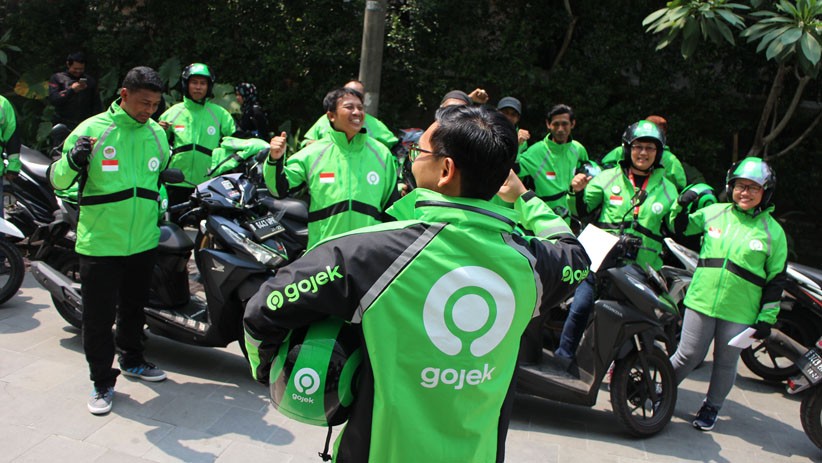
Gojek, one of the biggest players in Indonesia’s ride-hailing market, has already signaled that it will follow the new direction. In public remarks, GoTo Gojek Tokopedia CEO Hans Patuwo said the company will carry out the president’s instruction under the new regulation. He also confirmed that GoRide regular prices will not be increased for customers, even as the company restructures how revenue is shared with drivers.
At the same time, Gojek is making a separate move that shows how serious the company is about adapting its model. The company says it will end GoRide Hemat, a subscription-style service for driver partners that had been tested first in November 2025 and then expanded nationwide in February 2026. After a review period, the company concluded that the scheme needed to be stopped in order to support a better balance for driver welfare.
What The New Commission Rule Means
The new ride-hailing commission cap is more than a pricing adjustment. It changes the economics of Indonesia’s platform-based transport sector in a direct way. According to Reuters, Prabowo said the government had signed a presidential regulation as the legal basis for the new cap, which lowers the maximum platform commission to 8 percent and raises the driver share to at least 92 percent. The president also framed the policy as a response to long-running concerns about how much drivers actually keep from each trip.
For drivers, the headline number matters. A move from an 80 percent to a 92 percent share sounds simple, but it has broad operational consequences. Drivers keep more of each fare, which may improve daily take-home income, especially for those who depend heavily on ride-hailing work. Yet the wider system also has to absorb the cost of lower platform revenue, insurance obligations, and any redesign of incentives, subscriptions, or promos that were previously tied to the old commission structure. That is why the ride-hailing commission cap is being watched not just as a labor issue, but as a business model stress test.
The policy also sends a strong political signal. The government is clearly leaning toward driver protection, not just platform growth. In public remarks reported by Reuters, Prabowo argued that it was unfair for drivers to do the hard work while platforms take the larger share of the money. That framing matters because it suggests the government sees this as both an economic and social policy, not only a regulatory tweak.
Why Gojek Is Ending GoRide Hemat
Gojek’s decision to stop GoRide Hemat is the clearest early response to the new environment. Hans Patuwo said the company began testing the subscription scheme in November 2025, expanded it in February 2026, and then reviewed the outcome after three months. The review led the company to conclude that the program should be discontinued in the near term so driver welfare can be better balanced under the new rules.
This matters because GoRide Hemat was not just a discount feature. It was a separate service layer that sat alongside GoRide regular, offering a cheaper base fare for customers and a different economic setup for driver partners. TVOne reported that Gojek has now officially changed the GoRide revenue split to 92 percent for drivers and 8 percent for the company, following Perpres 27 of 2026. The same report also said GoRide Hemat has been formally stopped.
From a business standpoint, this is a rational response to the new ride-hailing commission cap. When the commission ceiling is compressed, platforms have less room to maintain layered pricing experiments that depend on separate contribution structures. The easiest path is often simplification. Rather than keeping a discounted subscription product that may complicate driver earnings, Gojek appears to be returning to a cleaner two-part model: GoRide regular, with a revised split, and no GoRide Hemat subscription.
That does not mean Gojek is merely shrinking. The company is also trying to protect demand. ANTARA reported that Gojek will not raise GoRide regular prices for customers. Hans Patuwo said the company wants to avoid changing what consumers pay, with the hope that order volumes remain steady and total income for drivers can still improve. That is an important detail, because a platform can technically raise the driver share while still losing if fewer consumers book rides.
What Drivers And Customers May Feel Next
For drivers, the immediate upside is obvious. A higher take-home share should improve per-trip earnings on paper. But the real question is whether this will translate into better daily income after demand, incentives, and order frequency are taken into account. If prices remain stable, as Gojek says they will, then the platform is betting that customer demand will hold and that drivers will benefit from both a bigger split and sustained booking volume.
For customers, the main takeaway is reassuring rather than dramatic. ANTARA reported that GoRide regular fares will not change, which suggests Gojek wants to avoid consumer backlash or a drop in ride volume. That is strategically sensible, because even a driver-friendly reform can backfire if passengers interpret it as a price hike. In a market as price-sensitive as Indonesia’s, the relationship between fare stability and ride frequency is critical.
There is also a broader trust issue. The government has framed the policy as protection for workers, while companies need to preserve financial sustainability. Those two goals are not automatically incompatible, but they are often in tension. If platforms lose too much flexibility, they may reduce promotions, adjust incentives, or cut back on experimental products like GoRide Hemat. If they cut too hard on customer-side benefits, demand may weaken. The coming months will show whether the new ride-hailing commission cap can support both worker welfare and platform health.
A Bigger Shift In Indonesia’s Ride-Hailing Market
The most important thing about this story is that it is not only about Gojek. Reuters noted that the rule will affect ride-hailing firms operating in Indonesia, including GoTo and Grab. That means the new commission structure is likely to reshape the broader competitive landscape, not just one company’s pricing plan.
This is where the policy may become a market-level reset. If all major players must live under an 8 percent cap, then competition will shift away from simple commission extraction and toward service quality, driver retention, order volume, subsidies, and ecosystem breadth. In other words, the ride-hailing commission cap may force the industry to compete more on operational efficiency than on how much of the fare can be retained by the platform.
That also explains why Gojek’s reaction is strategically important. Ending GoRide Hemat is not just a product decision. It is a message that the company wants to align fast, reduce friction, and avoid having two different pricing logics collide with the new regulation. Gojek is essentially signaling that it would rather simplify now than fight the policy through gradual adjustments.
The next phase to watch is implementation. Reuters noted that Prabowo did not say when the regulation would take effect, which leaves room for transitional uncertainty. That matters for drivers, customers, and investors alike. A policy can look clean on paper, but the operational details are what determine whether it really improves income, preserves demand, and keeps ride-hailing companies viable in the long run.
If the government’s goal is to boost driver welfare, and Gojek’s goal is to preserve volume without raising consumer prices, then the real test will come in daily trip data, not press conference language. For now, one thing is clear: Indonesia’s ride-hailing commission cap has already started reshaping the market, and Gojek is moving first to adjust.
Read More