





 Tuesday, 19-05-26








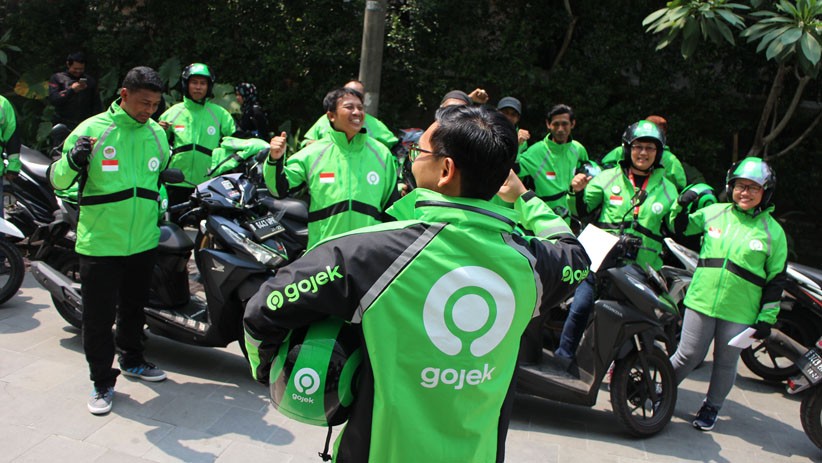
Gojek is making one of its clearest ride-hailing adjustments in years. The company will end the GoRide Hemat subscription model after reviewing how the scheme affects driver welfare, while also aligning its take rate with Indonesia’s new 8 percent commission cap for ride-hailing platforms. Regular GoRide pricing will stay unchanged, but GoRide Hemat will move to a new structure with only a very limited price adjustment for customers. The shift comes after the government formalized a tougher policy framework for online transport workers, and it forces Gojek to rethink how it balances affordability, platform revenue, and driver earnings at the same time.
Why Gojek Is Ending GoRide Hemat
The main reason behind the change is simple: Gojek says the subscription model no longer delivers the balance it wants between customer demand and driver welfare. According to company president director Hans Patuwo, the GoRide Hemat scheme was tested from November 2025 and then expanded more widely in February 2026. After three months of deeper evaluation, the company concluded that the subscription format needed better alignment with the interests of driver partners. That is why Gojek decided to stop the program in the near term and bring GoRide Hemat under the same commission logic as regular GoRide.
This is an important signal because it shows that GoRide Hemat was not simply a pricing experiment. It was part of a larger test of how far Gojek could push a lower-cost ride product without hurting the income side of the driver equation. When the company says the model needs “a better balance,” it is effectively admitting that a cheaper product is not automatically a better product if the economics become too strained for the people doing the work. In practical terms, GoRide Hemat may have been useful for demand generation, but the economics now appear to be shifting toward a more sustainable driver-first structure. That is an inference based on the company’s explanation and the policy change it is now adopting.
The wider regulatory backdrop matters here. Reuters reported that Indonesia’s new rule cuts the maximum commission ride-hailing companies can take from drivers to 8 percent, down from 20 percent. Reuters also reported that the presidential regulation is tied to broader protections for online transport workers, including accident and health insurance requirements. That means Gojek is not reacting only to market pressure, but to a formal policy reset that affects the structure of the entire industry. For a platform like Gojek, the safest route is not to fight the rule, but to redesign the product portfolio around it.
What The 8% Regulation Means For Drivers And Riders
For drivers, the most immediate change is better revenue sharing. Gojek said 92 percent of each GoRide trip will go to the driver, which is the direct result of the new 8 percent cap. That is a meaningful improvement in gross take-home economics, especially in a business where small percentage changes can significantly affect daily earnings. Gojek also framed the move as a long-term investment in a healthier ecosystem, which suggests the company expects improved driver retention, better service consistency, and less tension over commissions over time.
For riders, the picture is more nuanced. Gojek said regular GoRide will not see a price increase, which is important because that service remains the platform’s main two-wheel transport product. GoRide Hemat, however, will face a very limited price adjustment as it transitions into the same revenue-sharing logic as regular GoRide. Antara and Merdeka both reported that any price change is expected to be narrow and controlled, with Gojek emphasizing affordability while still protecting driver welfare. In other words, the company is trying to avoid a broad fare shock while still adjusting the economics of the lower-cost tier.
That balancing act is likely to matter because cheap ride products are usually built on volume, not just margin. If Gojek keeps regular GoRide stable and only trims the discount advantage of GoRide Hemat, the company may preserve most of its core demand while reducing the risk that the budget tier cannibalizes earnings. That is not a guarantee, but it is a logical reading of the strategy based on the company’s stated emphasis on keeping order volumes stable for regular GoRide and limiting price changes to GoRide Hemat only.
There is also a trust dimension here. Driver communities in many markets are highly sensitive to commission changes because they often see them as the clearest measure of how fairly a platform distributes value. By publicly ending a subscription scheme that it says did not sufficiently support welfare, Gojek is sending a message that it is willing to sacrifice some product complexity in exchange for a clearer and more defensible model. That could help reduce friction with driver partners, especially at a time when the political and regulatory climate is placing more attention on their income security.
What The Move Says About Gojek's Broader Strategy
The decision is about more than GoRide Hemat. It also shows how Gojek is trying to reposition itself inside a tougher policy environment. Hans Patuwo said the company will continue strengthening driver welfare programs for partners and their families, including benefits such as holiday bonuses, BPJS Ketenagakerjaan coverage, driver partner job fairs, ambulance services, and operational offices in multiple cities. He also said seven additional programs were launched in early May to improve the living standards of drivers and their families. That kind of messaging matters because it shows the company wants the market to see the policy shift as part of a broader social compact, not just a margin adjustment.
At the same time, Gojek is trying to protect its wider business engine. Kumparan reported that the company will optimize other business lines, including delivery, logistics, financial services, and other digital services, to absorb the impact of the change. That is a classic platform play: when one major line is under pressure, use the rest of the ecosystem to stabilize overall growth. It is also why GoRide Hemat should be read as one piece of a larger portfolio rebalancing, not an isolated product decision.
Gojek also said its second quarter 2026 outlook still looks solid despite the policy change. That may sound optimistic, but it fits the company’s broader message that this adjustment is a long-term investment rather than a short-term shock. If the commission cap is now fixed at 8 percent and the platform is under pressure to prove that drivers benefit from the change, then profitability will likely depend more on order growth, ecosystem cross-subsidy, and operational efficiency than on any single ride product. Reuters’ reporting makes clear that the new regulation is not just a company issue, but an industry-wide reset that will shape how ride-hailing firms in Indonesia compete going forward.
In that sense, the end of GoRide Hemat may be less of a retreat and more of a redesign. Gojek is choosing clarity over complexity, and welfare optics over a discount structure that may have become too hard to defend under the new rules. The company still wants affordability, but it now has to prove that affordability can coexist with stronger driver income protection. That will be the real test of this new phase for GoRide Hemat, and for Gojek’s ride-hailing business more broadly.
Read More