





 Tuesday, 29-09-26








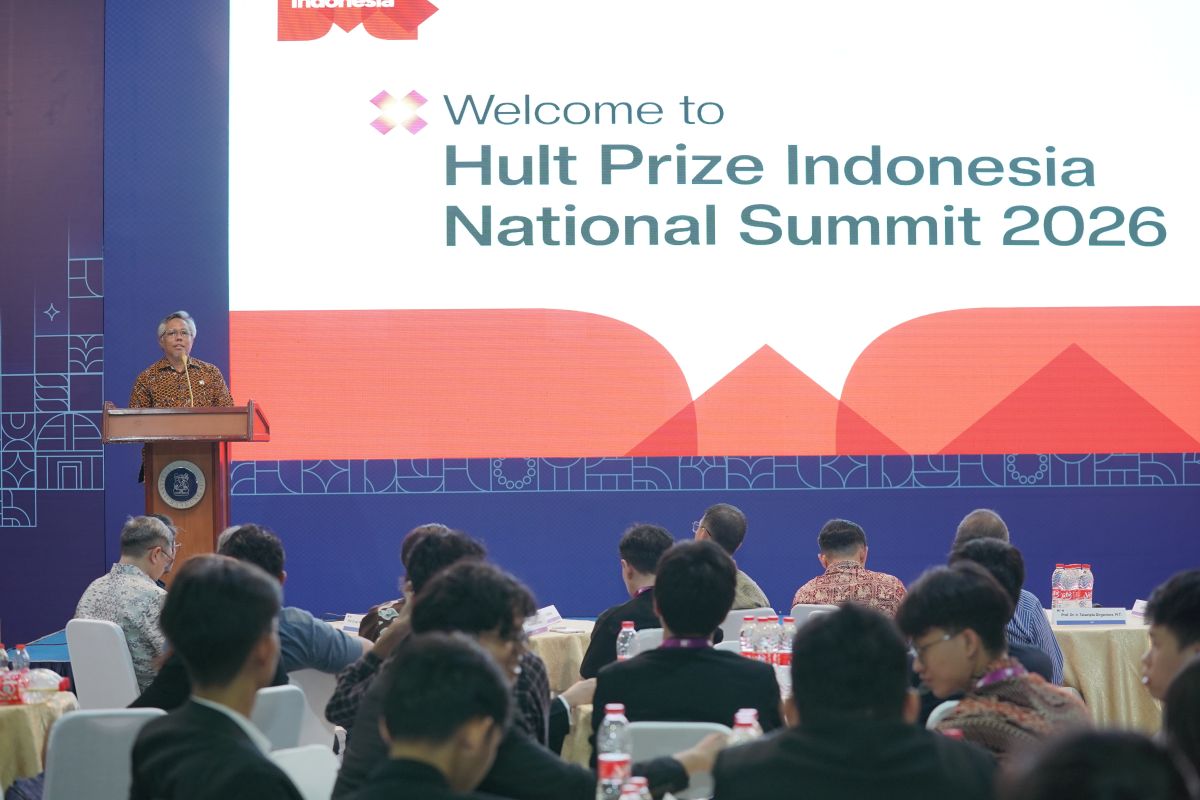
Indonesia’s university startup ecosystem is gaining fresh momentum as Institut Teknologi Bandung hosted the Hult Prize Indonesia National Summit 2026, bringing together young entrepreneurs, innovators, investors, and academic leaders to accelerate impact driven business development.
The event reflects a growing transformation within Indonesia’s higher education landscape, where universities are no longer focused solely on academic achievement but are increasingly becoming incubators for entrepreneurship, technology innovation, and social impact ventures.
Held at Institut Teknologi Bandung, one of Indonesia’s leading technology universities, the summit showcased how student startup innovation is evolving into an important pillar of the country’s future digital economy. The event gathered student entrepreneurs from across Indonesia who are developing startups aimed at solving global and local challenges through business driven solutions.
According to information released by ITB, the Hult Prize Indonesia National Summit 2026 aimed to encourage university students to create startups capable of generating meaningful global impact. Participants presented business ideas spanning sustainability, education technology, healthcare, agriculture, climate solutions, and digital transformation.
The growing prominence of student startup innovation comes at a time when Indonesia is seeking to strengthen its position as Southeast Asia’s largest digital economy. With a young population, expanding internet access, and increasing investor interest in technology driven businesses, universities are becoming increasingly important in producing the next generation of founders and innovators.
Industry observers believe Indonesia’s startup ecosystem is entering a new stage where social impact, sustainability, and long term resilience are becoming just as important as rapid growth and valuation expansion.
Why Universities Are Becoming Startup Innovation Centers
Universities around the world are increasingly viewed as engines of innovation and entrepreneurship. Indonesia is now following this trend as campuses expand beyond traditional education roles into technology commercialization, startup incubation, and venture development.
The rise of student startup innovation reflects changing expectations among younger generations. Many university students no longer see employment at large corporations as the only career path. Instead, entrepreneurship is increasingly viewed as an opportunity to create impact, solve societal problems, and build scalable businesses.
This shift has accelerated significantly over the past decade due to digital technology and the growth of startup ecosystems across Southeast Asia. Young founders today can access online platforms, global markets, venture capital networks, and digital tools more easily than previous generations.
Institutions such as ITB have become central to this transformation because they combine technical expertise, research capabilities, and entrepreneurial ecosystems within one environment. Engineering, science, and technology students are increasingly encouraged to commercialize ideas and transform academic research into real world businesses.
The Hult Prize itself has gained global recognition as one of the world’s largest student entrepreneurship competitions. Often referred to as the “Nobel Prize for Students,” the initiative challenges young innovators to develop scalable startups addressing major global issues.
Indonesia’s participation in this international movement highlights the country’s ambition to become more active within the global innovation economy. Student startup innovation is now increasingly aligned with broader national goals involving digital transformation, economic diversification, and sustainable development.
Several Indonesian universities have recently strengthened entrepreneurship programs, startup incubators, and innovation labs. Partnerships between universities, corporations, and venture capital firms are also becoming more common as stakeholders recognize the economic potential of youth driven innovation.
The result is a more dynamic startup environment where students are gaining exposure not only to technical education but also to business development, leadership, fundraising, and market strategy.
Impact Driven Startups Become New Entrepreneurial Trend
One of the most notable aspects of the Hult Prize Indonesia National Summit 2026 is its focus on impact oriented entrepreneurship. Unlike earlier startup eras that heavily emphasized rapid growth and technology disruption alone, today’s young founders are increasingly building businesses designed to address social and environmental challenges.
The student startup innovation trend now extends into areas such as climate resilience, waste management, sustainable agriculture, renewable energy, education access, and healthcare affordability.
This reflects broader global changes occurring within the startup ecosystem. Investors, consumers, and governments are placing greater emphasis on sustainability, environmental responsibility, and measurable social impact.
Indonesia itself faces multiple structural challenges that create opportunities for impact driven startups. Issues involving waste management, transportation, financial inclusion, climate adaptation, food security, and education inequality continue requiring innovative solutions.
Young entrepreneurs are increasingly positioning startups as tools capable of solving these complex societal problems while also generating commercial value.
At the summit, many participating startups reportedly focused on solutions connected to sustainability and community empowerment. This aligns closely with global venture capital trends where environmental, social, and governance related investments continue gaining momentum.
Indonesia’s massive population and rapidly expanding digital infrastructure create strong opportunities for scalable impact businesses. Startups capable of combining technology with local problem solving may find significant growth potential both domestically and internationally.
Industry analysts note that Southeast Asia is entering a new phase of startup development where quality and sustainability are becoming more important than pure expansion speed. Investors are now paying closer attention to business fundamentals, profitability pathways, and long term resilience.
The student startup innovation movement emerging from universities may therefore help produce a new generation of founders with stronger awareness of sustainable business principles from the beginning.
Indonesia’s Startup Ecosystem Enters a More Mature Phase
Indonesia’s startup ecosystem has experienced dramatic growth over the past decade. The country has produced several major technology companies and attracted billions of dollars in investment from regional and global venture capital firms.
However, the industry has also faced challenges related to profitability, market competition, and economic sustainability. Following periods of aggressive expansion and high valuation growth, many technology companies are now shifting toward more disciplined operational models.
This changing environment is influencing how young entrepreneurs approach startup development. Student startup innovation today increasingly emphasizes resilience, efficiency, and meaningful market solutions rather than growth at all costs.
Universities are becoming critical in shaping this next generation of startup founders. Educational institutions can provide structured mentorship, interdisciplinary collaboration, and long term research capabilities that help improve business quality.
ITB’s role as host of the Hult Prize Indonesia National Summit 2026 reflects how leading universities are positioning themselves within the broader innovation ecosystem. By connecting students with mentors, investors, and industry leaders, campuses can accelerate entrepreneurial development beyond classroom education alone.
The Indonesian government has also expressed increasing interest in strengthening startup ecosystems and digital innovation. Policies involving digital economy development, technology adoption, and creative industry support continue receiving attention from policymakers.
This broader ecosystem support could help sustain long term startup growth across Indonesia. However, competition is intensifying not only domestically but also regionally as Southeast Asian countries race to attract technology investment and entrepreneurial talent.
Student startup innovation may therefore become one of Indonesia’s strategic advantages if universities successfully produce globally competitive entrepreneurs capable of building scalable and sustainable businesses.
The Future of Youth Entrepreneurship in Indonesia
The momentum surrounding the Hult Prize Indonesia National Summit 2026 signals a larger cultural and economic shift occurring among Indonesian youth. Entrepreneurship is increasingly becoming embedded within student aspirations, academic environments, and national economic discussions.
Young Indonesians are entering a world shaped by digital transformation, artificial intelligence, climate change, and shifting global economic dynamics. These conditions create both challenges and opportunities for future entrepreneurs.
The rise of student startup innovation suggests that universities may play an increasingly important role in preparing students not only for employment but also for leadership within the future economy.
Technology accessibility has lowered barriers for startup creation, enabling students to experiment with digital products, online services, and scalable platforms even before graduation. Social media, cloud computing, artificial intelligence tools, and digital payment systems have made entrepreneurship more accessible than ever before.
At the same time, the global economy is demanding more adaptive and innovative talent. Employers and investors increasingly value creativity, problem solving abilities, and entrepreneurial thinking.
Indonesia’s demographic advantage also strengthens long term startup potential. The country possesses one of the largest youth populations in Southeast Asia, creating a significant pipeline of future innovators and business founders.
The challenge moving forward will involve ensuring that entrepreneurial ecosystems remain inclusive, sustainable, and globally competitive. Universities, governments, investors, and private sector partners will need to collaborate more closely to support emerging founders.
Events such as the Hult Prize Indonesia National Summit 2026 demonstrate that student entrepreneurship is no longer a niche activity within Indonesian campuses. It is becoming an important component of the country’s broader economic and innovation strategy.
As Indonesia continues building its digital economy and expanding its innovation ecosystem, student startup innovation may ultimately become one of the country’s most valuable long term assets.
Read More