





 Sunday, 14-06-26








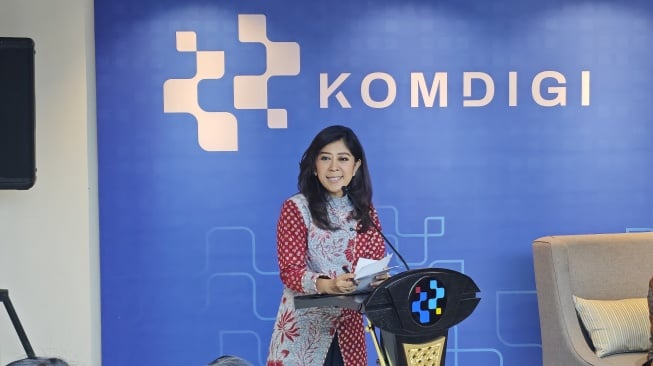
Indonesia is starting to rethink where its digital backbone should live. The latest push from Komdigi to encourage private investors to build an Eastern Indonesia data center reflects a larger shift in national infrastructure thinking. For years, the country’s data center capacity has been concentrated in western Indonesia, especially Jakarta and Batam. Now the government wants to spread that capacity more evenly, not only to reduce imbalance, but also to strengthen resilience, lower latency, and open new digital growth corridors outside Java.
The policy direction matters because data centers are no longer seen as simple storage facilities. Komdigi officials say they are now a strategic digital asset and a core part of Indonesia’s economic infrastructure, especially as demand rises for cloud services, edge computing, and AI workloads. That makes the Eastern Indonesia data center conversation less about geography alone and more about the next stage of digital competitiveness.
Why Komdigi Wants Data Centers In The East
Komdigi’s core argument is straightforward: Indonesia’s data center ecosystem is too concentrated in the west. Wayan Toni Supriyanto, Komdigi’s Director General of Digital Infrastructure, said the government is preparing a master plan and roadmap so that future development is not limited to western hubs but can also expand into the east. The ministry is coordinating this effort across agencies because the buildout depends on fiber, cable landing stations, electricity, environmental permits, and construction approvals.
This is not just a planning exercise. Antara reports that the Indonesian data center industry could grow to US$1.83 billion in 2026 and reach US$3.48 billion by 2031, according to Mordor Intelligence. That kind of growth makes location strategy important. If demand is rising that quickly, then the question is not whether Indonesia will need more data centers, but where the next wave will be built.
Jakarta remains the dominant market because it has dense fiber connectivity and serves as a landing point for subsea cables. Batam also remains attractive because of its closeness to Singapore. But that concentration creates a structural imbalance. Komdigi’s plan for an Eastern Indonesia data center is meant to widen the map so digital infrastructure does not remain locked into a few mature markets.
What Makes Eastern Indonesia Attractive Now
The case for an Eastern Indonesia data center is stronger than it may first appear. One reason is latency. Industry voices quoted by Antara say sites closer to submarine cable landing points are more attractive because they reduce data delay. That is important for cloud platforms, AI training and inference, financial services, and other digital services that rely on speed and reliability.
Another reason is geographic diversification. Indonesia is an archipelagic country with more than 17,000 islands, so building infrastructure only in one cluster raises operational risk. Antara notes that a more even spread of facilities could become a strategic advantage in the regional data center market. In practical terms, a distributed network allows companies to improve redundancy, support local users more efficiently, and reduce pressure on overloaded western hubs.
There is already evidence that this transition has begun. In early April 2026, DCI Indonesia inaugurated the E2 Data Center in Surabaya, with 9 megawatts of IT capacity and a service level agreement of 99.999 percent. The company said the facility is designed to support Indonesia Timur, provide low latency traffic distribution, and give redundancy to Jakarta. That is a concrete example of how the Eastern Indonesia data center strategy can move from policy language to real infrastructure.
Surabaya is especially relevant because it functions as a commercial and connectivity gateway for eastern Indonesia. DCI said the site was chosen for that strategic role, and East Java officials welcomed it as a boost to competitiveness and local economic growth. That combination of geography, industry demand, and local government support is exactly what Komdigi wants to replicate more broadly.
The Real Bottlenecks Are Power, Fiber, And Permits
The biggest obstacle to building an Eastern Indonesia data center is not ambition. It is infrastructure readiness. Komdigi said any target location must have fiber connectivity and access to cable landing systems. It also has to be supported by electricity, water, environmental licensing, and building permits. That means the challenge is not just finding land. It is creating a full ecosystem around that land.
This is where many regional projects often slow down. Data centers need highly reliable power and network redundancy. They also require predictable permitting, because investors cannot commit capital if the approval process is fragmented or unclear. Komdigi’s call for coordination across ministries is therefore not a formality. It is central to whether the Eastern Indonesia data center plan becomes viable at scale.
Industry stakeholders have reinforced the same point. Antara quoted the Indonesia Data Center Provider Organization, which said eastern Indonesia still lacks adequate infrastructure, especially fiber optic capacity. The organization also pointed to the role of AI, social media, e commerce, IoT, smart cities, and cloud services in driving demand for better distributed facilities. In other words, the demand side is growing faster than the supporting network in many regions.
Energy strategy is another critical piece. Denny Setiawan from Komdigi said energy efficiency and green energy are important for attracting data center investment. That aligns with a broader global trend, where operators and governments increasingly look for lower carbon infrastructure while still meeting high compute demand. For the Eastern Indonesia data center agenda, cleaner and more stable energy access could become a deciding factor for investors.
Why The Policy Could Change Regional Growth
If Komdigi succeeds, the benefits could extend beyond the technology sector. A strong Eastern Indonesia data center network could support local startups, e commerce logistics, digital public services, fintech, AI adoption, and enterprise cloud use in areas that have long been dependent on infrastructure based in western Indonesia. That would not erase the digital gap overnight, but it would start to narrow it.
It could also change how investors view eastern Indonesia. Data center development usually brings follow on demand for land, construction, security, energy services, cooling systems, and skilled labor. The Surabaya example shows that a facility can also serve as an anchor for a larger technology cluster. If more cities in eastern Indonesia reach that stage, the result could be a more balanced national digital economy.
There is also a strategic dimension. Komdigi says Indonesia has the potential to become a regional data center hub. That ambition depends on whether the country can offer not just market size, but also better distribution of infrastructure. A mature Eastern Indonesia data center ecosystem would strengthen the country’s position by offering geographic redundancy and broader coverage across the archipelago.
The Next Test For Investors And Policymakers
The next phase will be execution. The roadmap is important, but the market will judge the policy by what gets built, where it gets built, and how quickly the supporting ecosystem follows. For investors, the key question is whether eastern locations can match the network quality, power reliability, and permitting certainty needed for a modern data center business. For the government, the test is whether the master plan can turn coordination into actual shovel ready projects.
That is why the Eastern Indonesia data center push should be read as more than a regional development story. It is a test of Indonesia’s ability to spread digital infrastructure beyond its most developed corridors and build a more resilient national platform for the AI era. The opportunity is real, the demand is growing, and the policy direction is now visible. What happens next will show whether Indonesia can turn digital concentration into digital balance.
Read More