





 Wednesday, 17-06-26








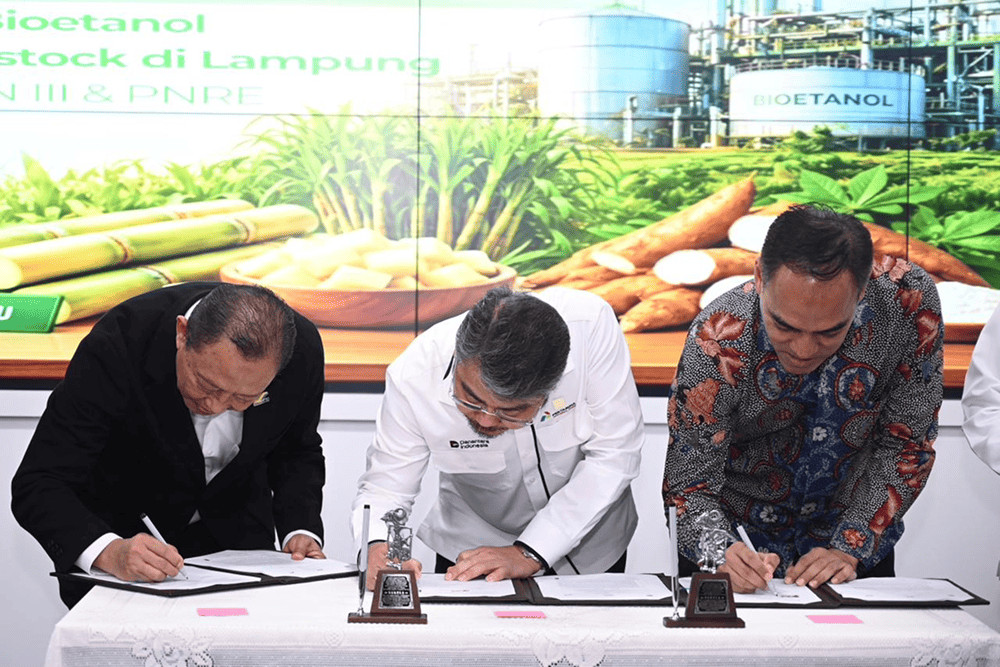
Indonesia is entering a critical phase in its energy transition as the government and state-owned energy company push forward with the E20 bioethanol Indonesia program. Designed to reduce dependence on fossil fuels and strengthen energy security, the initiative aims to increase the blending ratio of bioethanol in gasoline to 20 percent. This marks a significant step beyond the current lower blending levels and reflects Indonesia’s broader ambition to expand its renewable energy portfolio.
As global energy markets remain volatile and climate commitments tighten, the E20 bioethanol Indonesia strategy is increasingly viewed not just as an environmental initiative but as a structural shift in how Southeast Asia’s largest economy manages its fuel supply.
Why E20 Bioethanol Indonesia Matters for Energy Security
The push for E20 bioethanol Indonesia is closely tied to the country’s long-standing challenge of fuel imports. Despite being rich in natural resources, Indonesia still relies heavily on imported petroleum products to meet domestic demand. This dependency exposes the economy to global price fluctuations and currency volatility.
By increasing the share of bioethanol in fuel blends, Indonesia aims to reduce its reliance on imported gasoline. Bioethanol, which can be produced from agricultural commodities such as sugarcane, cassava, and molasses, offers a domestically sourced alternative.
The E20 bioethanol Indonesia initiative also aligns with the government’s broader biofuel roadmap, which previously focused heavily on biodiesel through the B30 and B35 programs. While biodiesel targets diesel consumption, bioethanol addresses gasoline demand, making it a complementary pillar in Indonesia’s renewable fuel strategy.
From a macroeconomic perspective, scaling up E20 bioethanol Indonesia could help stabilize the trade balance by reducing fuel imports. It also has the potential to create a more resilient energy system that is less vulnerable to external shocks.
Infrastructure and Supply Chain Challenges
Despite its strategic importance, the rollout of E20 bioethanol Indonesia is not without challenges. One of the biggest hurdles lies in the supply chain. Producing bioethanol at scale requires a reliable and sustainable feedstock supply, as well as significant investment in processing facilities.
Currently, Indonesia’s bioethanol production capacity remains limited compared to its biodiesel industry. Expanding production to meet the demands of the E20 bioethanol Indonesia program will require new investments in distillation plants, logistics infrastructure, and storage systems.
Another issue is feedstock competition. Crops used for bioethanol production often overlap with food supply chains, raising concerns about food security and price inflation. Policymakers must carefully balance the growth of the E20 bioethanol Indonesia initiative with the need to maintain stable agricultural markets.
Logistics also play a critical role. Transporting bioethanol across Indonesia’s vast archipelago presents unique challenges, especially in regions with limited infrastructure. Ensuring consistent fuel quality and blending standards across different locations will require strong regulatory oversight and coordination between stakeholders.
Economic Opportunities for Agriculture and Industry
While challenges remain, the E20 bioethanol Indonesia program also opens up significant economic opportunities. For the agricultural sector, increased demand for bioethanol feedstocks could boost farmer incomes and stimulate rural development.
Sugarcane producers, in particular, stand to benefit from the expansion of E20 bioethanol Indonesia, as molasses is a key raw material for ethanol production. This could encourage investments in plantation productivity, irrigation systems, and agricultural technology.
On the industrial side, the development of a domestic bioethanol industry could create new value chains and attract private sector participation. Companies involved in processing, distribution, and fuel retail could see new revenue streams as the E20 bioethanol Indonesia ecosystem expands.
There is also potential for job creation across multiple sectors, from farming and logistics to manufacturing and engineering. As the government accelerates the E20 bioethanol Indonesia rollout, it is likely to stimulate economic activity in regions that are currently underdeveloped.
Policy Support and Strategic Acceleration
The success of the E20 bioethanol Indonesia initiative will depend heavily on policy support and regulatory clarity. The government has already signaled its commitment to accelerating the program, recognizing its importance in achieving national energy and climate targets.
Incentives such as subsidies, tax breaks, and guaranteed purchase agreements could play a crucial role in attracting investment. Clear regulations on blending standards, pricing mechanisms, and distribution logistics will also be essential to ensure the smooth implementation of E20 bioethanol Indonesia.
Coordination between ministries, state-owned enterprises, and private sector players will be key. The government must ensure that all stakeholders are aligned in terms of objectives and execution strategies.
Another important aspect is public acceptance. Consumers need to be confident that fuel containing higher bioethanol blends will not negatively impact vehicle performance. Public awareness campaigns and technical validation will be necessary to build trust in the E20 bioethanol Indonesia program.
Environmental Impact and Climate Commitments
From an environmental perspective, E20 bioethanol Indonesia has the potential to significantly reduce greenhouse gas emissions. Bioethanol burns cleaner than conventional gasoline, resulting in lower carbon emissions per unit of energy.
This aligns with Indonesia’s commitment to reducing emissions under international climate agreements. The expansion of E20 bioethanol Indonesia could help the country move closer to its net zero targets while also improving urban air quality.
However, the environmental benefits depend on sustainable production practices. If bioethanol feedstocks are produced through deforestation or unsustainable farming methods, the overall impact could be negative.
Therefore, the E20 bioethanol Indonesia initiative must be accompanied by strict sustainability standards and monitoring mechanisms. This includes ensuring responsible land use, efficient water management, and minimal environmental degradation.
The Road Ahead for E20 Bioethanol Indonesia
Looking ahead, the E20 bioethanol Indonesia program represents both an opportunity and a test. It offers a pathway to greater energy independence, economic diversification, and environmental sustainability. At the same time, it requires careful planning, significant investment, and strong governance.
The acceleration of the program signals a shift in Indonesia’s energy strategy, moving beyond short term solutions toward a more integrated and sustainable approach. If successfully implemented, E20 bioethanol Indonesia could serve as a model for other emerging economies seeking to balance growth with sustainability.
Ultimately, the success of E20 bioethanol Indonesia will depend on execution. The foundations are being laid, but the real challenge lies in scaling the program efficiently and sustainably. As Indonesia moves forward, the world will be watching how it navigates this complex but promising transition.
Read More