





 Friday, 05-06-26








Indonesia’s postal and logistics sector is undergoing a major technological transformation. One of the most significant developments comes from PT Pos Indonesia, the state owned logistics company that has begun deploying large scale automation powered by artificial intelligence and robotics.
Through the implementation of Pos Indonesia AI robots, the company aims to improve operational efficiency, accelerate package processing, and modernize its logistics infrastructure. This initiative marks a turning point for the traditional postal service as it adapts to the rapidly evolving digital economy.
The adoption of Pos Indonesia AI robots is not merely a technological upgrade. It represents a broader transformation strategy designed to make the company more competitive in an industry increasingly dominated by fast moving private logistics providers and e commerce platforms.
By integrating artificial intelligence and robotic systems into its operations, Pos Indonesia is seeking to build a smarter, faster, and more efficient logistics network across the country.
How Pos Indonesia AI Robots Improve Logistics Operations
The deployment of Pos Indonesia AI robots focuses primarily on automating critical operational processes, particularly package sorting and labeling.
Sorting packages is one of the most labor intensive stages in logistics operations. Traditionally, workers manually categorize shipments according to destination, size, and delivery route. This process requires significant manpower and can be prone to human error.
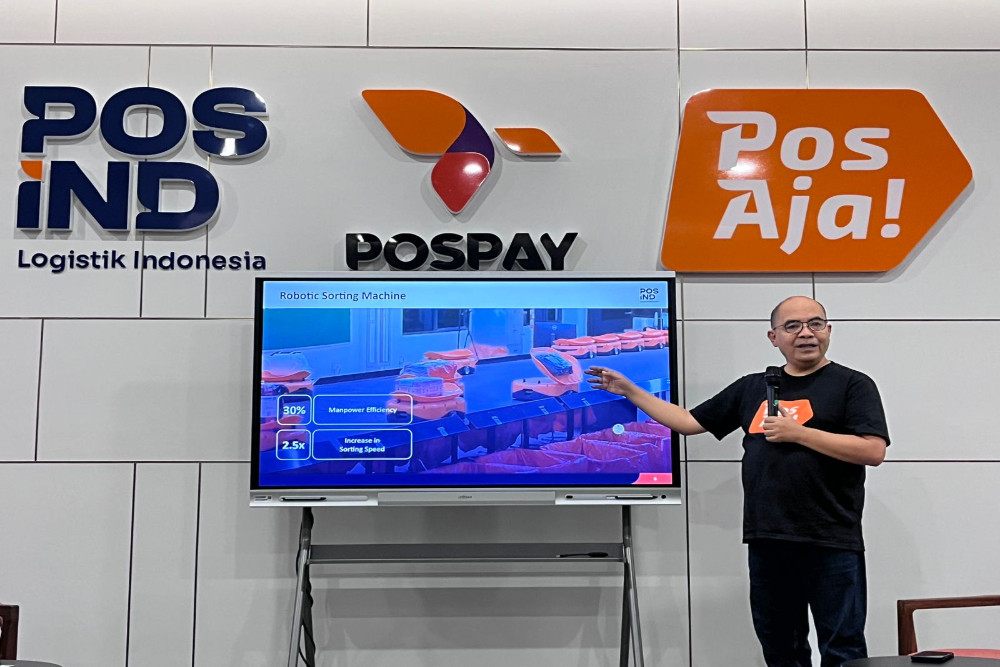
With the introduction of Pos Indonesia AI robots, much of this work is now handled by automated robotic systems equipped with artificial intelligence and advanced sensors. These robots are capable of identifying package information, determining destination routes, and directing parcels to the appropriate sorting channels.
The impact has been substantial. Robotic sorting systems are capable of processing up to 18,000 packages per hour, far exceeding the speed of manual sorting processes.
In addition to speed, the accuracy of sorting has also improved significantly. The system reportedly operates with an error rate of only 0.7 per million packages, dramatically reducing mistakes that could delay deliveries or misroute shipments.
Another key advantage of Pos Indonesia AI robots is operational consistency. Unlike manual labor, robots can work continuously without fatigue, allowing logistics centers to operate more efficiently during peak demand periods such as major online shopping campaigns.
These improvements ultimately help Pos Indonesia provide faster delivery services and maintain higher reliability across its logistics network.
The Scale Of Pos Indonesia AI Robots Deployment
The implementation of Pos Indonesia AI robots has been expanding steadily across the company’s logistics infrastructure.
Currently, hundreds of robotic sorting machines have been deployed in major operational centers, including Jakarta and Surabaya. Additional installations are planned for other logistics hubs as the company continues its digital transformation strategy.
Early stages of the automation program have already demonstrated strong performance improvements. According to company data, the use of robotics and artificial intelligence has helped increase operational efficiency significantly.
In some operational segments, efficiency improvements have reached over 40 percent, while the need for manual labor in sorting processes has decreased by approximately 30 percent.
These gains highlight the powerful impact that automation can bring to large scale logistics operations.
Beyond robotics, Pos Indonesia is also integrating additional digital technologies such as automated labeling systems, data analytics tools, and intelligent logistics management platforms.
Together, these technologies form the backbone of the Pos Indonesia AI robots ecosystem, allowing the company to optimize workflows, track shipments more accurately, and improve delivery performance.
Digital Transformation In Indonesia’s Logistics Industry
The rise of Pos Indonesia AI robots reflects a broader shift occurring across Indonesia’s logistics industry.
As e commerce continues to expand rapidly, logistics providers face increasing pressure to deliver packages faster and more reliably. Consumers now expect near real time tracking, next day delivery options, and minimal shipping errors.
Traditional logistics processes, which rely heavily on manual labor, struggle to keep up with these expectations.
Automation technologies such as robotics and artificial intelligence are therefore becoming essential tools for logistics companies seeking to remain competitive.
By investing in Pos Indonesia AI robots, the national postal service is positioning itself to compete with private courier companies and technology driven logistics startups.
Automation not only speeds up operations but also reduces operational costs in the long term. Robotics systems require significant initial investment, but they can lower labor costs, minimize errors, and increase throughput over time.
These advantages are particularly important for large scale logistics organizations that handle millions of packages every month.
The transformation also reflects a broader trend toward Industry 4.0 adoption across Indonesian state owned enterprises.
Many government affiliated companies are investing in digital technologies to modernize their operations, improve efficiency, and strengthen competitiveness in the global economy.
Workforce Implications Of Pos Indonesia AI Robots
While the benefits of Pos Indonesia AI robots are significant, the introduction of automation also raises important questions about workforce transformation.
Automation inevitably changes the nature of work within logistics operations. Tasks that were previously performed manually may now be handled by robotic systems.
However, company leaders emphasize that automation is not simply about replacing workers.
Instead, the goal is to shift human resources toward higher value roles that require analytical thinking, technical expertise, and customer service capabilities.
Employees who previously handled manual sorting tasks may be reassigned to positions related to system monitoring, logistics planning, digital operations, or customer support.
This transition requires substantial workforce development efforts, including training programs that help employees adapt to new technology driven environments.
For Pos Indonesia, the challenge lies in balancing efficiency gains with responsible workforce management.
As automation expands, companies must ensure that employees are equipped with the skills needed to operate in increasingly digital workplaces.
The Future Of Pos Indonesia AI Robots
Looking ahead, the role of Pos Indonesia AI robots is expected to grow significantly as the company continues its modernization journey.
Automation technologies are evolving rapidly, offering new capabilities that can further enhance logistics performance.
Future developments may include autonomous delivery systems, advanced warehouse robotics, and predictive logistics powered by machine learning.
Such technologies could enable even faster delivery times, improved route optimization, and more accurate demand forecasting.
At the same time, the expansion of automation will likely be accompanied by broader infrastructure upgrades.
Logistics centers may be redesigned to support fully automated workflows, while digital platforms could provide real time visibility across the entire delivery network.
If implemented successfully, Pos Indonesia AI robots could become a cornerstone of the country’s modern logistics ecosystem.
The transformation would not only improve the efficiency of the national postal service but also strengthen Indonesia’s ability to support the rapidly growing digital economy.
For a company with more than a century of history, embracing robotics and artificial intelligence represents a bold step toward the future.
As technology continues to reshape global logistics, Pos Indonesia is demonstrating that even traditional institutions can reinvent themselves through innovation.
Read More