





 Tuesday, 29-09-26








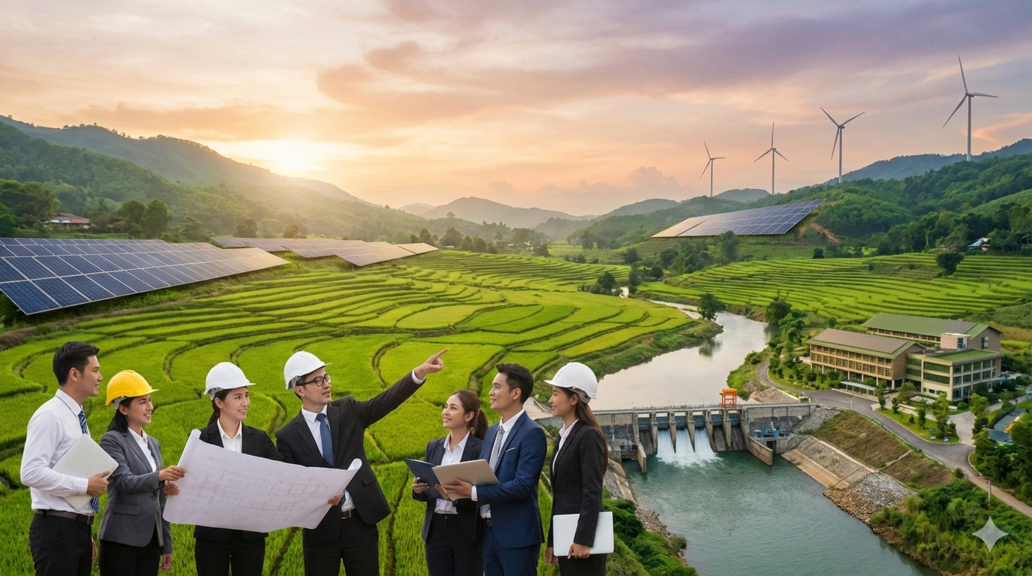
As we move through 2026, Southeast Asia stands at a paradoxical crossroads. The region is home to some of the world’s fastest-growing economies, yet it remains one of the most vulnerable to climate change. For investors, policy-makers, and business leaders, a single metric has come to define the narrative: Green Investment as a percentage of GDP.
While headlines trumpet a record-breaking $8 billion in private green capital flows across the "SEA-6" (Indonesia, Malaysia, the Philippines, Singapore, Thailand, and Vietnam) in 2024—a 43% year-on-year increase—the underlying reality is stark. Current green investment hovers at approximately 0.2% to 0.4% of regional GDP. To meet the 2030 Paris Agreement targets and secure sustainable growth, that figure needs to skyrocket to at least 6% to 7% in several member states.
This "Green Gap" isn't just a challenge; it is the most significant investment frontier of the decade.
The Current Landscape: A Country-by-Country Breakdown
The "ASEAN Way" of green transition is not uniform. Each nation is leveraging its unique natural resources and industrial strengths to attract capital. Here is how the green investment-to-GDP ratios and targets currently stand:
1. Vietnam: The High-Stakes Leader
Vietnam has emerged as the region’s renewable energy poster child. With a green investment rate of approximately 0.4% of GDP, it leads the pack in terms of solar and wind capacity. However, the World Bank estimates that Vietnam requires 6.8% of its GDP annually through 2040 to achieve its net-zero goals. With over $185 billion in green FDI already pledged between 2021 and 2025, Vietnam is the primary destination for investors looking for utility-scale impact.
2. Singapore: The Financial Engine
As the region’s financial hub, Singapore’s green investment rate is the highest at roughly 1.2% of GDP. The city-state is less about physical renewable plants and more about Green Finance. The government’s commitment to issuing S$35 billion in green bonds by 2030 has created a liquid secondary market that provides the "plumbing" for the rest of ASEAN’s green projects.
3. Indonesia: The Critical Minerals Powerhouse
Indonesia’s green investment (currently ~0.3% of GDP) is heavily concentrated in the "Electric Vehicle (EV) Battery Belt." By leveraging its massive nickel reserves, Indonesia has attracted over $50 billion in downstream processing investments. To reach its 2060 net-zero target, the nation needs an estimated $1.1 trillion, suggesting that the current investment rate must increase twenty-fold.
4. Malaysia & Thailand: The Manufacturing Hubs
Both nations are hovering around 0.3% of GDP in green investment.
- Malaysia has secured a niche as the world’s third-largest manufacturer of solar PV cells.
- Thailand is positioning itself as the "Detroit of the East" for EVs, capturing 84% of intra-ASEAN green capital in the automotive sector.
The $300 Billion Revenue Pool: Why 2026 is the Turning Point
The reason the 0.4% GDP investment rate is so significant is that it represents the "early adopter" phase. According to the Southeast Asia’s Green Economy 2025 report, the transition to a green economy could generate $300 billion in annual revenue by 2030.
The Rise of "Transition Finance"
One of the most important developments in 2025 was the widespread adoption of the ASEAN Taxonomy for Sustainable Finance (Version 3). This framework introduced the "Amber" category—a way for investors to legally and ethically fund the decarbonization of existing coal plants and heavy industry.
For the first time, institutional investors can move money into the 85% of ASEAN’s energy mix that isn't yet green, with a clear roadmap for retirement or conversion. This is expected to push the green investment-to-GDP ratio toward the 1.5% mark by 2028.
Strategic Pillars for Growth
To bridge the gap from 0.4% to 6%, three strategic pillars are being deployed across the bloc:
1. The ASEAN Power Grid (APG)
Energy is currently siloed by national borders. The APG aims to connect the hydroelectric power of Laos with the industrial demand of Singapore and Thailand. A unified grid could reduce the required capacity reserve by 15%, significantly lowering the investment threshold for new projects.
2. Nature-Based Solutions (NbS)
Southeast Asia holds some of the world's most critical carbon sinks. The Blue Economy—encompassing sustainable fisheries and mangrove carbon credits—is projected to be a $1.5 trillion frontier. For countries like the Philippines and Indonesia, NbS offers a way to attract green investment that simultaneously protects GDP from climate-related disaster costs (which can reach 20% of GDP by 2100).
3. Corporate Renewable Energy Procurement
In 2024 and 2025, we saw a shift from government-led projects to corporate-led demand. Tech giants building data centers in Malaysia and Vietnam are demanding 100% renewable energy. This private-sector pull is creating a "Green Premium" for real estate and industrial zones, incentivizing developers to invest their own capital.
Barriers to Entry: Navigating the 0.4%
If the opportunity is so large, why is the investment-to-GDP ratio still low?
- Regulatory Complexity: Each ASEAN nation has different licensing requirements. However, the ASEAN Single Window for green projects is currently being piloted to streamline permits.
- Cost of Capital: Interest rates for green projects in developing ASEAN nations are often 3-5% higher than in developed markets.
- Grid Readiness: Many national grids in the region cannot yet handle the intermittency of high-percentage solar and wind power.
The Path to 2030
The data is clear: the current 0.4% GDP investment rate in ASEAN green initiatives is the "floor," not the ceiling. For an SEO-conscious investor or business, the keywords for the next three years are Transition, Infrastructure, and Integration.
The nations that bridge this gap the fastest—likely Vietnam and Indonesia—will see a significant "Green Multiplier" effect on their total GDP. By 2030, we expect green investment to contribute an additional 2% to 5% to the region's annual growth.
The message for the global market is simple: Southeast Asia is no longer just a destination for low-cost manufacturing; it is becoming the world’s laboratory for high-return, large-scale sustainable development.
Read More