





 Saturday, 24-10-26








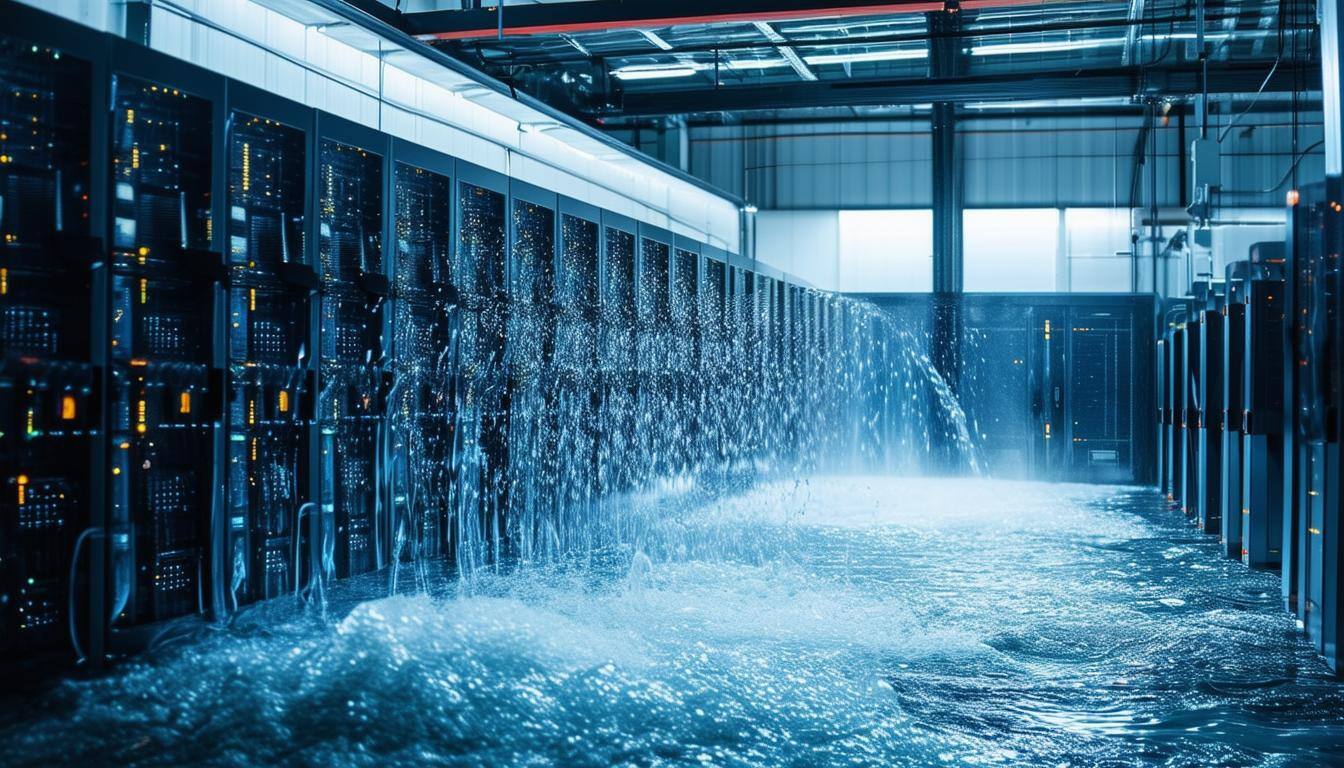
There’s a quiet crisis unfolding beneath the hum of global digital growth. As artificial intelligence accelerates and digital adoption skyrockets, the massive networks of computers that power the cloud, data centers, are consuming not just electricity, but staggering amounts of water. This burgeoning demand poses hidden risks for investors, founders, and tech leaders planning to stake claims in this rapidly expanding industry.
While most conversations around AI focus on compute performance or energy consumption, a critical but under-examined question is emerging: What is the ecological footprint of AI through water use? And what does that mean for business strategy, financial risk, and sustainable growth?
What Water Has to Do With Digital Infrastructure
At first glance, there’s no obvious connection between water and digital services like ChatGPT, TikTok, or cloud storage. But the link is physical, not digital.
Data centers produce immense heat, especially those running compute-heavy AI models. To prevent server failure, operators rely on cooling systems. And in many cases, these systems use water as a primary cooling medium. A typical data center may withdraw millions of gallons of water per day from nearby rivers or aquifers to cool its hardware, the equivalent of the average daily water use of tens of thousands of people. Larger facilities can “drink” up to 5 million gallons per day, or 1.8 billion gallons annually, similar to the water use of a small town.
The term engineers use for this metric is Water Usage Effectiveness (WUE), the amount of water consumed (in liters) per kilowatt-hour (kWh) of IT energy used. A data center’s goal is a low WUE score, yet many still rely on traditional cooling that contributes significantly to water drawdown. In the U.S. alone, data centers withdrew approximately 449 million gallons of water per day as of 2021, a figure poised to rise as more facilities are built. An additional pressure point comes from power generation. Since most electricity still comes from thermal power plants, those plants also consume water, which means data centers’ indirect water footprint is often much larger than their direct use.

AI Is Thirstier Than You Think
Recent estimates suggest that the water consumed by AI-related compute could reach between 312 billion and 764 billion liters annually, equivalent to or exceeding certain global benchmarks like bottled water consumption. Large language model training runs can require hundreds of thousands of gallons. One report estimated that training a single advanced AI model might vaporize up to 185,000 gallons of water, a startling amount given the frequency of training runs across hundreds of models globally. Crucially, much of this use comes from evaporative cooling systems, which withdraw freshwater and lose a large portion of it to the atmosphere as steam, water that is not easily returned to local water tables and can worsen stress on local supplies.
Why This Matters for Business Leaders
For investors and executives, this isn’t just an environmental story, it’s a strategic financial and operational risk.
1. Regulatory and Permit Risk
Local authorities in drought-prone regions are increasingly scrutinizing data center water use. For example, bills have been introduced in data center hubs like Virginia requiring water usage disclosures.
Regions with limited water supplies are tightening permitting, especially where data center demand competes with agriculture, households, and industry.
2. Community Conflict and Reputation Risk
Communities in drought-hit regions, from Brazil to the American Southwest, are pushing back against large data center projects, concerned that water extraction harms local ecosystems and food security.
This can translate into delays, litigation, and brand damage.
3. Long-Term Operational Risk
Water scarcity is not static. Regions that have plentiful supplies today may face severe shortages tomorrow due to climate change or over-extraction.
Facilities that do not plan for sustainable cooling may become stranded assets in as little as a decade.

The Future of Cooling: Changing the Game
The good news? Innovation is emerging that can dramatically reduce water use, turning data centers from water guzzlers to far more sustainable machines using the following principles:
1. Closed-Loop Cooling Systems
Unlike evaporative approaches, closed-loop systems recirculate water or coolant, reducing loss through evaporation. Some hyperscale deployments already claim major reductions in water withdrawal. Microsoft, for example, reported utilizing closed-loop cooling in certain facilities and aims to become water-positive by 2030, meaning it returns more water to the environment than it consumes. Closed-loop systems also permit the use of recycled or non-potable water, essential in arid regions.
2. Immersion Cooling
This approach involves submerging servers in non-conductive liquid coolants rather than relying on air or water to dissipate heat.
Scientific research indicates that high-performance immersion cooling systems can significantly improve heat extraction and efficiency metrics compared to traditional approaches. Industry studies also show that liquid cooling technologies (including immersion cooling) can reduce water usage by up to 31–52% and cut associated greenhouse gas emissions by 15–21% over air cooling systems.
3. Heat Reuse Strategies
Instead of allowing cooling systems to dump heat into the environment, some facilities are experimenting with waste heat recovery for district heating or industrial use, turning what was once wasted energy into a resource.Academic research demonstrates that combining alternative cooling (like lake water systems) with waste heat recovery can reduce energy demands dramatically.
4. Focused Siting & Policy
Infrastructure leaders are increasingly considering water stress maps, renewable energy availability, and ecological impact when choosing locations.Regulators and investors are calling for WUE transparency, and future ESG reporting standards may require water metrics alongside carbon disclosures.
Business Implications: Water Efficiency Is a Competitive Advantage
For investors and corporate strategists, the ecological footprint of data centers is no longer a peripheral ESG concern, it is becoming a core determinant of long-term competitiveness in AI infrastructure. As artificial intelligence workloads grow more compute-intensive, the question facing the industry is no longer whether data centers consume vast resources, but which companies can scale without triggering regulatory, social, and environmental backlash. In this context, water efficiency is emerging as a decisive differentiator.
From Hidden Cost to Strategic Asset
Historically, water was treated as a low-cost, abundant input, often excluded from strategic planning. That assumption is now breaking down. Climate change, urban growth, and industrial demand are converging to make water scarcity a structural constraint in many regions where data centers are expanding.
For operators and investors, this shift reframes water from an operating expense into a strategic risk variable. Companies that invest early in advanced cooling technologies, such as closed-loop liquid cooling or immersion cooling, gain a structural advantage by insulating their operations from water volatility. These systems dramatically reduce dependence on freshwater withdrawal and minimize exposure to local supply disruptions.
In contrast, facilities reliant on traditional evaporative cooling remain vulnerable to water restrictions, price hikes, and even forced curtailment during droughts. What once appeared cheaper in the short term can quickly become financially and politically expensive.
Regulatory Friction as a Cost Multiplier
Regulatory scrutiny around data center water use is intensifying globally. Local governments, particularly in water-stressed regions, are beginning to demand stricter environmental impact assessments, water usage disclosures, and efficiency benchmarks.
For companies that can demonstrate low Water Usage Effectiveness (WUE) and robust water stewardship strategies, regulatory approvals tend to be faster and less contentious. These firms are better positioned to secure permits, expand capacity, and negotiate with municipalities.
On the other hand, operators that lack transparency or depend heavily on potable water face mounting resistance. Delayed approvals, moratoriums on new facilities, or retroactive compliance requirements can significantly inflate project timelines and costs.
From an investor perspective, regulatory friction directly translates into execution risk, a factor increasingly reflected in valuations, insurance premiums, and financing terms.
ESG Performance That Actually Matters
Environmental, Social, and Governance (ESG) metrics are evolving. While carbon emissions remain central, water is rapidly becoming the next critical benchmark, especially for infrastructure-heavy industries like data centers. Firms that actively minimize water consumption and publicly report water metrics position themselves favorably with:
- Institutional investors
- Sustainability-linked lenders
- Sovereign wealth funds
- ESG-focused index providers
Crucially, water efficiency is harder to “offset” than carbon. There is no simple equivalent of carbon credits for evaporated freshwater. This makes genuine reductions in water use more credible, and more valuable, in sustainability assessments. As ESG scrutiny matures, water-inefficient data centers risk being classified as high-exposure assets, potentially limiting access to capital or increasing the cost of funding.
Community Relations and the Social License to Operate
Beyond regulation and finance, water use affects a company’s relationship with local communities, an often underestimated factor in long-term operational stability. In regions where data centers compete with agriculture, households, or small businesses for water, public opposition can escalate quickly. Protests, legal challenges, and negative media coverage not only disrupt operations but also erode brand trust, particularly for technology firms that rely on public goodwill.
Conversely, companies that invest in water-efficient cooling, recycled water systems, or water-positive initiatives strengthen their social license to operate. These firms are more likely to be perceived as partners in local development rather than extractive infrastructure.
In an era where reputational risk travels fast, amplified by social media and activist networks, water stewardship becomes a form of risk management, not philanthropy.
Reducing Long-Term Operational Risk
Perhaps most importantly, water efficiency enhances resilience. Climate models suggest that water stress will intensify in many data center hubs over the coming decades. Facilities designed without accounting for this reality face growing uncertainty around:
- Continuity of operations
- Long-term scalability
- Asset lifespan
By contrast, data centers that decouple growth from water availability are better positioned to operate consistently across climate cycles. This resilience is especially critical for AI workloads that require uninterrupted uptime and predictable performance. For corporate strategists, the implication is clear: water-smart infrastructure is future-proof infrastructure.
A New Competitive Baseline for AI Infrastructure
Taken together, these dynamics signal a shift in what defines competitiveness in the AI era. Compute power, latency, and energy efficiency remain essential, but they are no longer sufficient. As ecological constraints tighten, the ability to grow within environmental limits will separate durable leaders from short-lived winners. Companies that proactively address water use are not just mitigating risk; they are establishing a new baseline for responsible, scalable AI infrastructure. Meanwhile, firms that ignore water efficiency may find themselves constrained not by technology, but by nature, and by the regulatory, financial, and social consequences that follow.
As the world’s data thirst grows with AI and cloud computing, water, long an overlooked resource in technology strategy, is now a core business metric. Tech leaders must understand that water isn’t just a utility, it’s a strategic ecosystem partner. Sustainable growth in AI infrastructure depends not only on CPUs and GPUs but on hydrology, community resources, and ecological stewardship.
Business and investment decisions made today about where and how data centers are built will shape not only corporate P&L statements but also the health of water systems and communities for decades.
Read More