





 Friday, 22-05-26








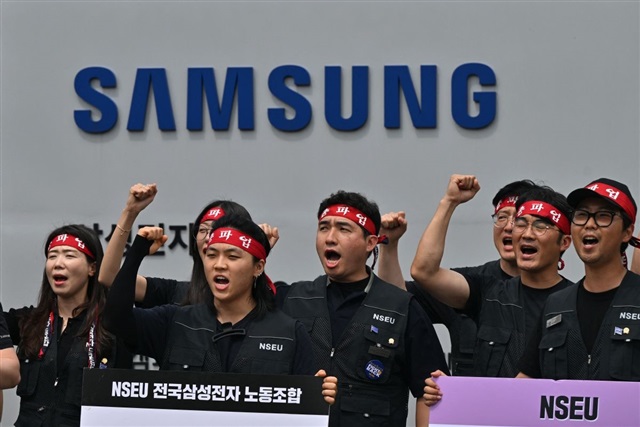
Samsung Electronics reached a pay agreement with its labor union, leading to the suspension of a planned 18-day strike involving around 48,000 domestic workers. At the same time, the company’s shares rose 8.5% to a record high on Thursday (21/05).
Union members are scheduled to vote on the government-mediated agreement between May 22 and May 27. The union leader said he expects the agreement to be approved.
The dispute followed worker concerns over compensation differences with rival chipmaker SK Hynix, which strengthened its business after supplying advanced AI chip units to Nvidia.
Samsung Bonuses Lower Than SK Hynix Compensation
According to the union, all Samsung semiconductor workers will receive a regular cash bonus equal to 50% of their annual salary.
Samsung will also allocate 10.5% of its operating profit for special bonuses that will be distributed in stock. Forty percent of the special bonus pool will be shared across the entire semiconductor division, while the remaining amount will be distributed to memory chip employees.
A union source said a memory chip employee with a base salary of 80 million won is expected to receive total bonuses of around 626 million won, or about $416,000, this year.
Reuters calculations showed SK Hynix employees could receive bonuses of more than 700 million won if the company achieves an annual profit of 250 trillion won this year.
Former Samsung human resources official Park Jun-young said Samsung secured a more favorable agreement in terms of costs than SK Hynix, although he said the company still risks losing skilled workers to its competitor.
Samsung Uses Stock Bonuses Linked to Profit Targets
Samsung’s special bonus payments will mainly be distributed in stock instead of cash.
A source familiar with SK Hynix’s compensation structure said workers at SK Hynix can choose to receive bonuses in cash or stock.
Ryu Young-ho, senior analyst at NH Investment & Securities, said Samsung’s compensation structure “avoids direct cash outflows while also helping support its share price without causing additional dilution.”
Samsung’s special bonus program for chip workers will continue for 10 years and depends on the company achieving profit milestones.
Analysts said the conditions could help Samsung manage costs during downturns in the semiconductor industry. They also noted that SK Hynix does not apply similar conditions.
JPMorgan estimated Samsung’s total performance-related pay for 2026 would amount to 12% of operating profit, while the union had requested 15%.
Workers Outside Memory Division Voice Concerns
Although memory chip workers are expected to receive large bonuses, employees in Samsung’s other semiconductor divisions are expected to receive lower compensation.
At Samsung’s chip complex southwest of Seoul, some workers expressed dissatisfaction with the agreement.
“Internally, the memory business seems to be ok with the deal, but the rest of the teams don't seem happy about it. It looks like the people who want out are already leaving,” a foundry engineer said.
The dispute also exposed divisions over how profits from the AI industry should be distributed within the company.
Samsung’s shares have increased more than five times over the past year as memory chips became key components for AI data centers.
Shareholders Plan Lawsuit Over Compensation Agreement
A small group of individual shareholders announced plans to file a lawsuit if the agreement is approved.
The shareholders argued that parts of the compensation agreement would be unlawful unless approved by shareholders.
Samsung accounts for about a quarter of South Korea’s exports, and the planned strike had raised concerns about possible damage to the country’s economy and global semiconductor supply chains.
PHOTO: AFP/DIGITIMES
This article was created with AI assistance.
We make every effort to ensure the accuracy of our content, some information may be incorrect or outdated. Please let us know of any corrections at [email protected].
Read More