





 Friday, 10-07-26








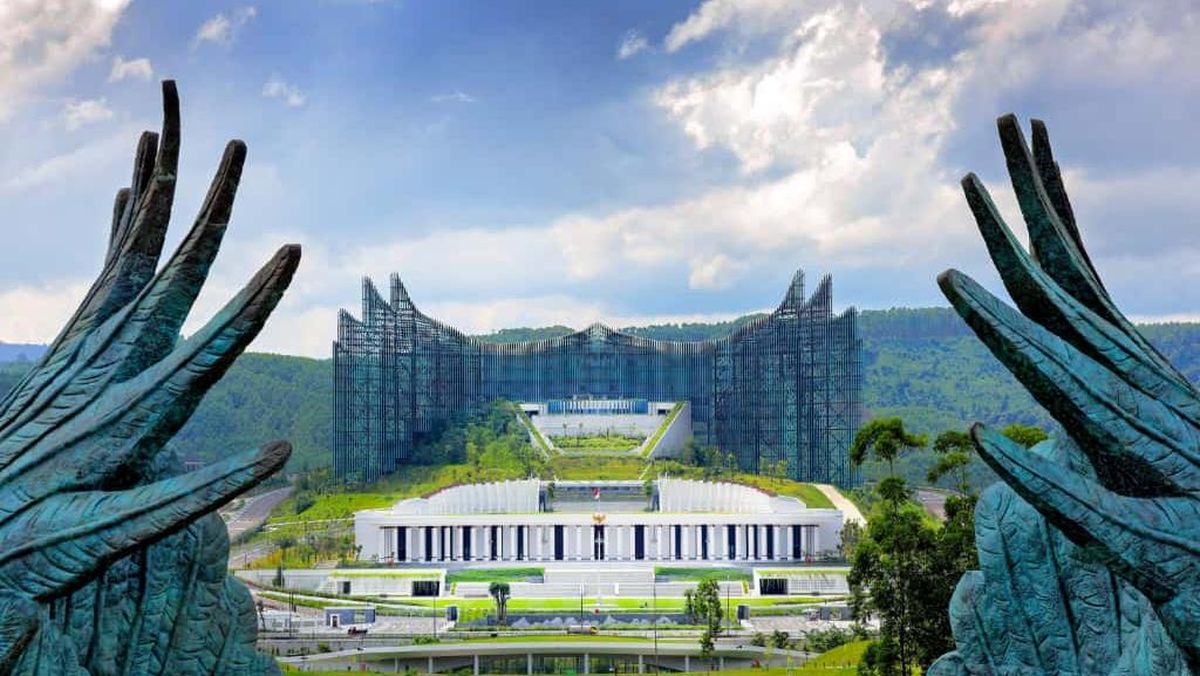
Indonesia’s ambitious new capital city project continues to attract strong investor confidence despite ongoing public debate and fiscal scrutiny. The development of Ibu Kota Nusantara, widely known as IKN, has once again entered the spotlight after the Nusantara Capital Authority announced that total investment realization reached Rp72.39 trillion. The latest figure reinforces the government’s commitment to continue the massive transformation project in East Kalimantan. Officials stated that the construction process remains active and supported by both domestic and foreign investors. The announcement also comes at a time when Indonesia is trying to strengthen long term infrastructure development while maintaining investor trust amid global economic uncertainty.
According to the Nusantara Capital Authority, the Rp72.39 trillion figure consists of private investment and public sector support. Around Rp60.29 trillion came directly from private sector participation, while Rp12.10 trillion was allocated through public facilities and ministry assignments. The investment commitments were secured through dozens of cooperation agreements involving investors from China, Singapore, South Korea, Malaysia, Russia, and the United Arab Emirates. The latest IKN Investment milestone highlights how Indonesia continues positioning Nusantara as a future economic center rather than merely a political capital relocation project.
Foreign Investors Continue Backing IKN Development
One of the strongest signals from the recent announcement is the continued participation of international investors. The Nusantara Capital Authority confirmed that at least six countries have contributed to the latest investment commitments through multiple strategic partnerships. Foreign participation remains crucial because IKN requires enormous funding for infrastructure, transportation, housing, digital connectivity, and public facilities. The government has repeatedly emphasized that private sector participation will become the backbone of the project, reducing dependence on the state budget.
The involvement of foreign investors also reflects growing international interest in Indonesia’s long term economic prospects. Southeast Asia continues attracting capital inflows due to its young population, expanding digital economy, and strategic geopolitical position. Indonesia, as the region’s largest economy, has been aggressively promoting infrastructure modernization to maintain competitiveness.
Several sectors have become the main targets for investment inside IKN. These include residential development, hospitality projects, sports facilities, commercial centers, energy infrastructure, and public transportation systems. Authorities believe the integrated ecosystem approach will help accelerate urban activity and attract future residents.
The IKN Investment trend also aligns with broader national investment growth. Indonesia recently reported that national investment realization exceeded government targets during the first quarter of 2026. This broader momentum gives additional support to the government narrative that long term investor confidence remains intact. At the same time, the government continues promoting Nusantara as a smart and sustainable city concept. Officials have repeatedly highlighted green infrastructure, renewable energy adoption, digital governance, and environmentally friendly urban planning as key differentiators for the future capital.
Challenges and Public Debate Still Surround the Project
Despite the optimistic investment figures, the IKN project continues facing criticism and skepticism from parts of the public. Questions remain regarding fiscal sustainability, political continuity, and the long term viability of relocating Indonesia’s capital city. The issue became more visible after discussions emerged regarding the formal presidential decree required to finalize Jakarta’s transition as the former capital. Online discussions and public commentary have also reflected concerns over government spending priorities during periods of economic pressure.
Some critics argue that Indonesia should focus more aggressively on strengthening existing urban centers and improving public services rather than allocating massive resources toward a completely new administrative city. Others remain worried about transparency, execution speed, and future occupancy rates. Currency pressure and market volatility have also fueled broader concerns about investor sentiment toward Indonesia. During recent months, discussions around rupiah weakness and fiscal management became increasingly visible across financial communities and online forums.
However, the government insists that the IKN project remains strategically important for Indonesia’s future. Officials argue that Jakarta’s overpopulation, land subsidence, traffic congestion, and environmental pressure make long term relocation necessary. Authorities also emphasize that Nusantara is designed to become a catalyst for economic redistribution beyond Java. For decades, Indonesia’s economic activity has been heavily concentrated on Java Island, creating regional development imbalances. By shifting the administrative center to East Kalimantan, policymakers hope to stimulate new growth corridors across eastern Indonesia.
The continued rise of IKN Investment is therefore being framed not only as infrastructure financing but also as evidence that investors still believe in Indonesia’s long term development roadmap.
Construction Progress Continues Across Multiple Sectors
Physical development inside Nusantara continues progressing across several strategic zones. Government offices, transportation networks, utilities, and supporting infrastructure are still under construction as authorities attempt to accelerate readiness for future government operations. Several commercial projects are also moving forward. New shopping centers, hospitality facilities, culinary zones, and residential areas are being developed to support future population growth inside the city. Authorities have repeatedly stated that creating a functioning urban ecosystem is critical for attracting residents and businesses.
Infrastructure expansion also includes roads, water systems, telecommunications, and energy facilities. Indonesia aims to integrate digital technology into urban management systems, making Nusantara one of the country’s most technologically advanced cities.
The government continues balancing state funding with private sector participation to reduce fiscal burden. Public Private Partnership schemes remain central to the financing strategy, especially for commercially viable sectors. Observers note that maintaining construction momentum is politically important because delays could negatively affect investor confidence. Continuous project activity helps reinforce the government narrative that the relocation remains on track despite changing political dynamics and economic challenges.
Meanwhile, the Nusantara Capital Authority continues promoting investment opportunities to both domestic and international companies. Officials believe long term opportunities inside IKN extend beyond construction, including property development, logistics, tourism, technology, education, healthcare, and green energy. The IKN Investment figure of Rp72.39 trillion may therefore represent only the early stage of a much larger economic transformation project.
Indonesia’s Economic Vision Beyond Jakarta
The development of Nusantara reflects a broader shift in Indonesia’s long term economic strategy. The country is increasingly focusing on downstream industries, infrastructure modernization, digital transformation, and regional economic diversification. President Prabowo Subianto’s administration has continued emphasizing infrastructure as a foundation for future growth. This includes ports, industrial estates, energy projects, transportation networks, and strategic urban development initiatives such as IKN. Supporters argue that the project could eventually reshape Indonesia’s economic geography by creating new growth centers outside Jakarta. East Kalimantan itself holds strategic importance because of its proximity to natural resources, shipping routes, and future industrial development zones.
Additionally, Nusantara is expected to become a showcase for Indonesia’s sustainable urban planning ambitions. Authorities continue promoting the city as a low carbon development model that integrates green spaces and renewable energy systems into daily urban operations. For investors, the long term opportunity lies not only in government infrastructure spending but also in the broader ecosystem that could emerge around the new capital city. While debate surrounding the project will likely continue, the latest investment announcement demonstrates that major stakeholders still view Nusantara as a significant long term opportunity. The challenge moving forward will be maintaining execution quality, ensuring fiscal discipline, and translating investment commitments into sustainable economic activity. As construction advances and investor participation grows, the IKN Investment story is becoming one of Indonesia’s most closely watched economic transformation projects.
Read More