





 Tuesday, 29-09-26








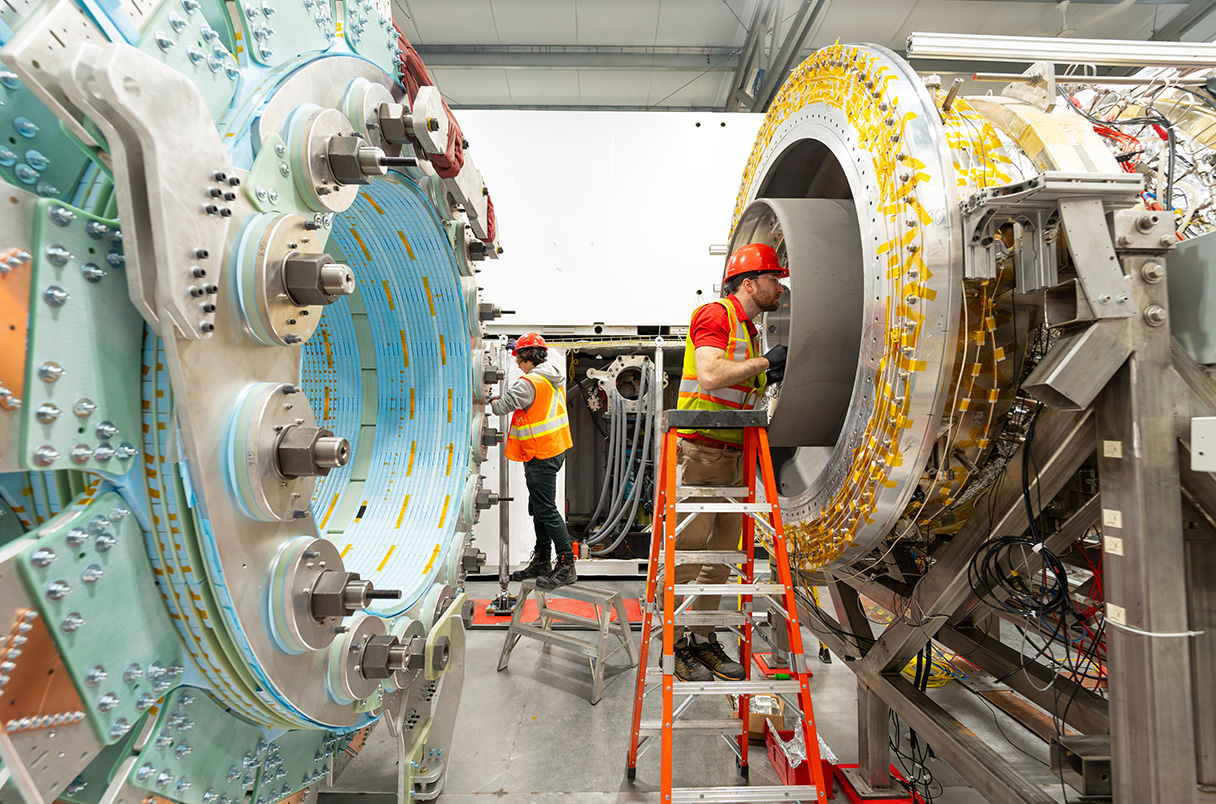
The global race to secure sustainable energy sources has entered a new phase, and Fusion Energy Startups are at the center of it. As artificial intelligence, electrification, and industrial growth push energy demand to unprecedented levels, traditional renewables like solar and wind may not be enough to meet long-term needs. This is where fusion energy enters the conversation as a potential game changer.
Unlike fossil fuels, fusion promises near-limitless clean power with minimal environmental impact. Unlike nuclear fission, it carries significantly lower risks of meltdown and produces far less radioactive waste. For decades, fusion remained largely theoretical and confined to government-backed research labs. Today, however, a new wave of private companies is accelerating progress, backed by billions in venture capital.
This shift signals a broader transformation in the energy landscape. Fusion Energy Startups are no longer speculative experiments. They are becoming serious contenders in the global energy transition.
How Fusion Energy Works and Why It Matters
Fusion energy is based on the same process that powers the sun. It involves combining light atomic nuclei, typically isotopes of hydrogen, to form a heavier nucleus. This reaction releases an enormous amount of energy. The challenge lies in replicating these extreme conditions on Earth.
To achieve fusion, fuel must be heated to temperatures exceeding tens of millions of degrees Celsius, forming a plasma. This plasma must then be confined long enough for fusion reactions to occur. Scientists have developed several approaches to this problem, including magnetic confinement and inertial confinement.
Magnetic confinement uses powerful magnetic fields to control plasma inside devices such as tokamaks or stellarators. Inertial confinement, on the other hand, relies on lasers or particle beams to compress fuel to extremely high densities.
The appeal of fusion is clear. It produces no carbon emissions during operation, uses abundant fuel sources like deuterium, and generates significantly less long-lived radioactive waste than traditional nuclear power. If commercialized, fusion could provide consistent baseload energy, solving one of the biggest limitations of renewable sources.
For this reason, Fusion Energy Startups are attracting attention not only from investors but also from governments and large technology companies that foresee massive future energy needs.
The Rise of Fusion Energy Startups and Private Investment
For decades, fusion research was dominated by large-scale public projects such as international collaborations. These projects remain critical, but they are often slow due to their complexity and bureaucratic structure.
In contrast, Fusion Energy Startups are moving faster by leveraging modern technologies, advanced materials, and agile engineering approaches. Over the past few years, private investment in fusion has surged into the billions of dollars. Venture capital firms, sovereign wealth funds, and tech billionaires are all placing bets on the industry.
Several factors are driving this investment wave. First, breakthroughs in computational modeling and AI are helping researchers better understand plasma behavior. Second, advances in superconducting magnets have made it easier to build more efficient confinement systems. Third, the urgency of climate change has increased demand for scalable clean energy solutions.
Startups are also diversifying their technical approaches. Some focus on compact tokamak designs, aiming to reduce size and cost. Others experiment with alternative configurations such as field-reversed configurations or magnetized target fusion. This diversity increases the probability that at least one approach will achieve commercial viability.
Importantly, Fusion Energy Startups are not just competing with each other. They are collectively pushing the entire industry forward, accelerating innovation cycles that were previously measured in decades.
Challenges Facing Fusion Energy Startups
Despite the optimism, significant hurdles remain. Fusion is one of the most complex engineering challenges ever attempted. Maintaining stable plasma at extreme temperatures is inherently difficult. Even minor instabilities can disrupt the reaction, halting energy production.
Another major challenge is achieving net energy gain. This means producing more energy from fusion than is required to sustain the reaction. While there have been promising milestones, consistently achieving and maintaining net positive output remains a key barrier.
Cost is also a concern. Building and operating fusion reactors requires advanced materials, precision engineering, and substantial capital investment. For Fusion Energy Startups, scaling from prototype to commercial plant will require not only technological breakthroughs but also financial sustainability.
Regulatory frameworks are still evolving as well. Since fusion differs from traditional nuclear power, governments must develop new policies to ensure safety without stifling innovation. This regulatory uncertainty can slow down deployment timelines.
Additionally, competition from other energy sources remains strong. Solar, wind, and battery technologies continue to improve and decrease in cost. Fusion must prove that it can compete economically while offering superior reliability and scalability.
The Future Energy Mix and Role of Fusion
Looking ahead, fusion is unlikely to replace existing energy sources overnight. Instead, it will likely become part of a diversified energy mix. Solar and wind will continue to dominate in regions with favorable conditions, while energy storage systems will help manage intermittency.
Fusion’s role could be as a stable, always-on power source that complements renewables. This is particularly important for industries that require continuous energy supply, such as data centers, manufacturing, and hydrogen production.
As AI adoption accelerates, energy demand from data centers alone is expected to surge. This creates a strong business case for Fusion Energy Startups, as they could provide the reliable, high-capacity power needed to sustain digital infrastructure.
Moreover, fusion could enable energy independence for many countries by reducing reliance on imported fossil fuels. This has significant geopolitical implications, potentially reshaping global energy markets.
In the long term, fusion could also support emerging technologies such as desalination, space exploration, and advanced manufacturing. Its high energy density makes it suitable for applications that require large amounts of power in compact systems.
Why Fusion Energy Startups Are a Long-Term Bet
Investing in fusion is inherently a long-term strategy. Most experts agree that widespread commercial deployment may still be years or even decades away. However, the trajectory is becoming increasingly promising.
What sets Fusion Energy Startups apart is their ability to innovate rapidly and attract top talent from across disciplines. By combining physics, engineering, and computational science, these companies are redefining what is possible in energy technology.
The growing alignment between private capital, government support, and technological progress suggests that fusion is moving closer to reality. While risks remain high, so does the potential reward.
For investors, policymakers, and industry leaders, the key question is not whether fusion will work, but when it will become commercially viable. Those who position themselves early could benefit from one of the most transformative energy breakthroughs of the century.
Read More